Allahabad High Court Seeks UP Government’s Response on Detention of Journalist Amid Noida Protests
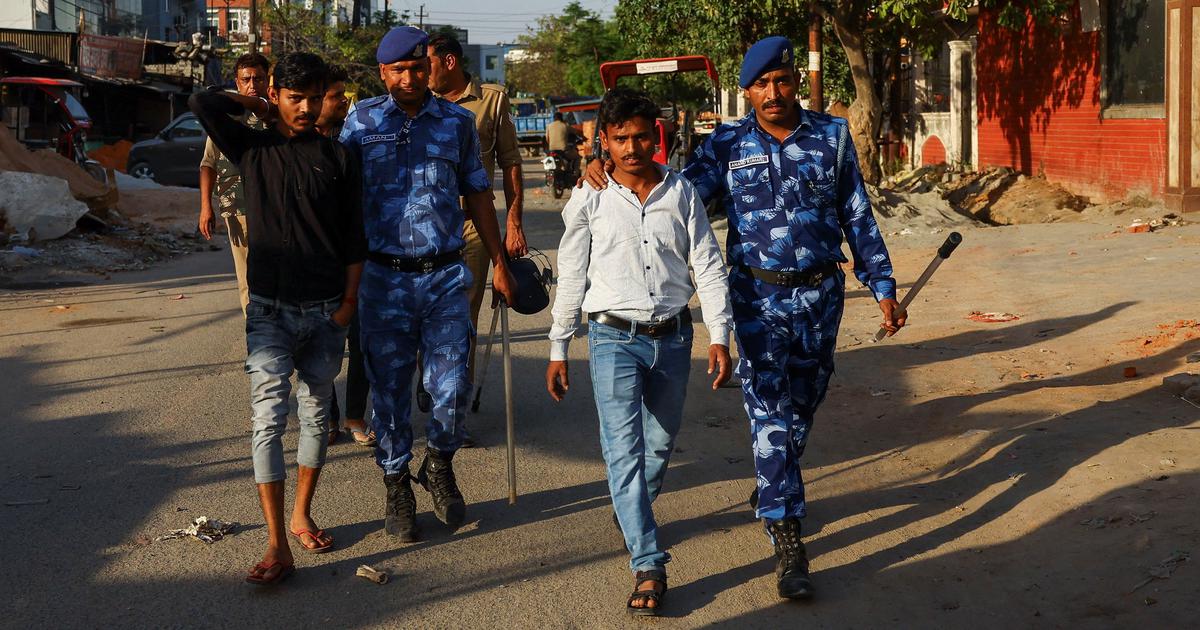
The Allahabad High Court has recently called upon the Uttar Pradesh government to provide clarification regarding the detention of former journalist Satyam Verma, who was arrested during a workers’ protest in Noida on April 13. This development comes after a habeas corpus petition was filed by Verma’s wife, challenging the legality of his detention.
The petition, which has garnered considerable attention, was presented before a bench comprising Justices Salil Kumar Rai and Devendra Singh-I. The court has scheduled a hearing for July 13, seeking a prompt response from state authorities regarding the allegations of procedural lapses in Verma’s custody.
Verma, a 60-year-old journalist hailing from Lucknow, was detained on May 13 under the National Security Act (NSA), a law that permits authorities to hold individuals without trial for extended periods of time, potentially up to a year. He, along with 25-year-old Aakriti Chaudhary, is affiliated with the Mazdoor Bigul Dasta, a workers’ organization that has been vocal about labor rights and social justice.
Authorities have accused Verma and Chaudhary of playing pivotal roles in inciting violence during the protest, which allegedly resulted in public disorder, vandalism, and chaos. The police further claimed that they had received external funding to fuel the unrest, raising serious questions about the nature of the allegations and the evidence supporting them.
In light of these claims, the habeas corpus petition aims not only for Verma’s release but also demands the preservation of all electronic and documentary evidence relating to his detention. As the case unfolds, it highlights broader concerns about civil liberties, freedom of speech, and the rights of individuals in the face of state power.
Observers note that instances like this reflect a growing trend where dissent is often met with stringent legal measures, raising critical discussions about the freedom of expression in India’s democratic framework. The outcome of this case could have significant implications for journalists and activists who often find themselves on the frontline of social justice movements.