The Bharatiya Janata Party (BJP), despite its electoral growth across many Indian states, continues to face significant political challenges in Punjab. Over the years, the party has attempted to strengthen its presence by inducting leaders from rival parties, expanding its organizational network, and positioning itself as a national alternative. However, Punjab remains one of the states where the BJP has yet to establish a dominant electoral base.
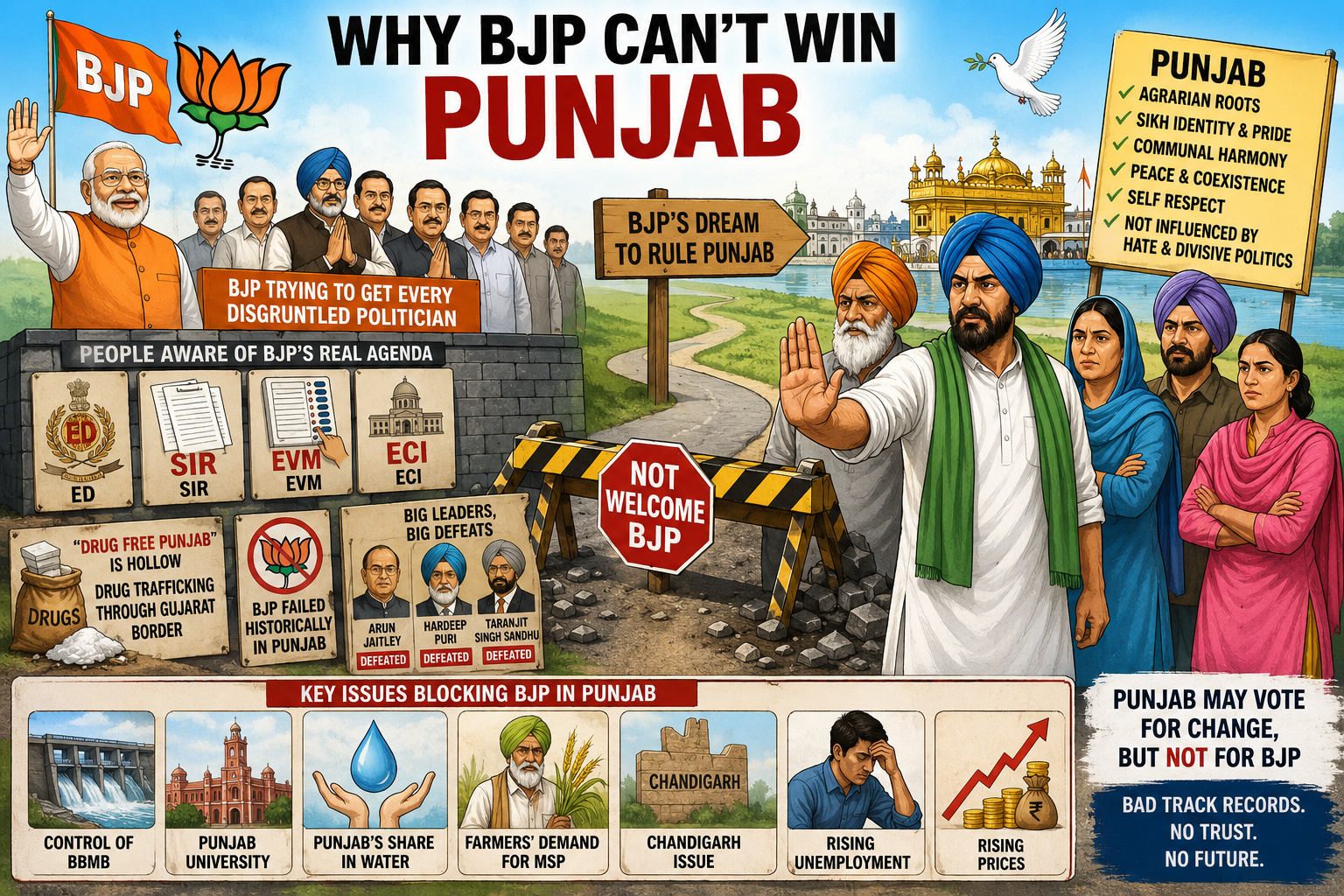
Political observers often point out that one of the BJP’s biggest challenges is building stronger support in rural Punjab. The state’s political landscape has historically been shaped by agrarian concerns, Sikh identity, regional pride, and communal harmony. Analysts believe that Punjab’s electorate has traditionally preferred regional and agriculture-focused political narratives over aggressive ideological polarization.
Many voters in Punjab are also seen as sensitive toward issues related to federal autonomy, farmers’ rights, and state identity. Political commentators say these factors have influenced public perception regarding national parties, including the BJP.
The issue of drug abuse in Punjab continues to remain a major political and social concern. While various governments and political parties have promised action against narcotics trafficking, opposition leaders and activists have frequently questioned the effectiveness of anti-drug measures across different states and border regions.
The BJP leadership often highlights its expansion in states where it previously had limited presence, including states such as West Bengal and several northeastern regions. However, Punjab’s political environment is widely considered distinct due to its unique social composition, historical experiences, and regional political consciousness.
Currently, the BJP’s electoral influence in Punjab remains comparatively limited and is considered stronger in certain urban pockets rather than across the rural belt. Political analysts note that the party still faces challenges in expanding support among farmers and rural communities.
The farmers’ agitation against the now-repealed farm laws also significantly affected political perceptions in Punjab. The movement witnessed large participation from Punjabi farmers and contributed to distrust toward the BJP among sections of the rural population.
Punjab also continues to face several long-standing issues, including unemployment, industrial slowdown, migration pressures, water-sharing concerns, demands related to Minimum Support Price (MSP), and debates surrounding institutions such as the Bhakra Beas Management Board (BBMB) and Panjab University. Analysts believe these issues will continue to shape the state’s political discourse.
At the same time, political experts note that dissatisfaction with existing regional parties does not automatically translate into support for any single national party. Punjab’s political dynamics remain highly competitive and influenced by regional identity, social harmony, and agrarian priorities.
In conclusion, while the BJP may continue efforts to strengthen its organizational structure in Punjab, political observers believe the party still faces substantial challenges in building broad-based support across the state. The future of Punjab politics is likely to depend on how effectively parties address economic concerns, farmers’ issues, regional aspirations, and public trust.