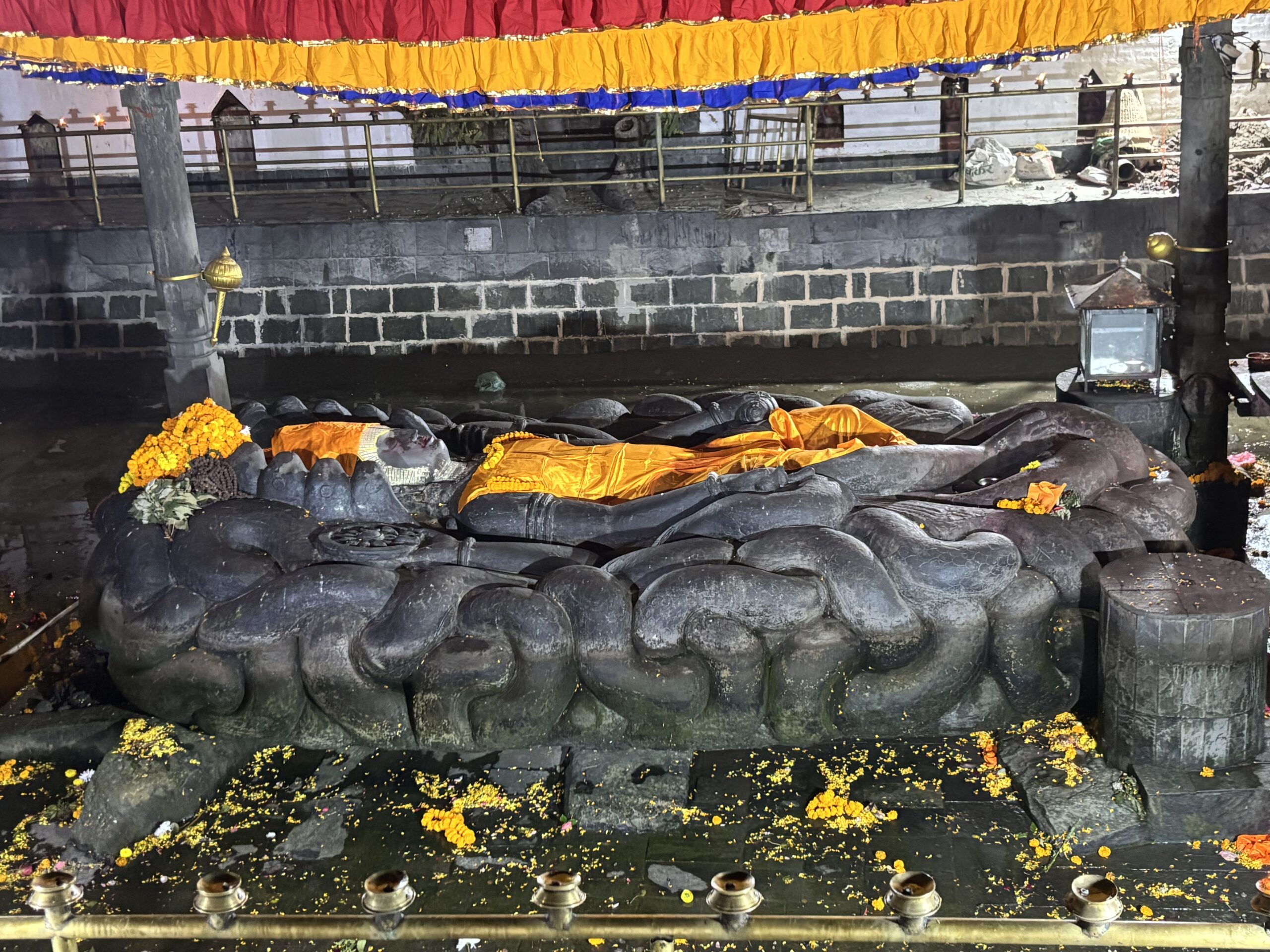
Located at the foothills of Shivapuri Hill in Kathmandu, Nepal, the Budhanilkantha Temple is one of the country’s most significant Hindu pilgrimage sites. The open-air shrine is dedicated to Lord Vishnu and is renowned for its massive stone statue depicting the deity in a reclining posture upon the serpent Shesha (Ananta).
The temple’s centerpiece is a monolithic statue believed to date back to the Licchavi period, around the 5th century CE. Carved from a single block of dark stone, the sculpture measures approximately five meters (16.4 feet) in length and portrays Lord Vishnu in the Jalasayana form, resting on the coiled serpent. The statue is situated within a sacred water tank, creating a striking visual impression that has fascinated devotees and visitors for centuries.
Historical and Cultural Significance
Budhanilkantha is regarded as an important center of Vaishnavite worship in Nepal. The temple attracts thousands of devotees throughout the year, particularly during religious festivals dedicated to Lord Vishnu.
The shrine is admired not only for its religious significance but also for its artistic craftsmanship, reflecting the advanced sculptural traditions of the Licchavi era.
Legends Associated with the Temple
Several local legends surround the temple. One popular belief suggests that Nepalese monarchs traditionally avoided visiting the shrine because of an ancient prophecy linking the king’s fate to the deity. Historians, however, regard this as part of local folklore rather than a documented historical fact.
The origin of the temple’s name, “Budhanilkantha,” is also the subject of different interpretations and traditions. While the exact meaning remains debated, the name has been associated with historical and religious narratives passed down through generations.
A Living Pilgrimage Site
The temple remains an active place of worship and serves as a major destination during the annual Haribodhini Ekadashi festival. During this occasion, devotees gather in large numbers to offer prayers and participate in religious ceremonies celebrating Lord Vishnu.
The atmosphere during the festival is marked by devotional songs, rituals, flowers, and traditional offerings, reflecting Nepal’s rich spiritual heritage.
Conclusion
Today, Budhanilkantha Temple stands as a remarkable blend of history, faith, art, and tradition. Its ancient sculpture, enduring religious importance, and the legends associated with it continue to make it one of Kathmandu’s most distinctive cultural landmarks.