Congress Questions Modi Government on Rising Fuel Prices Despite Falling Crude Oil Costs
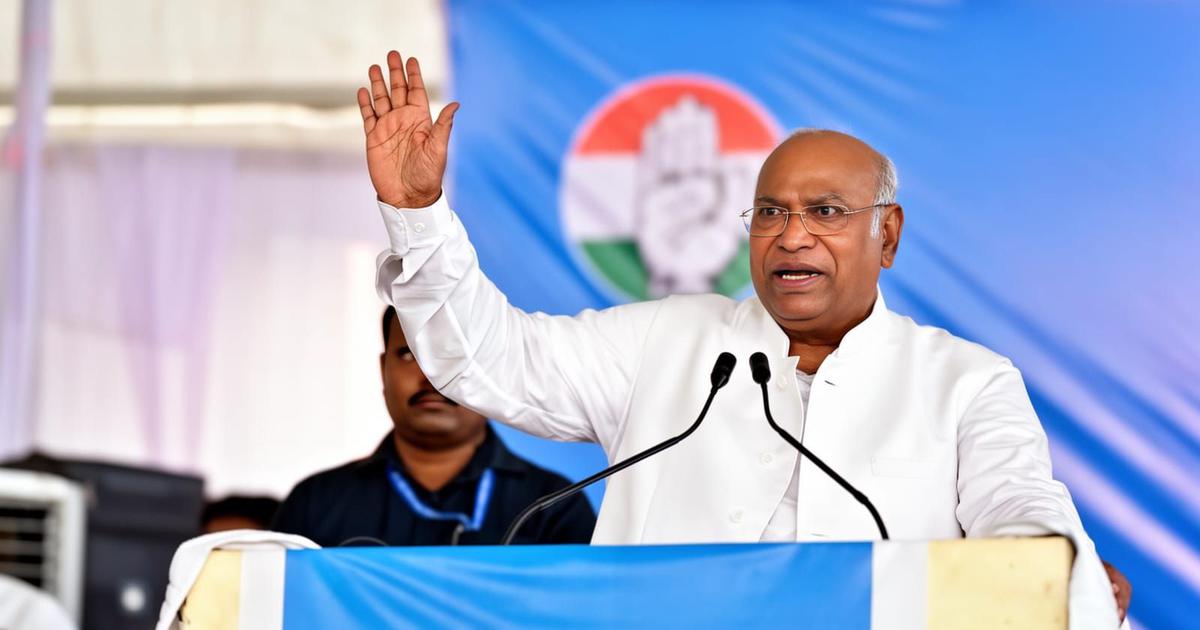
In a scathing critique of the Modi administration, Congress President Mallikarjun Kharge has posed a pressing question to the central government regarding the rising fuel prices in India, despite a notable drop in global crude oil prices. Reflecting on the economic policies since Narendra Modi assumed office 12 years ago, Kharge highlighted a glaring disparity between the price of crude oil and the cost of petrol and diesel at the pumps.
On social media, Kharge referred to data from the Press Information Bureau, revealing that when Modi took office on May 26, 2014, the benchmark crude oil price was pegged at $108 per barrel. At that time, Indian consumers paid Rs 71.5 per litre for petrol and Rs 56.7 per litre for diesel. Fast forward to today, and the crude oil price has dropped to below $99 per barrel. However, Indian consumers now face petrol prices soaring to Rs 102.12 and diesel prices escalating to Rs 95.20 per litre, marking a staggering increase of approximately 42.8% and 67.9%, respectively, in just over a decade.
Kharge further emphasized the economic implications of these fuel price hikes, noting that they significantly contribute to inflation across various sectors. As he pointed out, the increasing costs of transportation directly affect food prices and other essential commodities, placing an added financial burden on the average citizen. In addition, he drew attention to the fluctuating value of the Indian Rupee, which was 58.5 against the US Dollar back in 2014, compared to a troubling 95.6 today. This depreciation not only impacts foreign trade but also exacerbates the cost of imports, including crude oil.
The Congress leader’s remarks come amid growing public discontent over soaring fuel prices, which have become a critical issue for many households in India. With the festive season approaching, the rising costs are likely to weigh heavily on consumers, prompting discussions about government intervention or policy changes to alleviate the strain on citizens.
As India grapples with these economic challenges, Kharge’s assertions raise a pertinent question: what measures is the Modi government considering to bring relief to the public? With significant public sentiment against rising living costs, it remains to be seen how the government will respond to these allegations and whether any concrete actions will be taken to address this pressing issue.