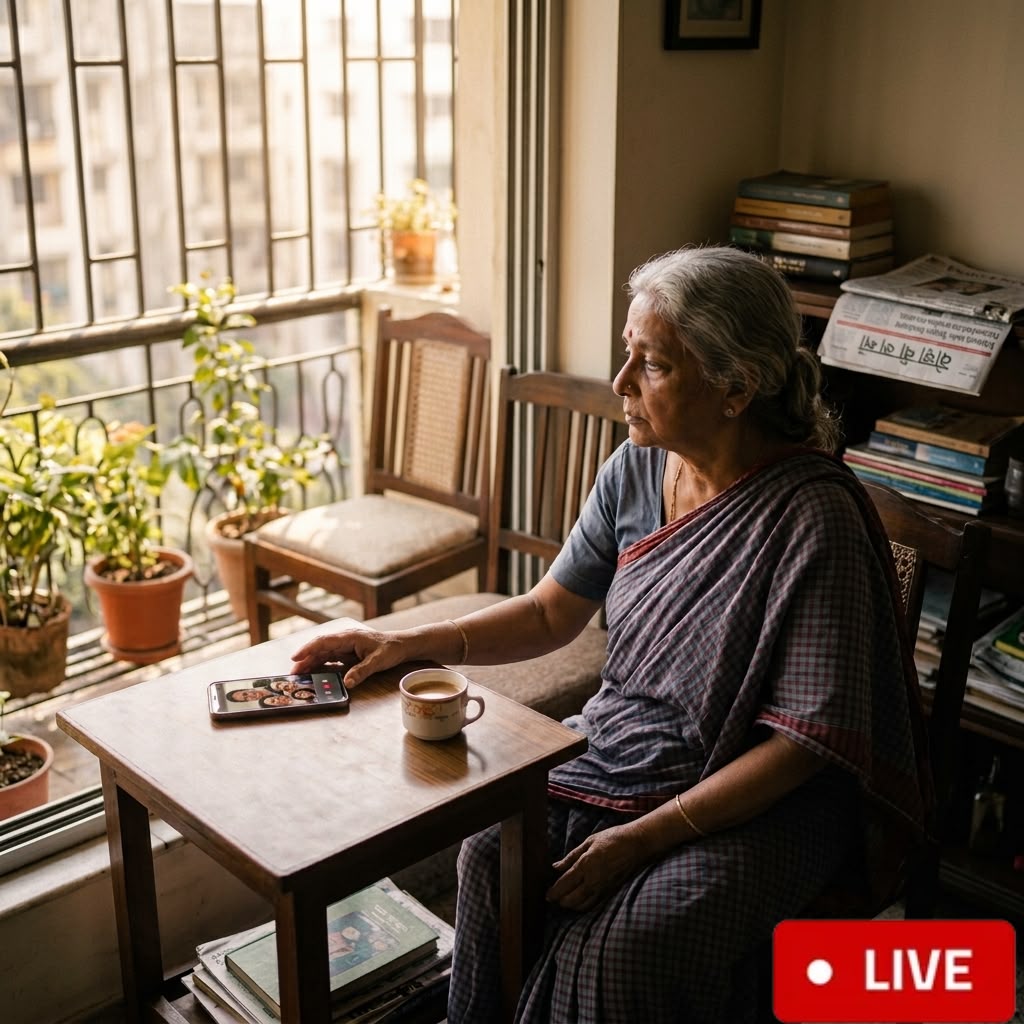
Every morning, 72-year-old Shanti Devi begins her day in the same quiet routine. She waters the plants on her balcony, prepares a cup of tea, and waits for the phone to ring.
Her children live overseas, building careers and raising families of their own. They call regularly, check on her health, and ensure her financial needs are met. Yet when the calls end and the house falls silent, a familiar feeling returns.
“It’s not that I am alone,” she says softly. “It’s that I miss having people around me.”
Shanti Devi’s story is becoming increasingly common across India.
As the country undergoes rapid urbanization and economic change, a growing number of senior citizens are facing a quiet but serious challenge: loneliness.
It is a struggle that often remains behind closed doors, yet it affects millions of elderly Indians who find themselves living with fewer social interactions and increasing isolation.
The Changing Face of Family Life
For generations, India was known for its strong joint family system.
Grandparents lived with children and grandchildren, sharing daily life, offering guidance, and remaining deeply connected to family and community. Old age was naturally surrounded by companionship.
Today, this structure is changing.
Young people are moving to cities and abroad for education and jobs. Nuclear families are becoming the norm. Physical distance between generations continues to grow.
While these changes bring opportunity and progress, they also create emotional gaps that are difficult to bridge.
Video calls and messages help maintain contact, but they cannot replace physical presence or emotional warmth.
The Loneliness We Cannot See
Elderly loneliness is often invisible.
Many senior citizens continue daily routines—visiting markets, attending religious gatherings, and interacting with neighbors. On the surface, life appears normal.
But beneath that routine, isolation quietly grows.
Retirement reduces daily social interaction. Friends move away or pass on. Health issues limit mobility. The loss of a spouse can deepen emotional emptiness.
Over time, days become quieter—and silence becomes heavier.
More Than an Emotional Issue
Loneliness is not just an emotional state—it is a health risk.
Research shows that long-term social isolation can contribute to:
- Depression and anxiety
- Cognitive decline
- Sleep disorders
- High blood pressure
- Weakened immunity
Human beings need connection at every stage of life. This need does not disappear with age—it often becomes more important.
When Living Together Isn’t Enough
Loneliness is not limited to those who live alone.
Even elderly people living with families often feel isolated in modern households. Busy schedules, digital distractions, and fast-paced lifestyles reduce meaningful interaction.
Being in the same house does not always mean being emotionally connected.
For many seniors, feeling heard and included matters more than physical proximity.
The Digital Divide
Technology connects families across distances—but not equally.
Video calls, messaging apps, and social media help maintain relationships. But many elderly people struggle with digital tools or lack access to them.
As more social interaction moves online, those unable to adapt risk deeper isolation.
The digital world has connected millions—but also left some behind.
Building Communities, Restoring Connections
Across India, efforts are being made to address this issue.
Senior citizen clubs, community centers, and volunteer groups are creating spaces for social interaction, learning, and recreation.
These initiatives provide more than activity—they provide companionship, dignity, and purpose.
For many elderly people, these communities become a second family.
The Power of Small Gestures
Solutions do not always need to be large or complex.
A visit, a shared meal, a phone call, or simply listening without distraction can make a difference.
Most elderly people do not seek financial support—they seek connection.
Even small gestures can transform loneliness into belonging.
Preparing for an Aging India
India’s elderly population is growing rapidly.
As life expectancy rises, the country must prepare for a future where more people live longer than ever before.
This requires not only healthcare systems but also emotional and social support structures.
Age-friendly communities, mental health awareness, and intergenerational bonding will become increasingly important.
The challenge is not just living longer—but living with dignity and connection.
A Measure of Society
A society is often judged by how it treats its most vulnerable members.
As India advances technologically and economically, it must also ask a deeper question:
Can progress remain human?
For millions of elderly citizens, the deepest struggle is not financial insecurity—but feeling forgotten.
Addressing loneliness is not just a family responsibility. It is a collective social responsibility.
Because growing older should never mean growing alone.