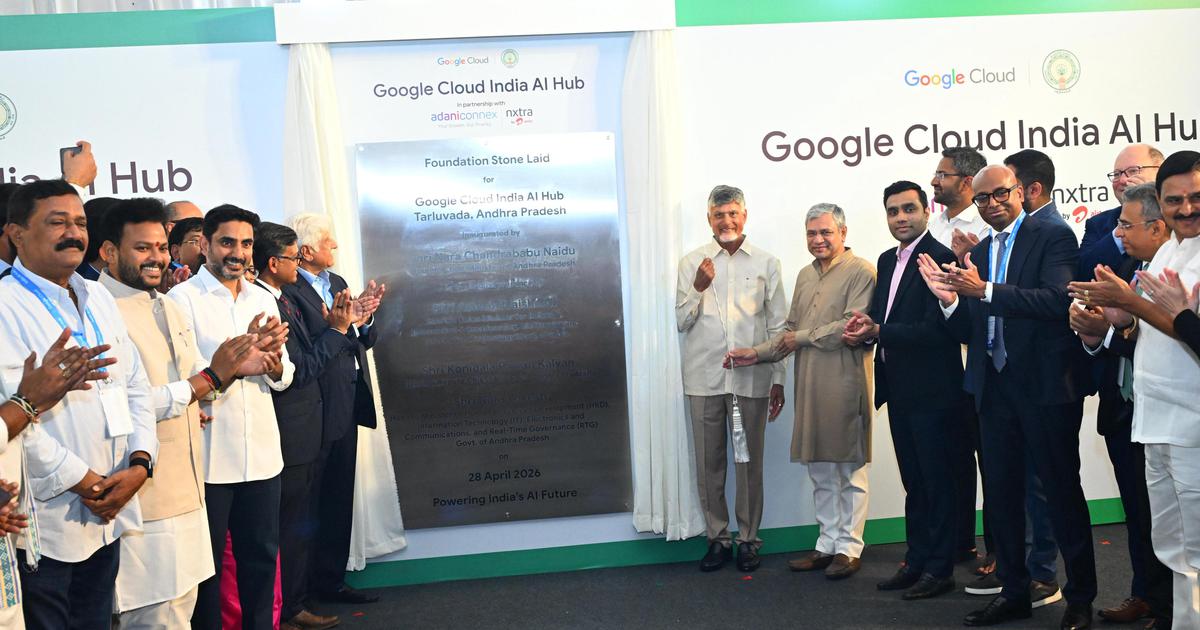
The coastal city of Visakhapatnam in Andhra Pradesh is on the brink of a significant technological overhaul with the inception of a massive data centre project by Google. On April 28, the foundation stone was officially laid in Tarluvada, a village within Visakhapatnam, marking the beginning of what is anticipated to be Google’s largest data centre outside of the United States. This development is part of a broader AI Hub initiative announced by the tech giant last year, aimed at positioning India as a key player in the global AI landscape.
The state government has dedicated an impressive 480 acres of land across the Visakhapatnam and Anakapalli districts to facilitate this ambitious project. However, the excitement surrounding this technological advancement is tempered by rising concerns from environmental activists and legal experts who are questioning the sustainability of such large-scale data centres. They argue that the lack of transparency regarding water and energy consumption is alarming, especially given the substantial resources that data centres require for their operation.
With data centres increasingly becoming critical components of the digital economy, experts are urging the Indian government to establish a comprehensive national data centre policy. The Ministry of Electronics and Information Technology of India released a draft policy in 2020, but since then, there has been little progress in finalizing a robust framework that addresses the environmental implications and resource needs of these structures. Without such guidelines, many fear that the unchecked growth of data centres could exacerbate existing environmental challenges.
Moreover, Reliance Industries Ltd is also in the process of developing a 1.5 gigawatt data centre cluster in Visakhapatnam, further contributing to the region’s burgeoning tech infrastructure. The state has set an ambitious target to develop 6.5 gigawatts of compute capacity in the coming years, positioning Andhra Pradesh as a key hub for data handling in India.
Nevertheless, the environmental ramifications of these data centres cannot be overlooked. They are notorious for their high water consumption, primarily used for cooling the systems. In fact, Google reportedly utilized around 31 billion litres of water across its global operations last year alone. This figure brings to light the urgent need for more stringent environmental assessments and protocols before the initiation of similar projects in the future.
As the digital landscape in India continues to evolve, the balance between technological advancement and environmental sustainability remains a critical challenge. The discussions surrounding data centres must prioritize responsible resource management, ensuring that the growth of the tech sector does not come at the expense of the environment. With the stakes high and the demand for data services increasing, the Indian government, private sector, and communities must work collaboratively to forge solutions that prioritize both innovation and sustainability.