Mukul Kesavan, an acclaimed poet and writer, weaves his observations of the vibrant Indian summer into three evocative poems that resonate with the essence of the season. His verses capture the sensory experiences of summer, from the vivid imagery of nature to the culinary delights that epitomize Indian culture.
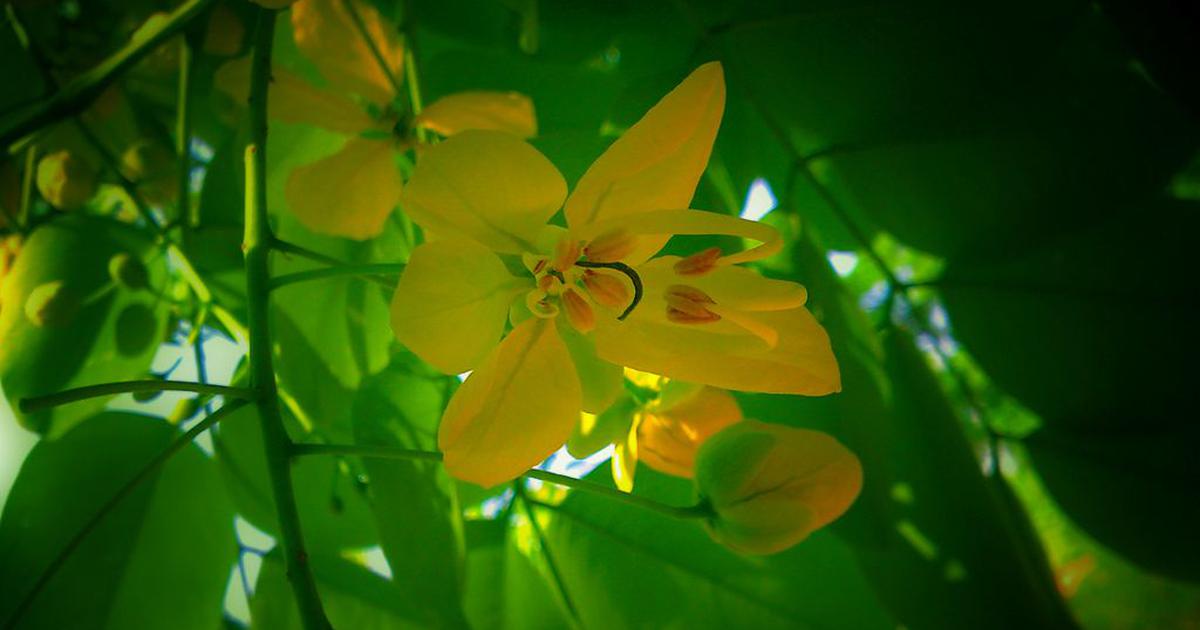
In his poem ‘Local Warming’, Kesavan paints a striking picture of the amaltas tree, often seen as a symbol of the Indian summer. He describes it as a ‘mad trumpeter’, gloriously adorned in yellow, which he likens to the ‘droppings of the sun’. This powerful metaphor not only emphasizes the beauty of the tree but also serves as a reminder of the changing climate. The poem reflects on an early heatwave that transforms the landscape, igniting twigs and altering the vibrant greens of spring into a golden hue. Through his words, Kesavan connects the local environment to the global climate crisis, reminding readers of the impending changes that lurk on the horizon.
Kesavan’s next piece, ‘Fateh’s Chaat’, transports us to the bustling front gate of a school, where the tantalizing crunch of kachauris mingles with the savory aroma of chana. He articulates the complex flavors of this beloved street food, conveying how mere descriptions fall short of capturing their essence. The poem delves into the intimate relationship between food and memory, celebrating the nostalgia that accompanies every bite. Kesavan’s exploration goes beyond taste, acknowledging the deep cultural roots of chaat, and how it serves as a testament to shared experiences and collective history. He challenges readers to recognize that some culinary delights transcend simple terminology, existing instead in a realm of personal significance.
Lastly, ‘Garg in Goa’ reflects on the life and inspirations of a character ensnared in the contrasting worlds of literature and reality. Set against the backdrop of Bardez in Goa, the poem juxtaposes the protagonist’s literary escapades with the vibrant atmosphere of his surroundings. As he immerses himself in Gabriel Garcia Marquez’s works, Goa’s rich cultural tapestry becomes a character in its own right. The poem evokes a sense of wanderlust, portraying the journey through Goa as both a homecoming and an adventure into the unfamiliar. Kesavan skillfully captures how place influences identity, illustrating that even within a familiar landscape, one can embark on a new voyage of discovery.
Kesavan’s poetry not only celebrates the vibrancy of Indian culture but also challenges readers to engage with their surroundings more deeply. His ability to blend the beauty of nature, culinary experiences, and personal reflection encapsulates the essence of summer in India. Through his work, Kesavan invites us to ponder the complexities of our environment, our heritage, and the stories that connect us all.