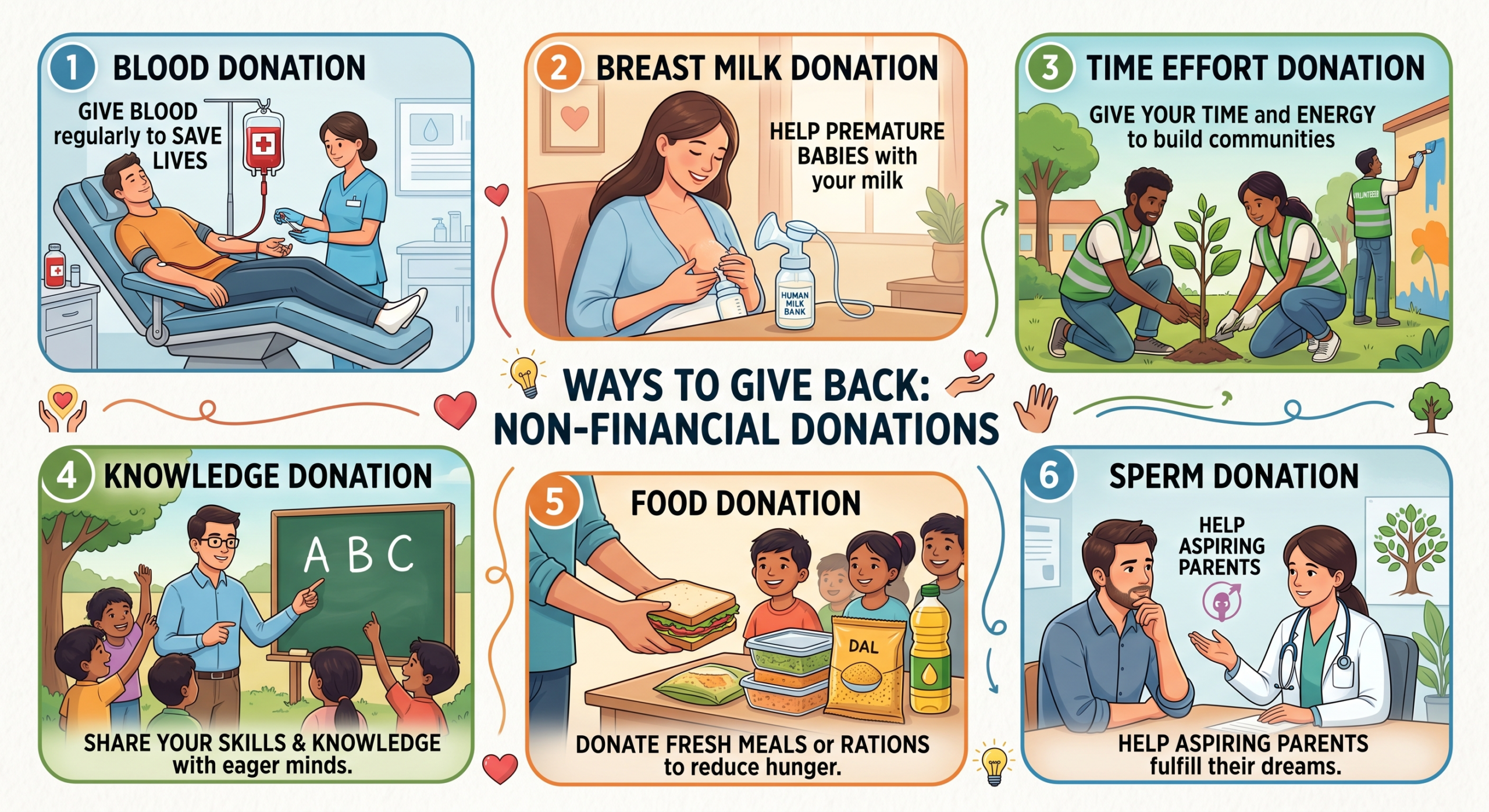
When people think about charity, financial donations are often the first thing that comes to mind. While monetary support remains important, many forms of non-financial contributions also play a significant role in helping individuals and communities. Donations of time, knowledge, food, and medical support can directly impact lives and strengthen social support systems.
Non-financial donations often create personal connections between communities and those in need. From blood donation to volunteering, these efforts contribute to public welfare in meaningful ways.
1. Blood Donation: A Lifesaving Contribution
Blood donation remains one of the most important forms of humanitarian support. Hospitals regularly require blood for surgeries, accident victims, cancer treatment, and emergency medical care. Since blood cannot be manufactured artificially, voluntary donors play a crucial role in saving lives.
Medical experts note that a single unit of donated blood can help multiple patients through the separation of blood components such as plasma, platelets, and red blood cells.
2. Breast Milk Donation for Newborn Care
Breast milk donation supports premature infants and medically vulnerable newborns, particularly those admitted to neonatal intensive care units (NICUs). Human milk banks help provide donated breast milk to babies whose mothers are unable to produce sufficient milk due to medical or health-related reasons.
Doctors consider breast milk beneficial for strengthening immunity and supporting healthy infant development.
3. Volunteering Time and Effort
Volunteering is another valuable form of non-financial contribution. Many social organisations, shelters, and community groups depend heavily on volunteers to manage daily activities and outreach programs.
People contribute through:
- Community clean-up drives
- Supporting elderly care centres
- Helping at animal shelters
- Disaster relief support
- Organising social welfare events
Experts often describe volunteering as an important way to strengthen social responsibility and community engagement.
4. Sharing Knowledge and Skills
Educational support and mentorship can help improve opportunities for underprivileged children and young adults. Individuals who provide free teaching, career guidance, language training, or digital education contribute toward long-term social development.
Many NGOs and educational organisations encourage professionals and students to volunteer their expertise to support children from economically weaker backgrounds.
5. Food Donation and Hunger Relief
Food donation continues to be one of the most direct ways to support vulnerable communities. Several organisations and volunteers distribute cooked meals, dry ration kits, and nutritional support to people facing food insecurity.
Social workers also encourage reducing food waste by responsibly sharing excess untouched food through verified donation networks.
6. Reproductive Donation and Medical Support
Sperm and egg donation have become important parts of fertility treatment for couples facing medical challenges related to conception. In India, such procedures are regulated through medical guidelines and fertility clinics.
Experts say reproductive donation can help individuals and couples explore parenthood options under proper medical supervision and legal procedures. Due to social sensitivity surrounding the topic, awareness and counselling remain important aspects of the process.
Importance of Non-Financial Giving
Social experts believe that non-financial donations encourage stronger community participation and public responsibility. Unlike monetary charity alone, these contributions often involve direct personal involvement and social interaction.
Whether through donating blood, volunteering time, teaching children, or helping provide food support, such efforts contribute toward building stronger and more compassionate communities.
Conclusion
Non-financial donations continue to play an important role in social welfare and humanitarian support. As awareness grows around community participation and social responsibility, more people are recognising that contributions beyond money can also create meaningful change. From healthcare support to education and volunteering, these forms of giving remain valuable pillars of community development.