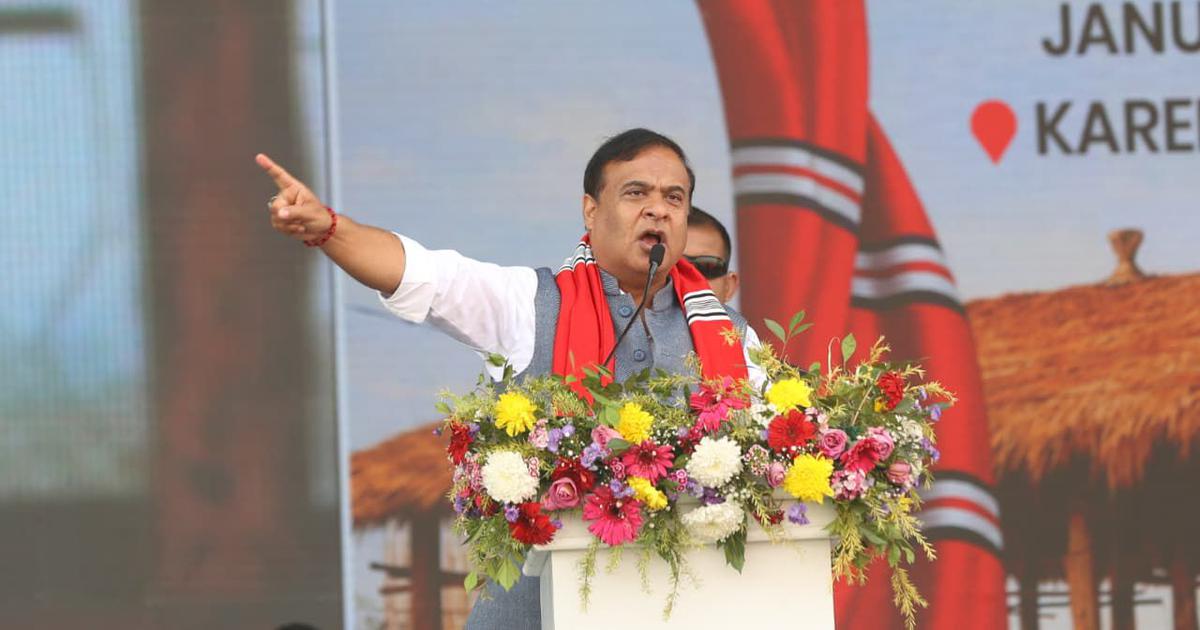
Guwahati: In a significant legal development, Assam Chief Minister Himanta Biswa Sarma has moved to defend himself against allegations of hate speech, claiming that the accusations stem from ‘selective extracts’ of his interviews and speeches. In an affidavit presented to the Gauhati High Court, Sarma asserted that taking isolated remarks out of context could misrepresent his intentions and distort the actual meaning of his statements.
Since the start of the year, Sarma has made controversial remarks targeting Bengali-origin Muslims in Assam, referring to them as “Miyas.” This term, which has historically been used in a derogatory manner to describe undocumented immigrants, specifically points to a demographic often accused of being illegal migrants from Bangladesh. Sarma’s comments drew sharp criticism, particularly as he stated that it was his duty to make this community “suffer.”
In Assam, the term “Miya” has a complex history. Originally an honorific term used among South Asian Muslims, it has been reappropriated by Bengali-origin Muslims in Assam as a self-identifying label. However, the contemporary usage often carries a negative connotation, particularly in political discourse. The Chief Minister’s remarks have raised concerns among various quarters, including scholars, activists, and police officials, who have taken legal action against him.
Among those challenging Sarma’s statements are noted Assamese scholar Hiren Gohain, Director General of Police Harekrishna Deka, and social activist Paresh Malakar. Their petitions have prompted the Gauhati High Court to consider the implications of Sarma’s language, which many argue incites division and animosity within the diverse fabric of Assam’s society.
In April, the Gauhati High Court granted the Assam government and the BJP additional time to respond to these petitions, underlining the seriousness with which the judiciary is treating the matter. Sarma’s defense emphasizes the need for careful interpretation of public comments, particularly in a political landscape where words can significantly impact community relations.
This incident not only highlights the ongoing tensions surrounding migration and identity in Assam but also reflects broader issues regarding the responsibilities of public figures in their speech. As the case unfolds, it remains to be seen how the judiciary will navigate these complex socio-political waters.