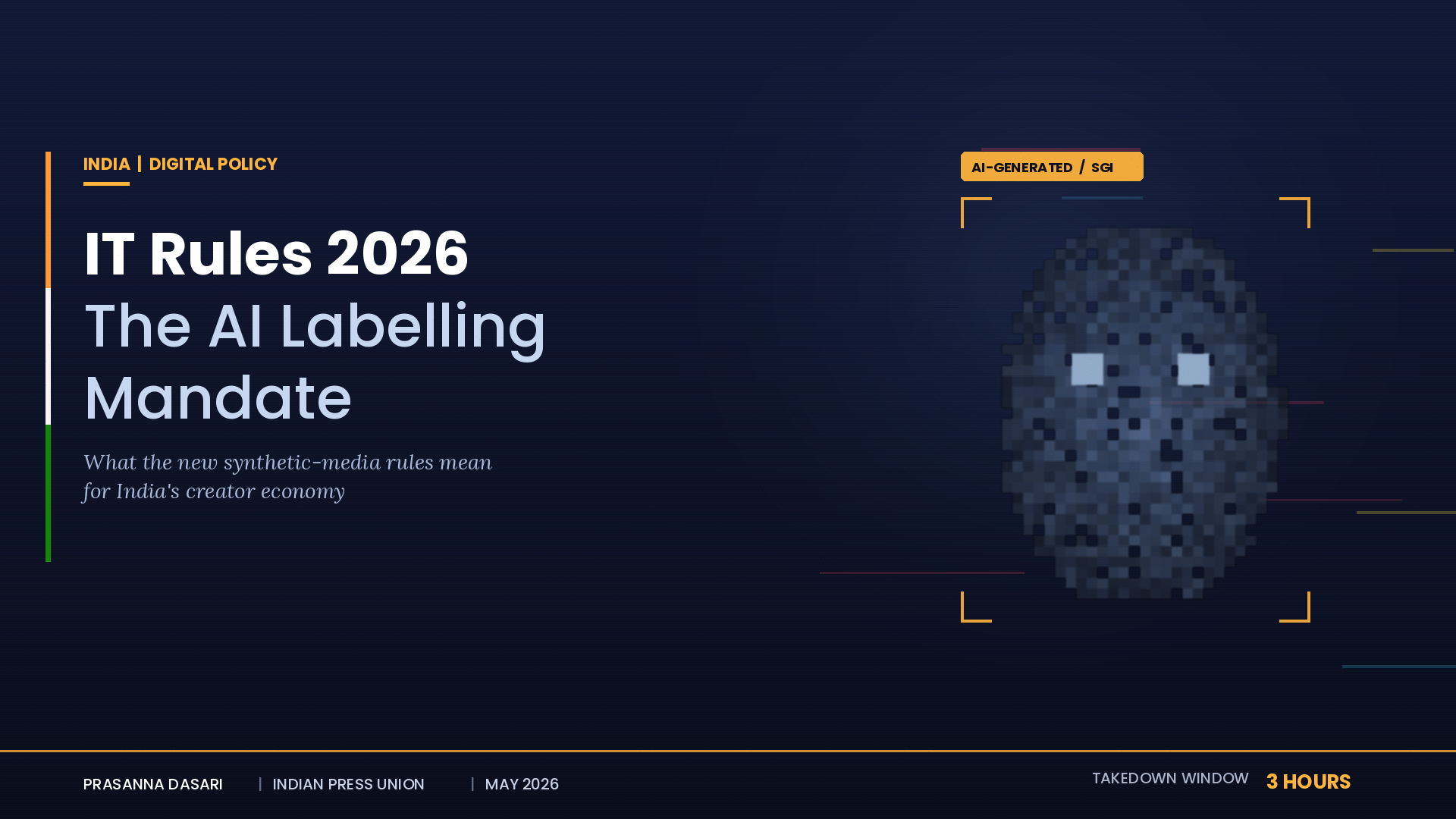
India has introduced new rules related to synthetic and AI-generated media through the Information Technology (Intermediary Guidelines and Digital Media Ethics Code) Amendment Rules, 2026. The changes, which came into effect in February 2026, are expected to significantly impact digital creators, agencies, social media platforms, and marketing teams working with AI-generated audio, video, and visual content.
The amendments are being viewed as one of India’s most important regulatory steps toward addressing concerns around deepfakes, synthetic media, online impersonation, and AI-driven misinformation.
What the New Rules Introduce
Under the amended rules, a new category called “Synthetically Generated Information” (SGI) has been introduced. The definition broadly covers audio, visual, or audio-visual content that is artificially created, generated, modified, or altered using digital tools in a manner that could appear realistic or be perceived as authentic.
The framework is primarily focused on visual, video, and audio content rather than text-based AI outputs. As a result, AI-generated images, voice clones, deepfake videos, and realistic synthetic media may fall within the scope of the rules.
Technology and legal observers say the amendments are intended to improve transparency and accountability in digital publishing while addressing growing concerns around misuse of AI-generated content.
Areas Excluded From SGI Classification
The rules also clarify that certain routine digital activities may not qualify as synthetic media violations. These include:
- Basic editing and formatting
- Colour correction and compression
- Accessibility improvements
- Translation and transcription tools
- Standard document preparation and presentation design
However, experts note that the distinction depends on whether AI tools materially alter the meaning, context, identity, or authenticity of the original content.
Impact on Creators and Agencies
The amended rules are expected to create new compliance responsibilities for digital creators, marketing agencies, production studios, influencers, and content teams.
Industry observers believe organizations working with AI-generated visuals, voice technology, or synthetic video content may now need stronger internal disclosure systems and clearer documentation regarding AI usage in published content.
Some digital agencies have reportedly started introducing:
- AI disclosure protocols
- Asset tracking systems
- Metadata preservation practices
- Client compliance clauses
- Internal review procedures for synthetic media
Experts say these operational changes could become increasingly important as platforms and regulators strengthen enforcement mechanisms around AI-generated content.
Increased Pressure on Platforms
The amended rules also place additional responsibilities on large digital platforms and intermediaries operating in India. Platforms may be required to identify, label, verify, or remove certain forms of synthetic content, particularly where impersonation, misinformation, or harmful manipulation is involved.
Digital rights groups and technology policy observers have expressed concerns that shorter takedown timelines could lead to excessive automated moderation and unintended removal of legitimate content, including satire, commentary, or public-interest material.
At the same time, supporters of the framework argue that stronger regulation is necessary to address the rapid spread of deepfakes, online fraud, voice-cloning scams, and synthetic misinformation campaigns.
AI Regulation and the Future of India’s Digital Economy
India’s move comes at a time when artificial intelligence tools are becoming deeply integrated into advertising, entertainment, journalism, education, social media, and online communication.
The creator economy has rapidly expanded in recent years, with AI tools increasingly used for:
- Video production
- Voice generation
- Advertising content
- Digital avatars
- Social media campaigns
- Animation and visual design
Technology analysts believe AI regulation is likely to become a major policy issue globally as governments attempt to balance innovation, public safety, free expression, and digital accountability.
India’s latest amendments are expected to influence broader conversations around online governance, platform responsibility, creator compliance, and synthetic media regulation in the coming years.
Growing Debate Around Press Freedom and Creative Expression
Some legal and media experts have also raised questions regarding how the rules may affect journalism, creative storytelling, parody, and digital commentary.
Observers note that the long-term impact of the amendments will likely depend on how the rules are interpreted, implemented, and enforced over time by regulators, courts, and digital platforms.
The amendments have already triggered wider debate across technology, media, and legal sectors regarding the future of AI-generated content in India’s rapidly evolving digital ecosystem.
Conclusion
The IT Rules 2026 amendments mark a significant shift in India’s approach toward regulating synthetic and AI-generated media. As artificial intelligence continues transforming the digital landscape, creators, agencies, platforms, and businesses are expected to adapt to new compliance and transparency expectations.
While supporters view the framework as an important step toward combating deepfakes and online misuse, critics continue to call for stronger safeguards protecting free expression, journalism, and creative work.
As AI technology evolves further, India’s regulatory approach is likely to remain closely watched both domestically and internationally.