The Indian Ministry of External Affairs has firmly stated that there is no place for any third party in the ongoing bilateral discussions between India and Nepal, particularly concerning the contentious border regions. This assertion comes in response to remarks made by Nepal’s Prime Minister Balendra Shah, who suggested that Kathmandu has engaged in talks with both China and the United Kingdom regarding the disputed territories of Kalapani, Limpiyadhura, and Lipulekh.
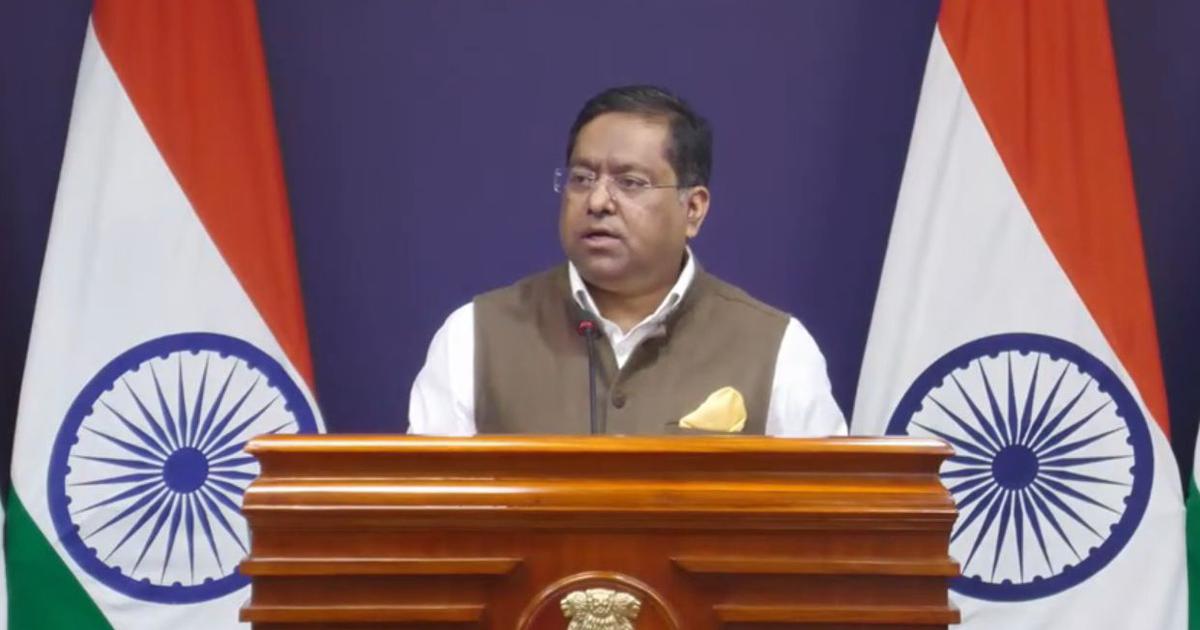
During a press briefing on Tuesday, Ministry spokesperson Randhir Jaiswal emphasized India’s position, reiterating that the aforementioned areas are considered part of Uttarakhand by India. He clarified that India’s stance on the territorial claims made by Nepal remains unchanged.
Jaiswal pointed out that nearly 98% of the India-Nepal border has already been demarcated. However, he acknowledged some unresolved segments that have surfaced due to natural changes, such as the shifting course of the Gandak river. This geographical alteration has contributed to complexities in the border delineation process.
Furthermore, Jaiswal highlighted issues of cross-border occupation and encroachment in areas classified as no man’s land along the demarcated segments. To address these challenges, India and Nepal have developed bilateral mechanisms that facilitate dialogue and cooperation on all aspects of boundary issues.
In light of these developments, Jaiswal’s comments serve as a reminder of India’s commitment to resolving border disputes through direct negotiations, without external interference. He stated, “It must be clear to all concerned that there is no role for any third parties in a bilateral matter between India and Nepal.” This declaration underlines the importance India places on maintaining sovereignty and bilateral relations with its neighboring nation.
The border disputes between India and Nepal have historical roots, influenced by colonial-era treaties and geographical changes. As both nations share deep cultural and historical ties, the resolution of such disputes is crucial for maintaining mutual respect and fostering stronger diplomatic relations.