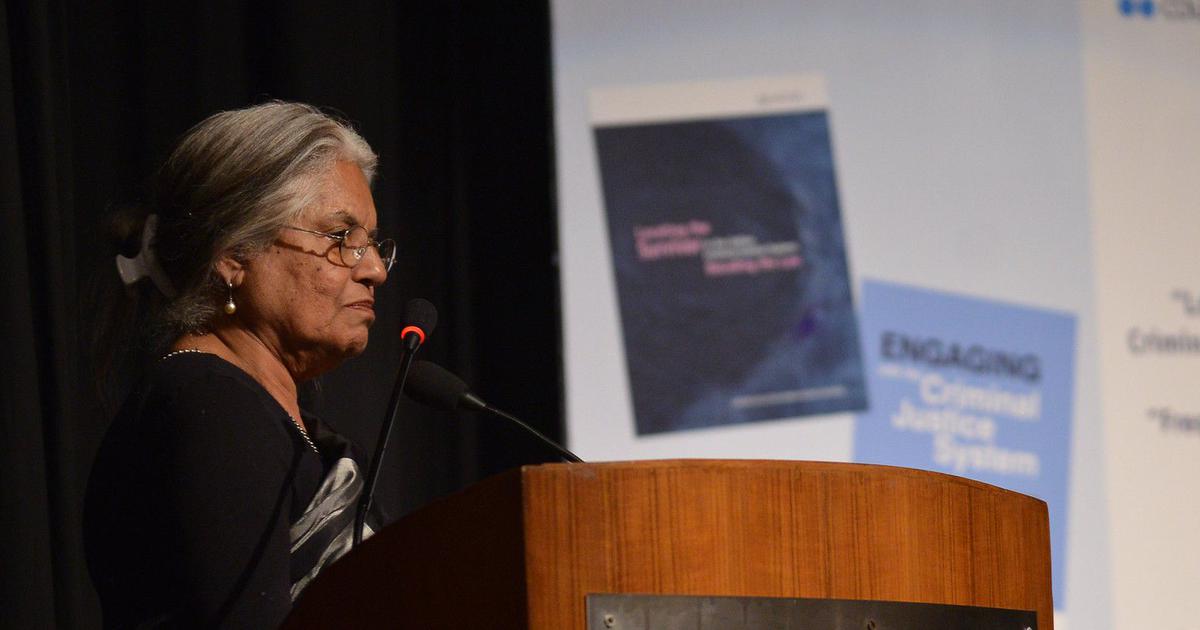
Indira Jaising, a trailblazer in the legal domain, has recently shared insights from her life and work in a new book that delves into her commitment to advocating for workers’ rights. In an engaging conversation, she recounts her evolution as a lawyer and her innate connection to the struggles faced by working women, particularly in a patriarchal society.
Jaising, who emerged as a first-generation lawyer, highlights the unique challenges she faced in a profession largely dominated by established, family-run firms. With no role models to guide her path, she was compelled to carve out her own identity and approach to law. Reflecting on her early days in practice, she noted the absence of support systems like NGOs and legal aid that we often take for granted today. “I had the freedom to shape my identity, my practice, and my choices entirely on my own terms,” she remarked, indicating that this lack of a traditional framework ultimately empowered her.
Her work has encompassed a broad spectrum of issues, from the rights of trade unionists and air hostesses to championing the causes of pavement dwellers. For Jaising, the decision to focus on these marginalized groups was not a mere coincidence; it was driven by her instinctive understanding of the difficulties faced by working women, which resonated deeply with her own experiences. “I identified instinctively with the working woman’s concerns,” she expressed, emphasizing the importance of intersectionality in her advocacy.
At a time when her predecessors were primarily focused on property rights, Jaising and her contemporaries sought to redirect the legal narrative towards social and economic rights, reflecting a significant shift in the priorities of legal practice. This transition was not merely a professional choice; it was a moral imperative for her. The establishment of the Lawyers’ Collective, a group aimed at democratizing legal services, was a landmark moment in this journey, driven by the necessity to make legal aid accessible to those most in need.
As she shares her experiences in this new book, Jaising also provides a broader commentary on the evolution of the legal landscape in India, advocating for a more inclusive approach that prioritizes the rights of the underserved. Her story is not just one of personal triumph but also a call to action for current and future generations of lawyers to engage with the pressing social issues of our time.