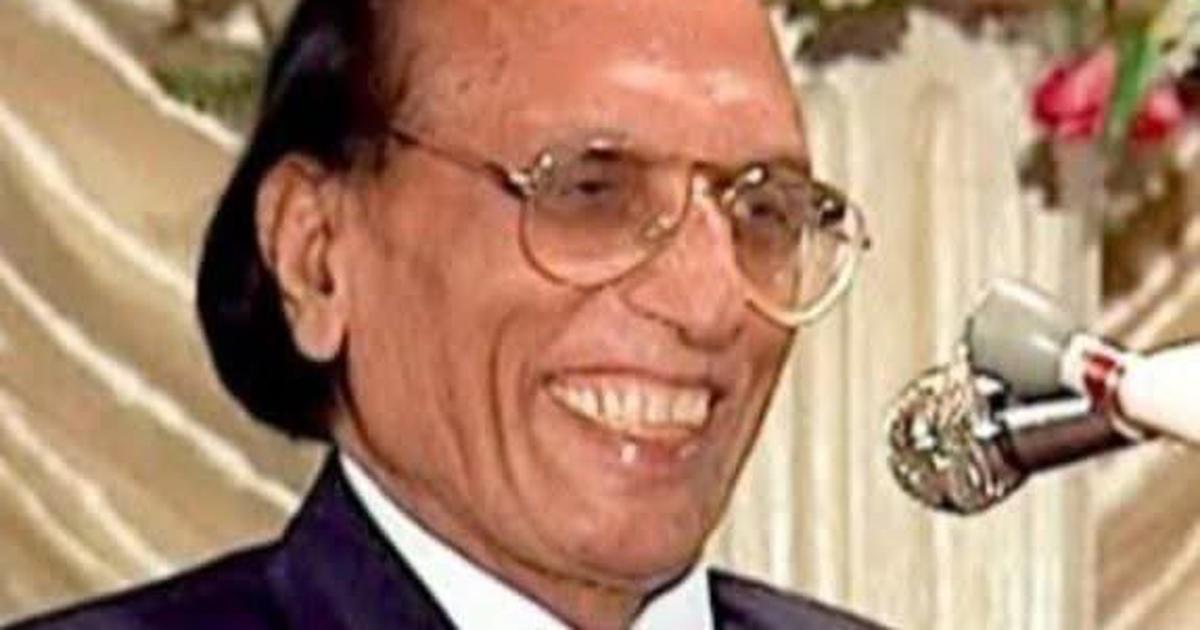
Renowned Urdu poet Bashir Badr, known for his profound contributions to the world of poetry, passed away on Thursday in Bhopal at the age of 91, as confirmed by his family through PTI. Badr’s journey as a poet began at a remarkably young age, with reports suggesting that he began penning verses at just seven years old. Born in 1935 in Ayodhya, Uttar Pradesh, Badr became a prominent figure in Urdu literature, celebrated for his unique style and emotive ghazals.
Throughout his illustrious career, Badr published over seven collections of poetry in Urdu and one in Hindi, showcasing his versatility and command over language. His notable works include celebrated ghazal collections such as Ikai, Image, Aamad, Aahat, and Kulliyat-e-Bashir Badr. One of his poignant works, a collection of Urdu ghazals presented in Devanagari script titled Ujjale Apni Yadon Ke, highlights his dedication to making poetry accessible to a broader audience.
In recognition of his outstanding contributions to literature, Badr was honored with the prestigious Padma Shri award in 1999, India’s fourth-highest civilian award. His literary prowess was further acknowledged by the Uttar Pradesh Urdu Academy, which awarded him four times, and the Bihar Urdu Academy, which recognized him once. Badr’s works not only reflected the beauty of Urdu poetry but also the socio-political landscape of his time, making him an influential voice in contemporary literature.
Tragically, Badr’s life was marked by adversity as well; during the communal riots in 1987, his home in Meerut was set ablaze, leading to the loss of many unpublished manuscripts. This devastating event forced him to relocate to Bhopal, where he continued to create and inspire. The resilience he displayed through challenging times is mirrored in the depth and emotion of his poetry.
In the wake of his passing, tributes have poured in from various corners of the literary world. Lyricist Javed Akhtar expressed his sorrow on social media, stating, “Today, our language Urdu has become a little poorer. The poet and his poetry will live on in our memories forever.” Congress MP and fellow poet Imran Pratapgarhi referred to Badr’s demise as an “irreparable loss,” emphasizing the void left in the realm of Urdu literature. His reflections on Badr’s legacy highlight the deep connections that poets share, transcending time and space.
Bashir Badr’s death marks the end of an era, but his poetic voice will undoubtedly continue to resonate with future generations. His ability to weave emotions into words and his passion for the Urdu language have left an indelible mark on the hearts of poetry lovers across India. As we remember him, it is essential to celebrate not just his life but the rich legacy of Urdu poetry that he so passionately upheld.