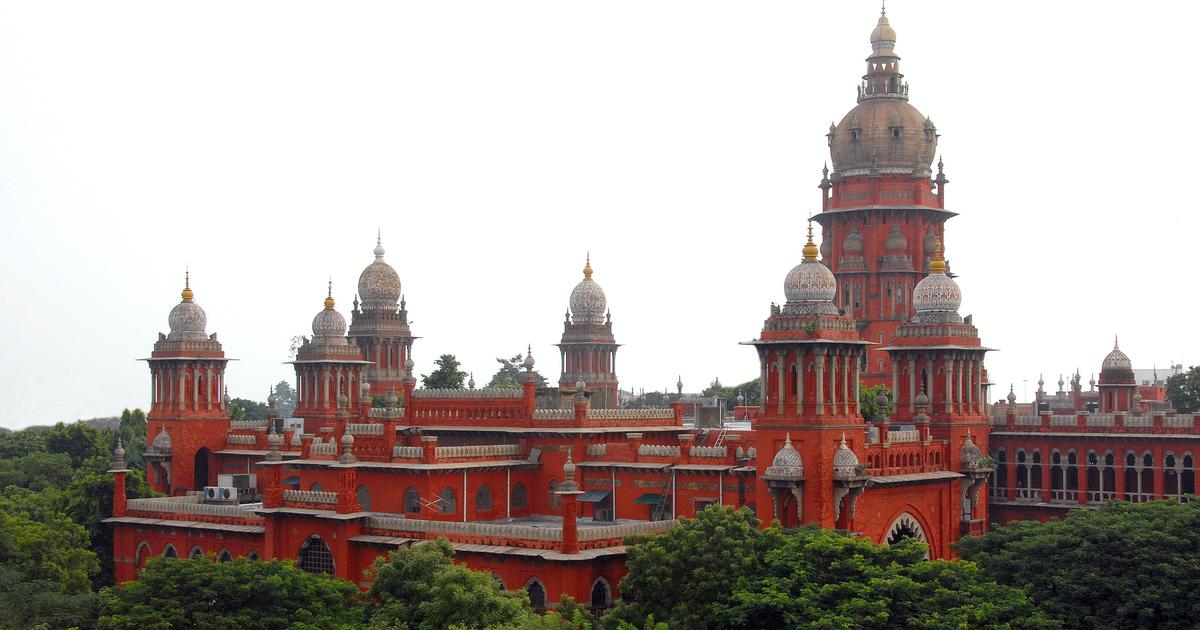
The Madras High Court has taken a bold stance on the issue of corruption within the judiciary, asserting that judges should not be regarded as ‘holy cows’. This statement came during a hearing regarding a petition aimed at banning a Tamil film, ‘Karuppu’, which allegedly tarnishes the image of the judicial system. The court’s remarks, which emphasize the need for accountability and transparency within the judiciary, have sparked significant discussions among legal experts and the public alike.
The petition, filed by an advocate, claimed that the film, which was released on May 15, sensationalizes the judicial system and could lead to public misperception. Directed by RJ Balaji and featuring popular actors Suriya and Trisha Krishnan, ‘Karuppu’ centers on a guardian deity who takes the guise of a lawyer to combat corruption in a legal system that exploits a vulnerable young girl awaiting a liver transplant. The petitioner argued that the film constitutes criminal contempt of court and sought its prohibition across theaters and streaming platforms.
In its ruling delivered on May 21, the bench comprising Justices GR Swaminathan and V Lakshminarayanan stated that criticism of the judiciary is not only allowed but necessary. They pointed out that acknowledging the existence of corruption is crucial for reform. The judges noted, ‘None can deny there is corruption in the judiciary. There were and are corrupt judges. Judges need not be treated as holy cows.’ This statement underscores a significant shift in the conversation surrounding judicial accountability in India.
Critics of the judiciary have long argued that the system is plagued by inefficiencies and corruption, leading to a lack of public trust. The court’s acknowledgment of these issues may serve as a catalyst for more profound reforms within the Indian legal framework. The film ‘Karuppu’, while fictional, addresses serious real-world concerns that resonate with many citizens who have faced obstacles within the judicial process.
The Madras High Court’s decision to allow the film to screen is seen as a victory for artistic expression and an endorsement of the right to question authority. This ruling opens the door for more films and artistic works that challenge the status quo and encourage public discourse on critical issues. As the dialogue around judicial integrity continues, it remains essential for both the public and legal authorities to engage constructively, promoting a system that is fair, just, and transparent.