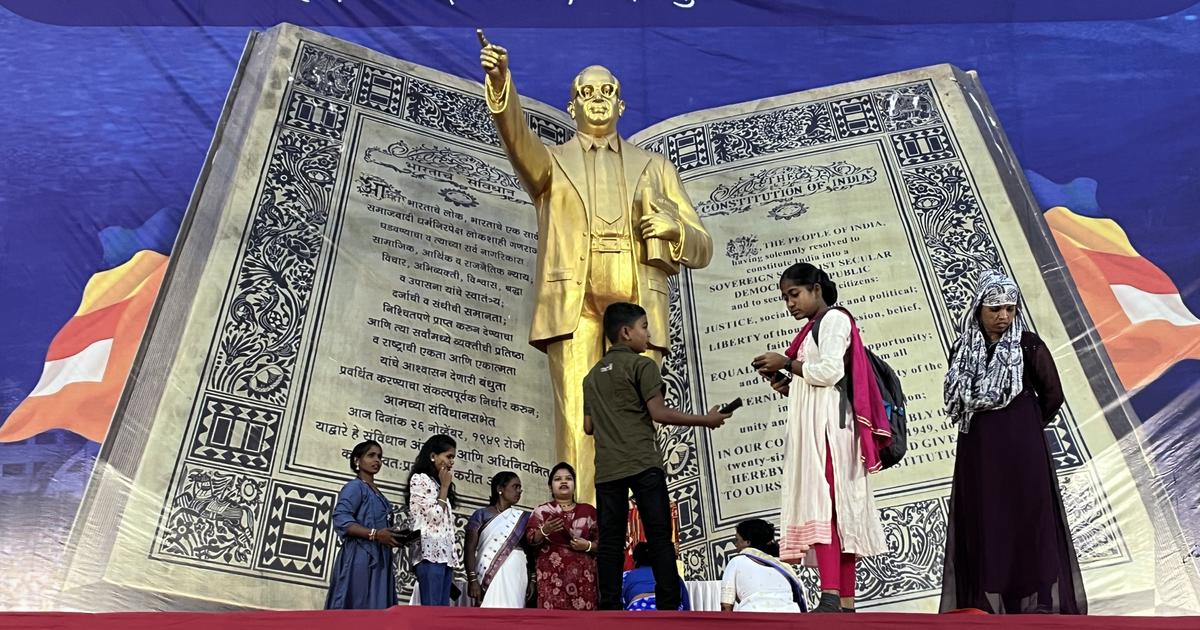
The recent ruling by the Madurai bench of the Madras High Court in the case of G Rajesh versus the State of Tamil Nadu, delivered on April 30, has sparked discussions for its unconventional approach. The case stemmed from an incident involving the desecration of a poster depicting BR Ambedkar, a revered figure in Indian history and a champion for the rights of the marginalized. Rather than adhering strictly to the punitive measures typically outlined in the Scheduled Castes and Scheduled Tribes (Prevention of Atrocities) Act, the court took a different route by encouraging a compromise between the involved parties.
In a significant departure from traditional legal proceedings, Justice L Victoria Gowri directed the accused to delve into Ambedkar’s writings, even going as far as to examine their understanding of these texts orally. Furthermore, the court advocated for the integration of Ambedkar’s philosophies into educational curricula, emphasizing a broader commitment to social reform. The rationale behind this progressive stance was articulated by the court itself, which suggested that social harmony cannot merely be upheld through punitive measures after harm has occurred. Instead, the constitutional principle of fraternity must be actively fostered.
This ruling raises critical questions about the balance between reformative justice and the potential dangers of leniency in the face of atrocities. While the court’s initiative to encourage understanding and education regarding Ambedkar’s contributions is commendable, it also reflects a troubling aspect of the legal landscape in India. The Scheduled Castes and Scheduled Tribes (Prevention of Atrocities) Act, instituted in 1989 to protect marginalized communities from discrimination and violence, has often been criticized for inadequate enforcement. In this context, the court’s approach may inadvertently reinforce a culture where offenders feel emboldened to act without fear of serious repercussions.
The risk is particularly pronounced given the history of caste-based discrimination in India, where social dynamics are complex and often fraught with tension. Critics argue that a compromise in such serious matters could dilute the gravity of the offenses committed against marginalized communities, potentially leading to a sense of impunity among transgressors. Justice must not only be about reconciliation and education but also about accountability and deterrence.
As this case unfolds, it serves as a poignant reminder of the challenges faced in balancing legal principles with the need for societal transformation. The court’s innovative approach has the potential to foster understanding and empathy, but it must be handled with care to ensure that it does not compromise the very protections that the Scheduled Castes and Scheduled Tribes (Prevention of Atrocities) Act was designed to provide. The discussion around this ruling will likely continue as society grapples with the complexities of caste, law, and the pursuit of justice in India.