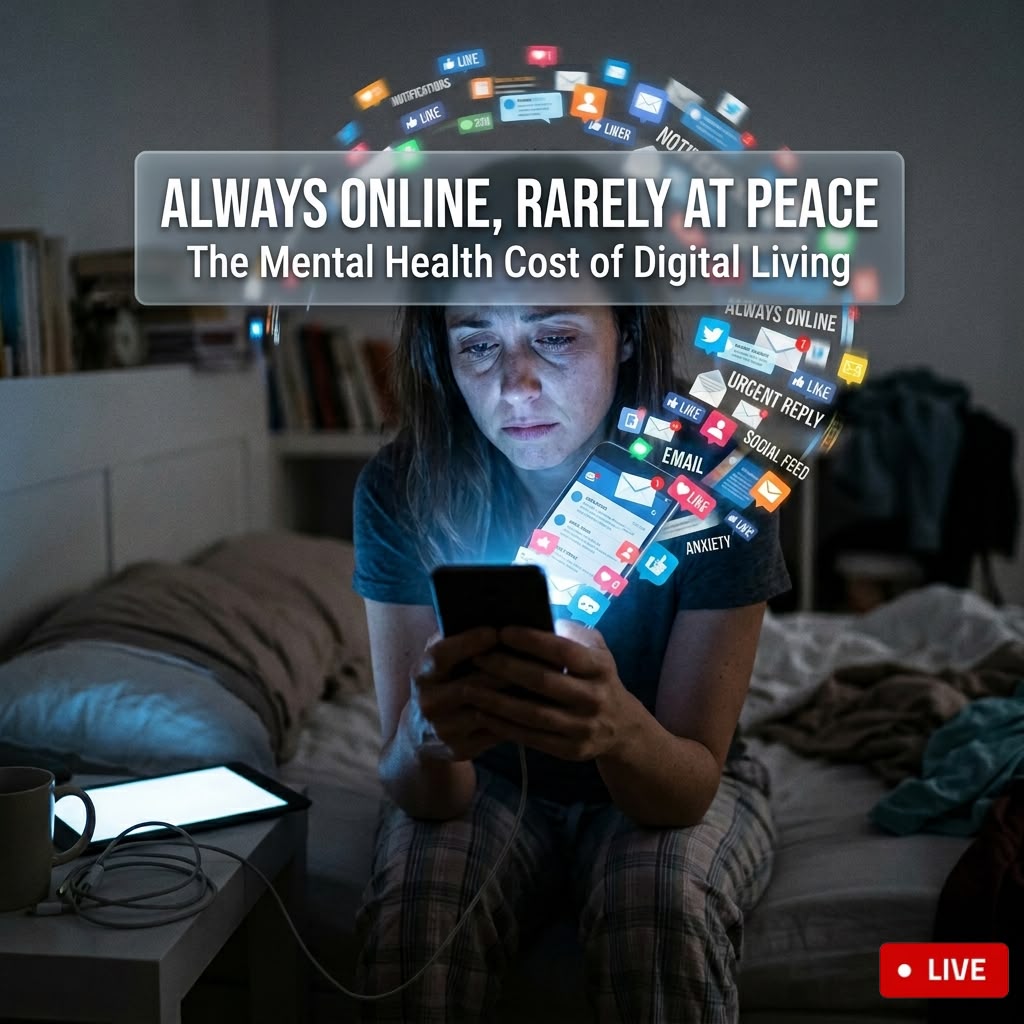
It begins almost instinctively.
Before getting out of bed, millions of people reach for their smartphones. A quick glance at notifications turns into scrolling through social media feeds, reading news headlines, and replying to messages. By the time the day officially starts, many have already spent significant time connected to the digital world.
The pattern continues throughout the day. Notifications demand attention. Messages expect immediate replies. Social media offers an endless stream of content. Work follows employees beyond office walls. Even moments meant for rest are often interrupted by the glow of a screen.
Technology has transformed modern life—making communication faster, information more accessible, and daily tasks more convenient. Yet as society becomes increasingly connected, mental health experts are raising an important question:
What is the psychological cost of always being online?
Across India and the world, growing evidence suggests that constant digital engagement may be contributing to rising levels of stress, anxiety, burnout, loneliness, and emotional exhaustion.
The New Reality of Constant Connectivity
For much of human history, people experienced natural periods of disconnection. Work ended when they left the workplace. News arrived at specific times. Social interactions were primarily in person.
Today, those boundaries have largely disappeared.
Smartphones have become constant companions. Emails, messages, social media updates, news alerts, and entertainment are all accessible at any time.
While convenient, this creates a culture of constant availability—where downtime becomes rare and mental rest is limited.
The Rise of Notification Anxiety
Experts describe a growing phenomenon known as “notification anxiety.”
People feel compelled to check their phones repeatedly, anticipating messages, likes, or updates. Even without notifications, the urge remains.
Over time, this trains the brain into a state of constant alertness, fragmenting attention and reducing focus.
The mind is rarely fully at rest.
Social Media and the Comparison Trap
Social media connects billions of people—but it also creates pressure.
Users often see curated highlights of others’ lives: achievements, vacations, celebrations, and milestones. Everyday struggles remain hidden.
This can lead to comparison with unrealistic standards of success and happiness.
Mental health professionals warn that excessive comparison may contribute to anxiety, low self-esteem, and dissatisfaction, especially among young people.
Connected Yet Lonely
Despite being more connected than ever, many people feel lonelier.
Digital communication is convenient, but it cannot fully replace face-to-face emotional connection. A message or “like” cannot substitute meaningful presence.
Humans require deeper interaction—attention, empathy, and shared experiences that screens often cannot provide.
The Workplace That Never Sleeps
Digital work culture has improved flexibility but also blurred boundaries.
Work emails, messages, and meetings now extend beyond office hours, creating an “always-on” environment.
Without clear separation between work and personal life, burnout and exhaustion become increasingly common.
The Hidden Impact on Sleep
Screen usage before bedtime disrupts sleep quality.
Blue light affects melatonin production, while engaging digital content keeps the brain alert.
Poor sleep can lead to stress, mood changes, low concentration, and long-term health effects.
Young Minds in a Digital World
Children and teenagers are especially vulnerable.
While technology supports learning and connectivity, excessive use may lead to distraction, reduced physical activity, and emotional stress.
Social validation through likes and followers can also affect self-esteem during key developmental stages.
Balanced digital habits are essential.
Technology Is Not the Enemy
Experts emphasize that technology itself is not harmful.
It has improved education, healthcare, communication, and access to information.
The challenge lies in how it is used.
When used wisely, technology enhances life. When it dominates attention, problems arise.
Building Healthier Digital Habits
Experts recommend:
- Turning off unnecessary notifications
- Creating screen-free time blocks
- Avoiding phones before bedtime
- Setting work-life boundaries
- Spending more time outdoors
- Prioritizing face-to-face interaction
- Taking breaks from social media
- Practicing mindful usage
Finding Peace in a Connected World
The digital age offers extraordinary benefits, but it also demands awareness.
True balance lies not in rejecting technology, but in using it intentionally.
In a world of constant noise, learning to disconnect may be one of the most important steps toward mental peace.
Because sometimes, real connection begins when we step away from the screen.