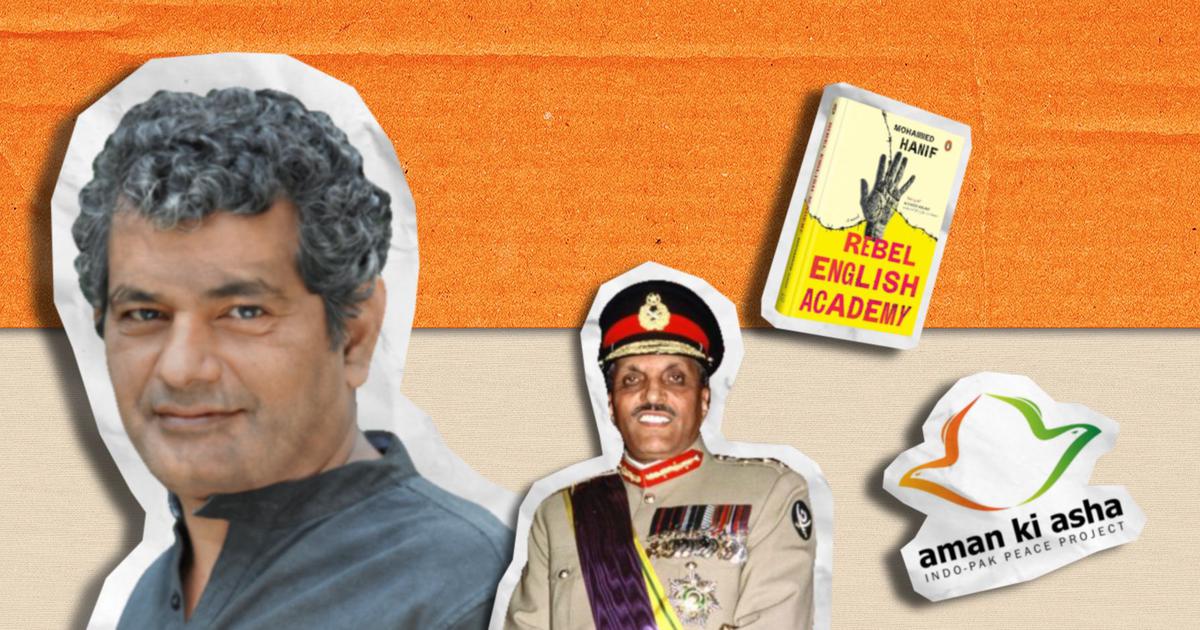
In the realm of South Asian literature, few authors have made as significant an impact as Mohammed Hanif, particularly with his novel A Case of Exploding Mangoes. Released in 2008, this satirical take on the 1988 plane crash that killed the military dictator Zia-ul-Haq resonated deeply with readers, establishing Hanif as a formidable voice in political satire. His ability to intertwine humor with the grim realities of life in Pakistan has earned him the nickname, the ‘Pakistani Joseph Heller’.
Since his breakthrough, Hanif has continued to explore the intersection of politics and absurdity in his writing, producing three additional novels that critique the prevailing socio-political climate in Pakistan. His latest work, The Rebel English Academy, further cements his reputation as a sharp observer of the human condition within the fabric of Pakistani society. During a recent conversation at Scroll Adda, Hanif shed light on his creative process, the languages that shape his narrative, and his views on current political dynamics.
Hanif’s mastery of satire stems from a rich blend of linguistic influences. Fluent in Punjabi, Urdu, and English, he navigates these languages to convey complex ideas and emotions. This multilingual prowess not only enhances his storytelling but also reflects the diverse cultural tapestry of Pakistan. He emphasizes that satire allows him to address serious issues with a light touch, making them accessible to a broader audience while provoking thought and discussion.
Touching upon significant historical events, Hanif articulated how the military’s grip on power, particularly through operations like Operation Sindoor, has shaped the country’s political landscape. He argues that such maneuvers have inadvertently strengthened the military’s role, leading to a cycle of repression that stifles dissent. His observations are particularly timely, considering the current political climate in Pakistan, where leaders like Imran Khan face significant challenges and accusations of being political prisoners.
As Hanif continues to engage with the realities of Pakistani life through his satirical lens, he invites readers into a world where humor and tragedy coexist. His work not only entertains but also serves as a critical commentary on the socio-political fabric of Pakistan. With a growing readership, Hanif’s voice is more relevant than ever, challenging norms and encouraging discourse through the power of satire.