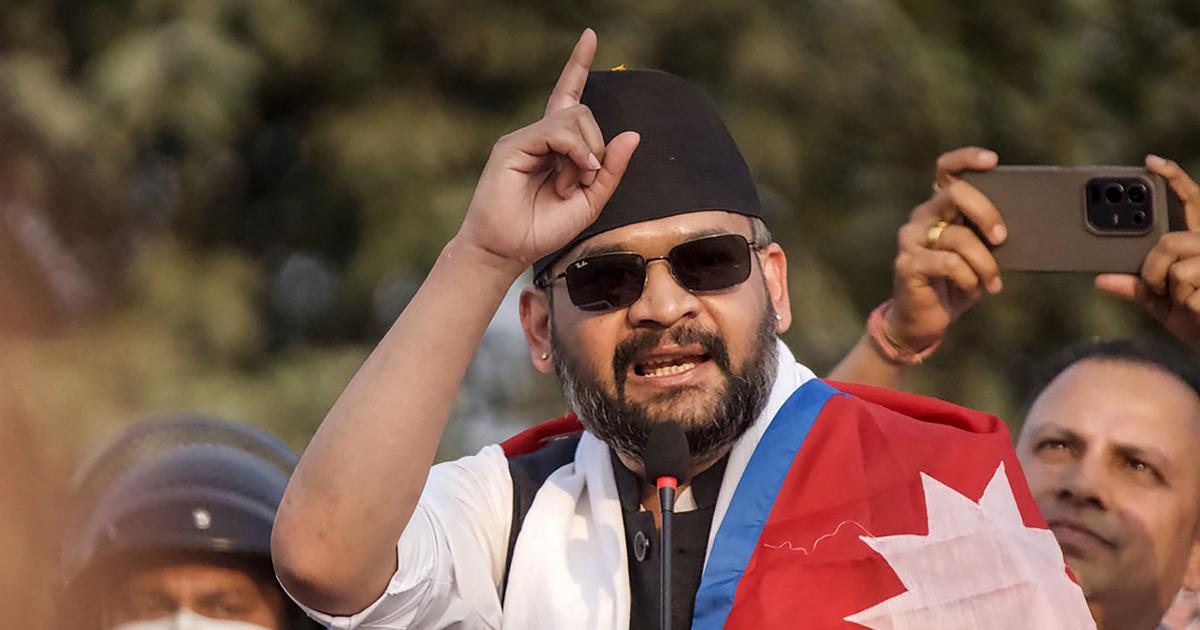
Nepal’s Prime Minister, Balendra Shah, stirred controversy in his recent address to Parliament by asserting that both Kathmandu and New Delhi have encroached upon each other’s territories. This statement comes amid ongoing tensions regarding border disputes, particularly in the contentious Kalapani-Limpiadhura-Lipulekh region, which both nations claim as their own.
During his speech, Shah emphasized the importance of resolving these territorial disputes through constructive dialogue rather than confrontation. He stated, “After assuming office, I discovered that not only has India encroached on Nepalese land, but we have also encroached on Indian territory in various locations.” Although he refrained from detailing specific areas where Nepal might have encroached upon Indian land, his remarks have reignited discussions surrounding long-standing border issues between the two countries.
The Kalapani-Limpiadhura-Lipulekh region has been a flashpoint for national sentiments on both sides. India asserts that this territory falls under Uttarakhand, firmly rejecting Nepal’s claims. Shah’s comments come at a time when diplomatic relations are being tested, and both nations are urged to find a common ground. In his address, he conveyed that both governments had agreed to resolve the boundary disputes amicably, enlisting the expertise of historians and surveyors to find a lasting solution.
Further, Shah revealed that Nepal has formally communicated its concerns to India regarding territorial encroachments, including the contentious Lipulekh area. The Nepalese government has reportedly received a response from its Indian counterpart, signaling the commencement of diplomatic discussions. This development indicates a willingness from both sides to address the complexities of their shared border through negotiations.
In a notable addition to the dialogue, Shah mentioned Nepal’s discussions with China about the dispute. This area is strategically significant, situated at the trijunction of India, Tibet, and Nepal. Expressing a broader perspective, he suggested that the United Kingdom should also engage in these discussions, as the historical context of the territorial claims dates back to British colonial rule.
As both nations move forward, the path to resolving these territorial disputes will require careful consideration and mutual respect. For many Indians and Nepalese, the outcome of these discussions will signify not just the resolution of land disputes but also the strengthening of bilateral relations that have historical and cultural significance. The hope remains that diplomatic efforts will lead to a peaceful and satisfactory resolution for both countries.