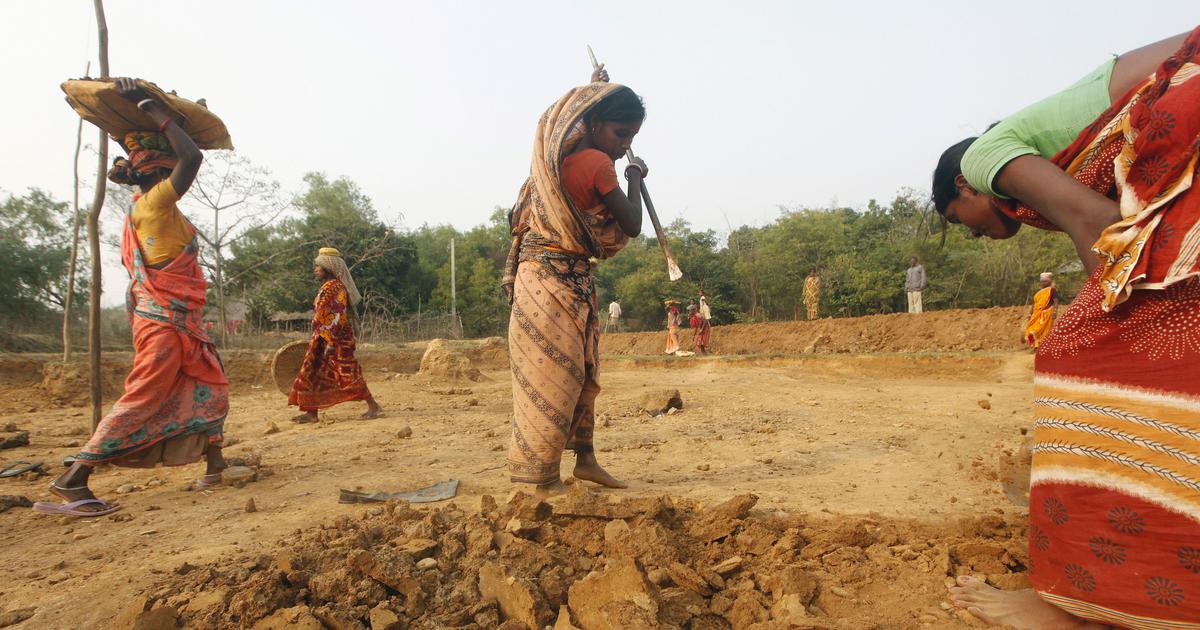
In a tragic turn of events, Maini Oraeen, a 51-year-old woman from Murkuni village in Jharkhand’s Ranchi district, passed away after falling ill while working under the scorching sun. She had been engaged in the construction of wells as part of the Mahatma Gandhi National Rural Employment Guarantee Act (MGNREGA). Her son, Vishwanath Oraon, reflects on the harsh reality faced by many families in rural India, stating, “My mother used to do MGNREGA work every year. It was a lifeline for us in the summer months, where there is not much else we can do.” He added, “It was not her time to die yet,” highlighting the intense pressure and vulnerabilities faced by laborers in these regions.
This incident underscores the critical role that MGNREGA has played in providing employment and financial stability for countless families in rural India. However, the landscape of rural employment is about to change. In December 2025, the Indian government introduced the Viksit Bharat Guarantee for Rozgar and Ajeevika Mission (Gramin), or VB-G RAM G, effectively replacing the long-standing MGNREGA program that has been in operation since its inception in 2006 under the previous United Progressive Alliance government.
The new VB-G RAM G scheme has sparked concerns among activists, experts, and the workers themselves. Many fear that the transition may lead to a reduction in employment opportunities and financial allocations that were previously secured under MGNREGA. The dynamics of rural labor in India are precarious, and workers like Vishwanath Oraon are apprehensive about the implications of this new law on their livelihoods.
For many rural families, MGNREGA was not just a source of income, but a vital support system during lean periods. With the promise of guaranteed work for at least 100 days a year, it provided a safety net against poverty. However, as the government shifts its focus with the new VB-G RAM G act, there are fears that this guaranteed work will dwindle, leaving many families in the lurch.
Critics of the new scheme argue that while it aims to promote more sustainable employment practices, the immediate impact may be detrimental for rural workers who have relied on MGNREGA for their daily survival. The shift could jeopardize the financial stability of countless families who depend on labor-intensive work during the dry months, making it essential for the government to address these concerns before implementing the new program.
As rural communities grapple with the potential consequences of VB-G RAM G, it is evident that the future of employment in these areas hangs in the balance. Policymakers must engage with affected communities to ensure that any new initiatives do not further marginalize those who are already vulnerable. Without careful consideration and strategic planning, the livelihoods of many could be at risk in the pursuit of new economic models.