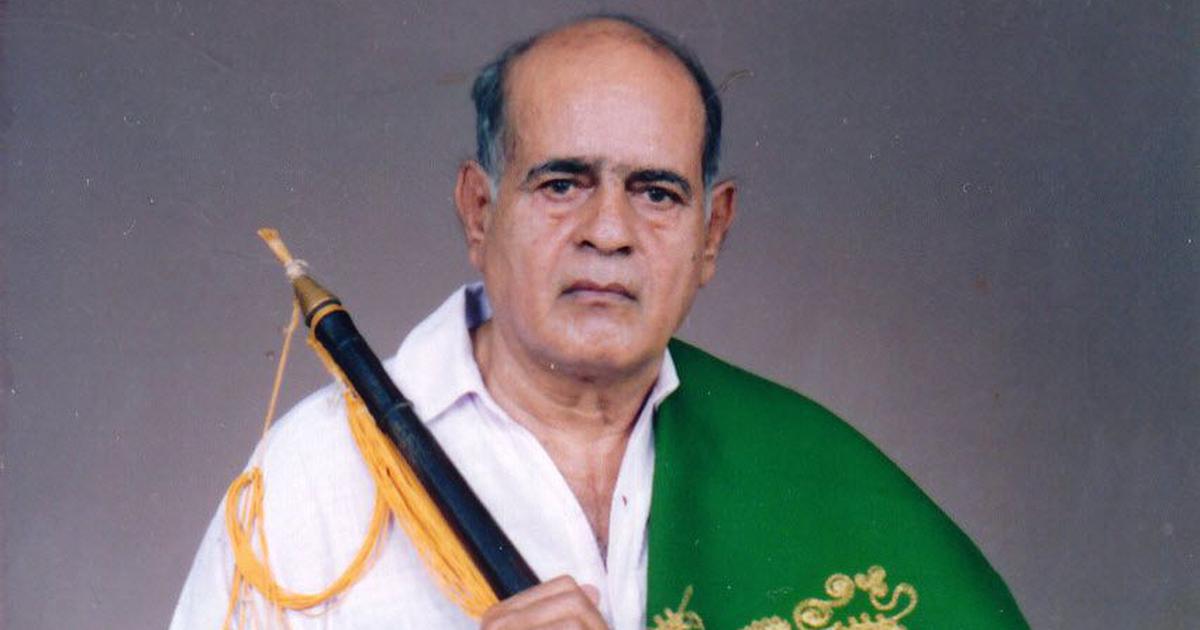
In the early 1950s, a talented nadaswaram musician from the small village of Karavadi near the Andhra coast faced a pivotal moment in his life. Born into a lineage of nadaswaram maestros that spanned nearly three centuries, this young artist stood to inherit a respected position as an asthana vidwan, a resident musician at the local Rama temple. His family had upheld this musical tradition for generations, cultivating a rich cultural environment. However, the allure of mastering the nadaswaram under the legendary TN Rajarattinam Pillai of Tamil Nadu proved too strong to resist.
Though his aspiration to learn directly from this iconic figure did not materialize, he did not lose hope. Instead, he sought out the disciples of Pillai—Ranjan and Duraikannu Pillai—in the town of Nachiarkovil, located in the Thanjavur district. This decision reflected not just a personal ambition, but also a commitment to preserving and advancing the art of nadaswaram, a traditional wind instrument integral to South Indian temple music.
By the early 1960s, driven by the promise of opportunities at All India Radio in Tiruchirapalli, he relocated to Srirangam, an island city renowned for its majestic Ranganatha temple. It was here that he began to carve out a legacy of his own, transforming his residence on Thangaiyan Street into a vibrant epicenter of cultural activity. His performances captivated audiences, blending traditional techniques with innovative interpretations, thus elevating the nadaswaram to new heights.
For decades, Sheik Chinna Moulana, as he came to be known, left an indelible mark on the musical landscape of India. His contributions extended beyond mere performance; they included nurturing young talent and enriching the temple music tradition with his unique style. His influence was profound, touching the hearts of countless musicians and music lovers alike.
Recently, in a heartfelt homage to this musical legend, Thangaiyan Street was renamed in his honor, 27 years after his passing. This tribute not only recognizes his legendary status but also reinforces the importance of cultural heritage and the bonds that exist between diverse communities in India. Sheik Chinna Moulana’s story is a testament to the power of music to bridge divides, showcasing how a musician from a Muslim background became a pivotal figure in a tradition deeply rooted in Hindu culture.