Supreme Court Orders Rajasthan to Compensate Convict with Rs 11 Lakh for Illegal Detention
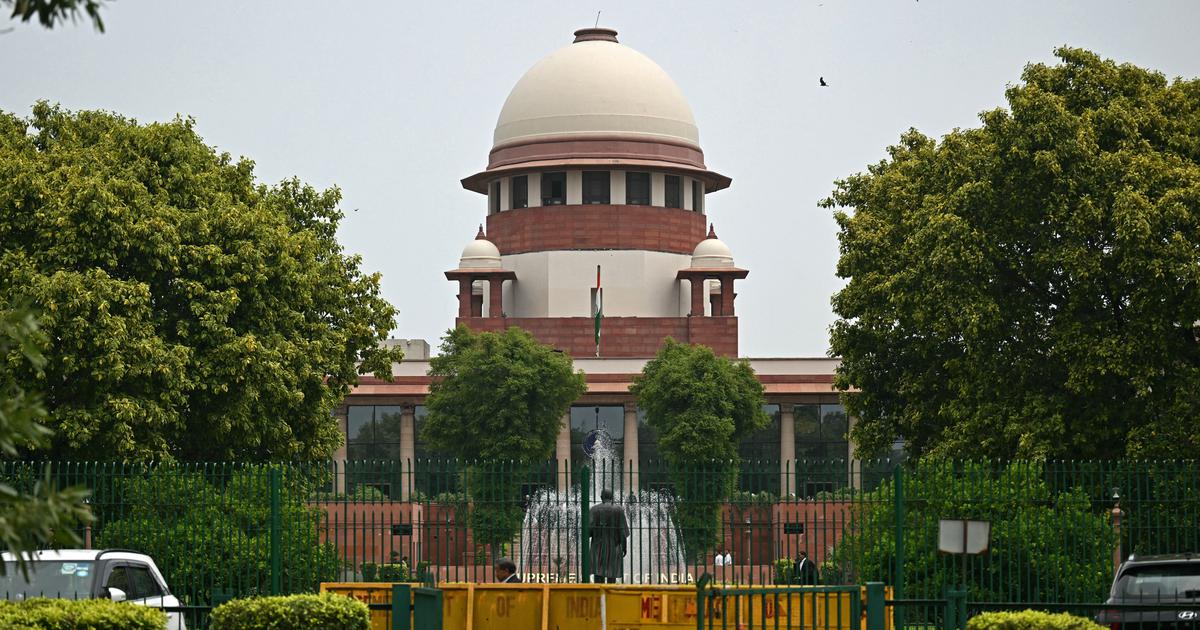
In a landmark ruling on Friday, the Supreme Court of India mandated the Rajasthan government to pay Rs 11 lakh to a convict who endured illegal detention for 24 days, despite a High Court order that permitted his release on parole. This decision underscores the sanctity of personal liberty and the imperative for authorities to adhere to judicial directives.
The Supreme Court bench, comprised of Justices Sanjay Karol and AG Masih, emphasized that the state cannot infringe upon an individual’s freedom simply based on bureaucratic deliberations regarding the potential challenge of a judicial order. “The liberty of an individual is not a trivial matter,” the judges remarked, reinforcing the principle that judicial orders must be honored unless suspended by a higher court.
The case revolves around Daudayal, who was convicted in 1988 for a crime dating back to 1967, which involved unlawful assembly and house trespass, among other charges. He was sentenced to four years of rigorous imprisonment. Despite being granted parole by the High Court, Daudayal found himself confined in prison for an additional 24 days—a situation deemed by the Supreme Court as clear illegal detention.
The court’s ruling serves as a crucial reminder of the rights of individuals even while serving sentences. The justices pointed out that the failure to comply with a judicial order not only undermines the rule of law but also questions the integrity of the justice system. Personal liberty, the court asserted, should never be compromised and must be protected vigilantly by the state.
This ruling has significant implications for how parole and judicial orders are managed in India. It stresses the need for judicial decisions to be implemented promptly and underscores the accountability of state authorities in respecting the rights of individuals. The awarded compensation is not just a financial remedy but also a recognition of the violation of Daudayal’s personal freedoms, reflecting the Supreme Court’s commitment to uphold justice in the face of bureaucratic negligence.