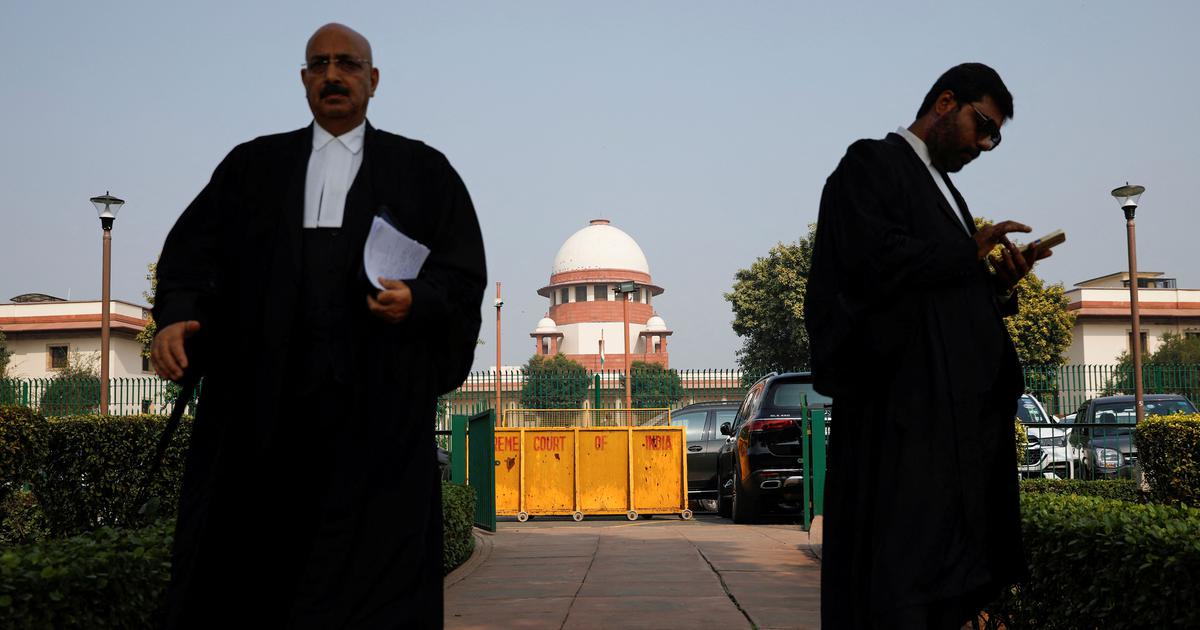
The Supreme Court of India has taken a significant step to scrutinize the Central Board of Secondary Education’s (CBSE) mandatory three-language policy for Class 9 students. This decision comes after concerns were raised regarding the potential pressure this requirement places on students, alongside logistical challenges in its implementation.
A circular released by the CBSE on May 15 stated that beginning July 1, all Class 9 students must study three languages, with a stipulation that at least two of these languages be Indian. This policy has sparked a debate about its feasibility and impact on the educational experience of students, particularly given the current academic landscape where students are already grappling with heavy workloads.
On Wednesday, a bench headed by Chief Justice Surya Kant expressed its intent to hear arguments from various stakeholders, including the CBSE, the Union government, and the National Council of Educational Research and Training (NCERT). This inquiry was prompted by petitions challenging the three-language directive, which advocates argue may not only burden students further but also highlight existing inadequacies in school infrastructure and teacher availability.
Advocate Mukul Rohatgi, representing the petitioners, articulated concerns about the additional academic pressure this policy would impose. He emphasized that students are already experiencing considerable stress from existing academic loads and peer expectations. The introduction of a mandatory third language for Class 10 certification could exacerbate these challenges. Despite assurances that assessments will remain internal and school-based, the additional requirement still raises questions about student readiness and support.
The bench initially suggested scheduling the hearing for June 15; however, at the request of Additional Solicitor General Aishwarya Bhati, it has been rescheduled to the second week of July. The decision to revisit this policy reflects a growing recognition of the complexities involved in implementing education reforms in India, especially in a system that must cater to diverse linguistic and cultural backgrounds.