The Supreme Court of India has recently directed the Election Commission to deliberate on a proposal that advocates for the inclusion of time stamps on Voter Verifiable Paper Audit Trail (VVPAT) slips. This directive was issued in response to a public interest litigation filed by a businessman, highlighting the importance of transparency and accountability in the electoral process.
The petitioner’s counsel argued that the current absence of time stamps creates a significant “physical audit gap,” particularly concerning incidents where a surge in voter turnout is witnessed during the final hours of polling. Such scenarios have raised questions about the integrity and authenticity of the voting process, especially when irregularities are reported. By implementing time stamps, the counsel believes that the evidentiary value of the VVPAT slips would be considerably strengthened, thereby enhancing public trust in election outcomes.
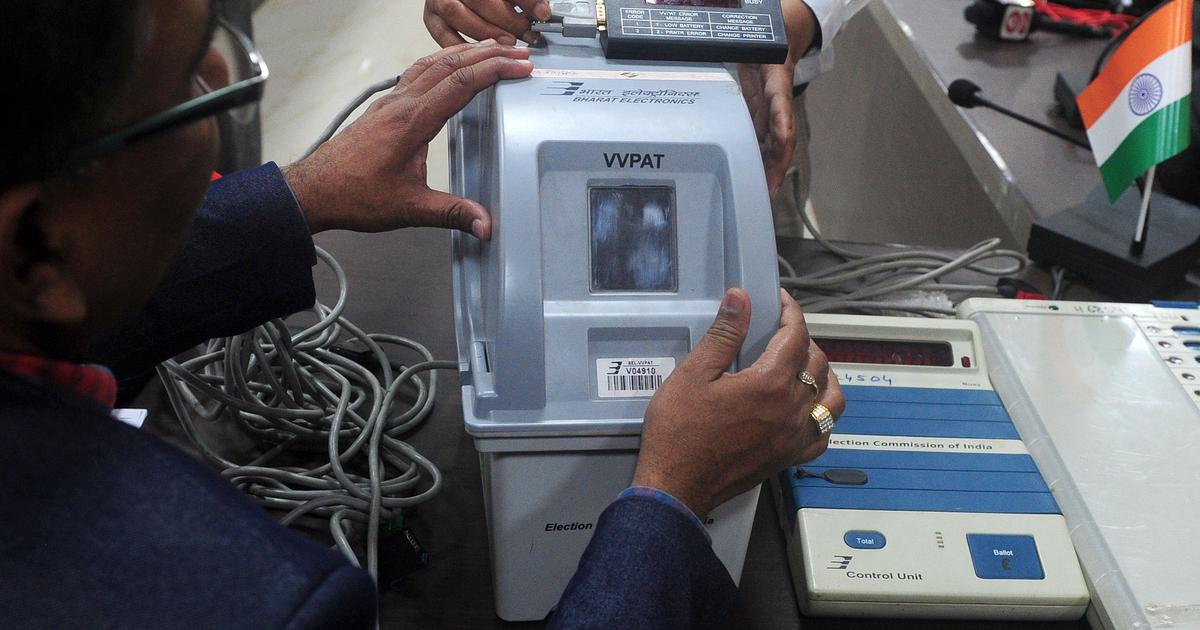
Introduced in 2013, VVPAT machines serve as a critical tool in Indian elections, allowing voters to verify that their votes are cast as intended. After a voter selects a candidate, the VVPAT machine prints a slip displaying the candidate’s name and symbol, which remains visible for a few seconds before being securely stored in a box. However, the current system lacks a crucial element—the precise time a vote is cast, which could significantly impact the resolution of disputes arising from peculiar voting patterns.
During the proceedings, the petitioner cited several instances where a sudden increase in voter turnout post-5 PM has led to widespread skepticism regarding the electoral process’s integrity. These concerns have prompted calls for greater accountability measures, and the inclusion of time stamps on VVPAT slips could address these issues effectively. “This simple addition could put to rest many doubts surrounding the electoral process,” the counsel emphasized before the court.
The discussion around time-stamping VVPAT slips is not merely a technical enhancement; it reflects a growing demand for electoral reforms that prioritize transparency and trust. The Election Commission has a critical role in ensuring that electoral processes remain robust and are perceived as fair by the electorate. As India prepares for future elections, the implications of this directive could lead to significant changes in how voting is monitored and verified, potentially setting a precedent for future electoral reforms.