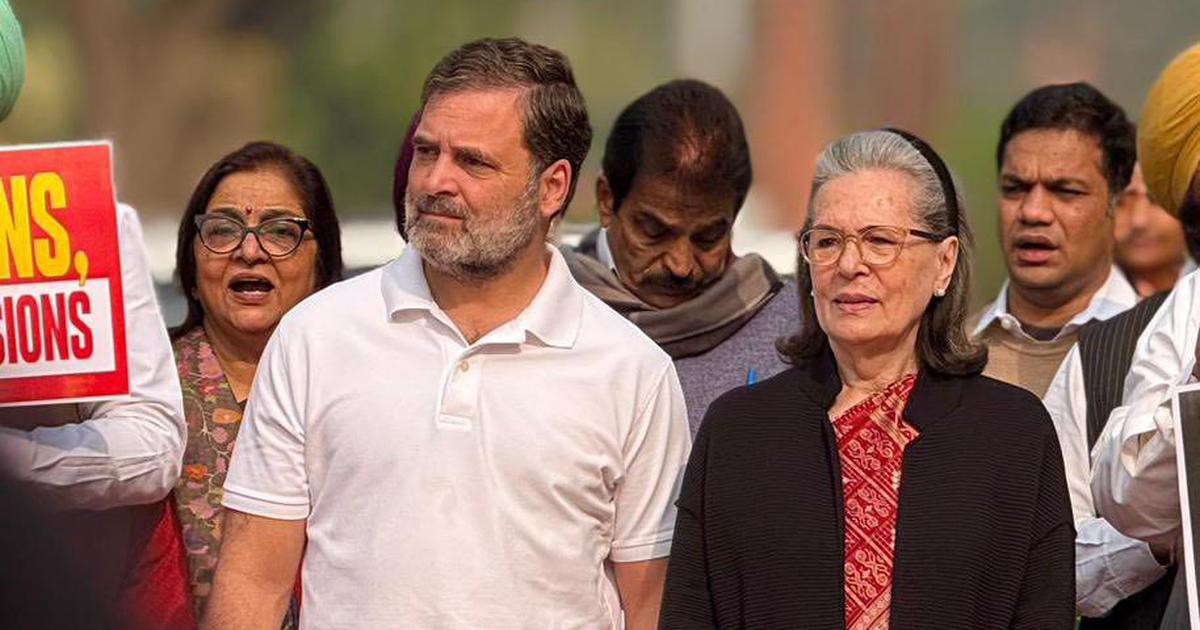
In a thought-provoking piece, historian and author Ramachandra Guha sheds light on the Congress party’s dwindling relevance in Indian politics, attributing its stagnation to an over-reliance on the Gandhi family. His article, titled “How the Gandhi family has helped Modi consolidate power,” has sparked a heated debate among readers about the party’s future and the state of leadership in India.
Many commentators express a sense of disillusionment with the current state of Congress. A reader named Gopinath Dombla articulates a common sentiment, noting that the party’s survival is inextricably linked to the Gandhi family. He voices a concern that without this political lineage, the party might fracture into competing factions, ultimately leading to its demise. Dombla underscores a larger issue — the lack of viable alternative leadership in the country, especially if the electorate wishes to move away from Prime Minister Narendra Modi’s administration.
Suchitra Ramani, another reader, echoes this sentiment, lamenting the absence of competent leadership within the Congress party. As a long-time supporter, her disappointment is palpable, revealing the internal struggle many Congress loyalists face. The question looms large: what alternatives do they truly have in a political landscape dominated by Modi’s Bharatiya Janata Party (BJP)?
However, not all readers agree with Guha’s assessment. One commentator, Shankar PS, argues that the criticisms leveled at Modi are steeped in bias and lack substantive backing. He points out that every major political party in India has faced accusations of misusing institutions, a narrative he feels is unfairly directed at the current government. According to him, the global economic turmoil should be acknowledged rather than used as a weapon against Modi’s leadership.
As the discourse unfolds, it becomes evident that the challenges facing Congress extend beyond individual leadership. The party’s inability to present a united front or a coherent alternative vision is exacerbated by internal strife and a lack of accountability that has historically plagued coalition governments in India. The shadow of corruption looms large, leading many Indians to question whether Congress can be a credible alternative to the BJP.
In the backdrop of these conversations, the pressing question remains: What does the future hold for the Congress party? With a national election on the horizon, the party must confront not only its leadership crisis but also the urgent need to reconnect with the electorate. A failure to address these issues could further entrench the BJP’s dominance in Indian politics. As citizens look for hope and direction, the call for a fresh, competent leadership grows louder, and the Congress must rise to meet this challenge or risk further marginalization.