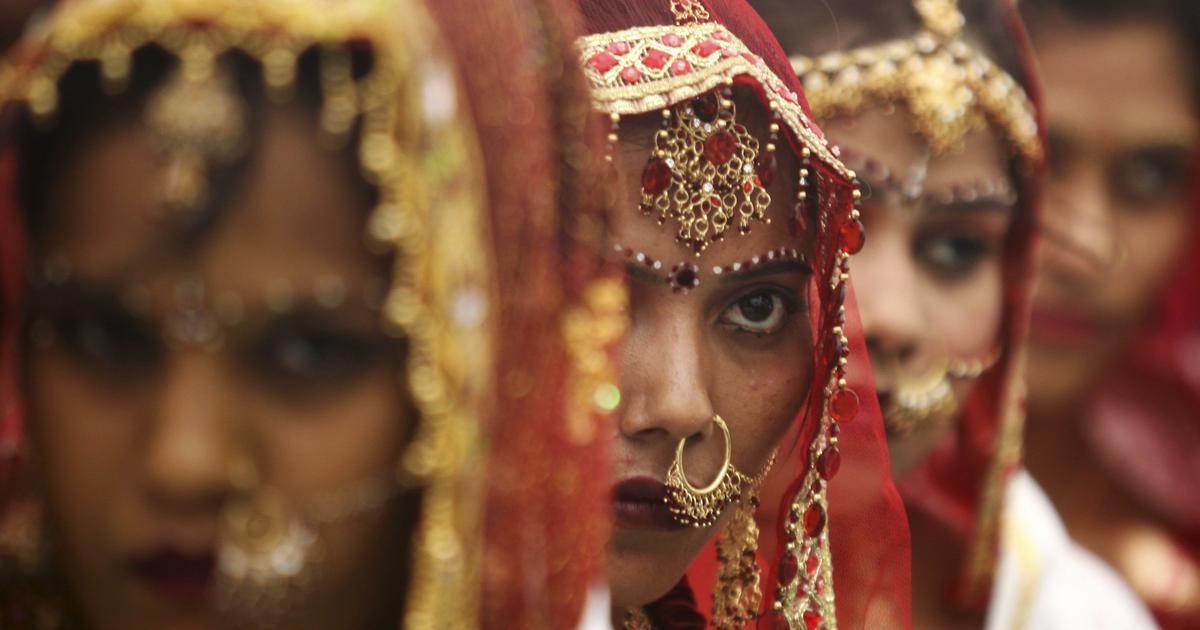
The ongoing discourse surrounding dowry deaths in India has resurfaced, with the tragic case of 33-year-old Twisha Sharma drawing significant attention. Found dead in her Bhopal home just six months after her marriage, Sharma’s demise has sparked a wave of similar incidents across the nation, prompting a critical examination of the dowry system and its implications for women’s safety in marital environments.
Sharma’s husband, Samarth Singh, and her mother-in-law, Giribala Singh—a retired judge—have been arrested following allegations made by her parents, who accuse the family of domestic abuse and persistent dowry demands. They contend that her death was not a suicide as claimed by her husband, but rather a brutal act of murder. This tragic event, reminiscent of the dowry-related ‘bride burning’ incidents that plagued North India in the late 20th century, has reignited discussions about systemic issues within the institution of marriage.
Historically, the late 1970s and early 1980s marked a pivotal moment in India’s women’s rights movement, with numerous cases of violence against newly-wed brides leading to legal reforms. Stricter laws were enacted to combat dowry-related violence, yet the prevalence of such incidents continues to raise alarming questions about the effectiveness of these measures and the deep-rooted cultural attitudes towards marriage.
Feminist scholar Mary E. John has emphasized the concept of “compulsory marriage” within Indian society, where marriage is seen as the only pathway to social legitimacy, stability, and security for women. This cultural imperative reinforces the idea that a woman’s value is intrinsically linked to her marital status, a belief that places immense pressure on individuals entering into unions. Even with legal protections in place, the notion that marriage is the ultimate goal persists, often at the expense of women’s autonomy and safety.
As India grapples with this perennial issue, the need for a cultural shift becomes increasingly urgent. Addressing the dowry problem requires not only stringent enforcement of existing laws but also a broader societal transformation that challenges traditional views on marriage. Conversations around gender equality, women’s rights, and the redefinition of societal norms must take center stage to eradicate the violence that stems from dowry demands. Only through collective effort can the cycle of violence be broken, allowing women to seek fulfillment beyond the confines of marriage.