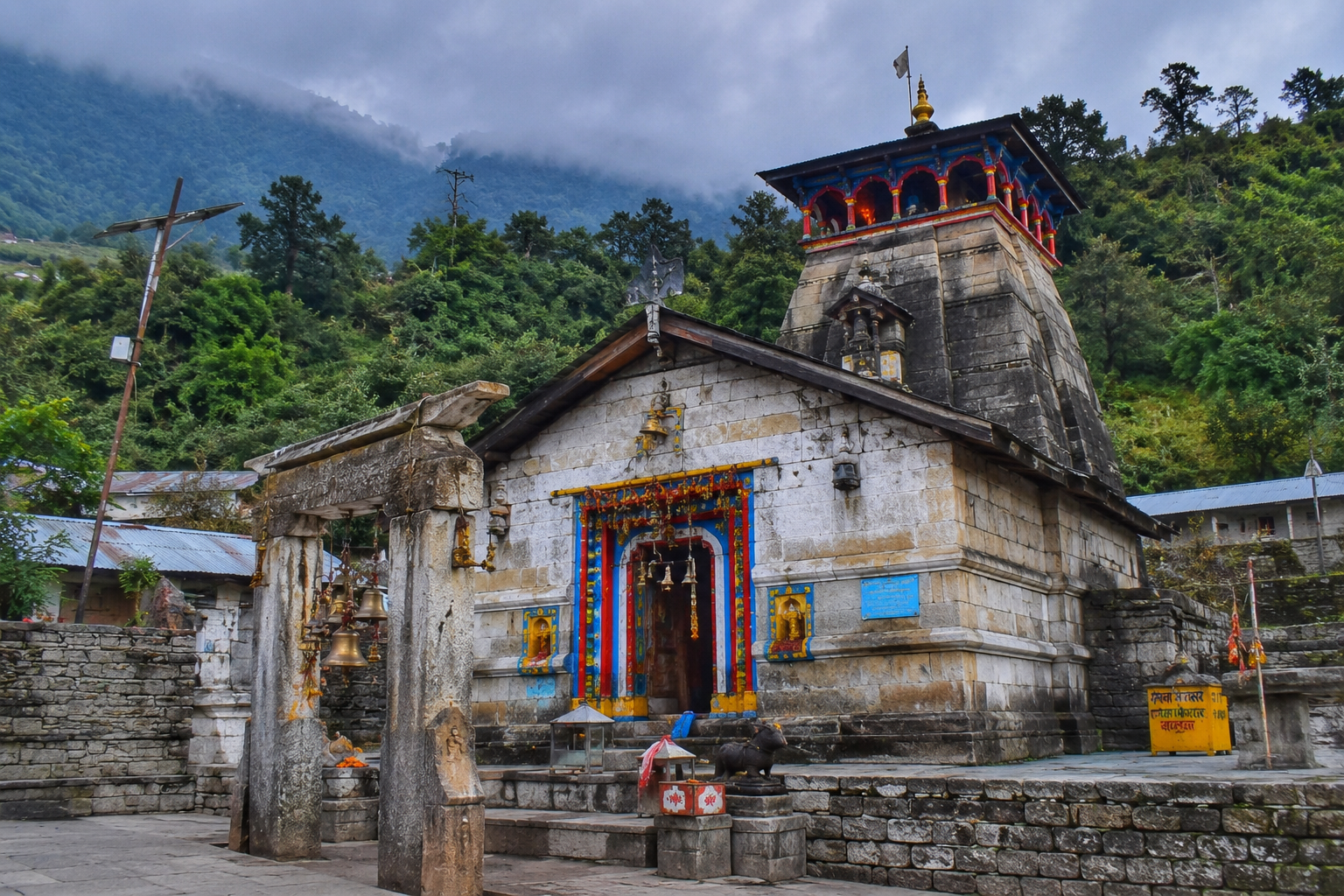
Nestled in the serene Garhwal Himalayas of Uttarakhand, the ancient Triyuginarayan Temple is regarded as one of India’s spiritually significant Hindu shrines. According to Hindu tradition, the temple marks the sacred site where Shiva married Parvati in the presence of Vishnu and Brahma.
Triyuginarayan Temple Nestled in the serene Garhwal Himalayas of Uttarakhand, the ancient Triyuginarayan Temple stands as one of India’s most spiritually significant Hindu shrines. Revered as the sacred venue where Lord Shiva married Goddess Parvati, the temple attracts pilgrims, spiritual seekers, and travelers from across the world. Surrounded by snow-capped mountains and peaceful valleys, the temple combines mythology, devotion, architecture, and natural beauty in a truly timeless setting.
Historical and Mythological Importance
According to Hindu mythology, Triyuginarayan is the divine site where Lord Shiva and Goddess Parvati were married in the presence of Lord Vishnu and Lord Brahma. It is believed that Lord Vishnu acted as Parvati’s brother during the ceremony, while Brahma performed the wedding rituals. The sacred fire that witnessed the celestial marriage is said to have been burning continuously ever since and is known as the Akhand Dhuni (eternal flame).
The temple’s name itself carries deep meaning:
Tri means three
Yugi refers to yugas or cosmic ages
Narayan is another name for Lord Vishnu
Thus, Triyuginarayan translates to “Lord Vishnu across three yugas,” symbolizing the eternal sanctity of the place.
Architecture of the Temple
The temple is believed to have been rebuilt or restored by Adi Shankaracharya around the 8th century CE. Architecturally, it resembles the famous Kedarnath Temple and follows the traditional North Indian Himalayan stone temple style.
Key Architectural Features
Constructed using massive stone blocks suited for harsh Himalayan weather
Features a traditional Nagara style tower (shikhara)
Houses silver idols of Lord Vishnu, Goddess Lakshmi, and Goddess Saraswati
Contains the sacred Akhand Dhuni fire pit in front of the temple
Includes the revered Brahma Shila, believed to mark the exact wedding spot of Shiva and Parvati
The temple complex also contains four sacred ponds or kunds:
Rudra Kund
Vishnu Kund
Brahma Kund
Saraswati Kund
These kunds are fed by a stream called Saraswati Ganga, believed to originate from the temple courtyard itself. Devotees consider the waters holy and spiritually purifying.
Religious Beliefs and Rituals
One of the most unique traditions associated with the temple is offering wood to the eternal flame. Pilgrims collect the sacred ash from the fire, believing it brings marital harmony, prosperity, and blessings for a happy married life.
In recent years, the temple has also become a popular wedding destination for couples seeking blessings associated with Shiva and Parvati’s eternal union.
Scenic Beauty and Tourism
Located at an altitude of approximately 1,980 meters above sea level, Triyuginarayan offers breathtaking Himalayan landscapes, peaceful surroundings, and a spiritually uplifting atmosphere. Many pilgrims visiting Kedarnath Temple also visit Triyuginarayan because of its close proximity to Sonprayag and Gaurikund.
Best Time to Visit
The ideal time to visit is between:
May to June
September to October
During winter, the region often experiences heavy snowfall.
How to Reach
Nearest Airport: Jolly Grant Airport, Dehradun
Nearest Railway Station: Rishikesh
By Road: Accessible via Rudraprayag, Sonprayag, and Gaurikund
The temple is around 12–14 km from Sonprayag and can be reached by local transport or trekking routes.
Conclusion
Triyuginarayan Temple is far more than a religious shrine; it is a living symbol of divine love, faith, and eternal devotion. Its sacred mythology, eternal fire, ancient Himalayan architecture, and tranquil surroundings make it one of the most extraordinary pilgrimage destinations in India. For devotees and travelers alike, a visit to Triyuginarayan offers not only spiritual fulfillment but also a deep connection to India’s timeless cultural heritage.