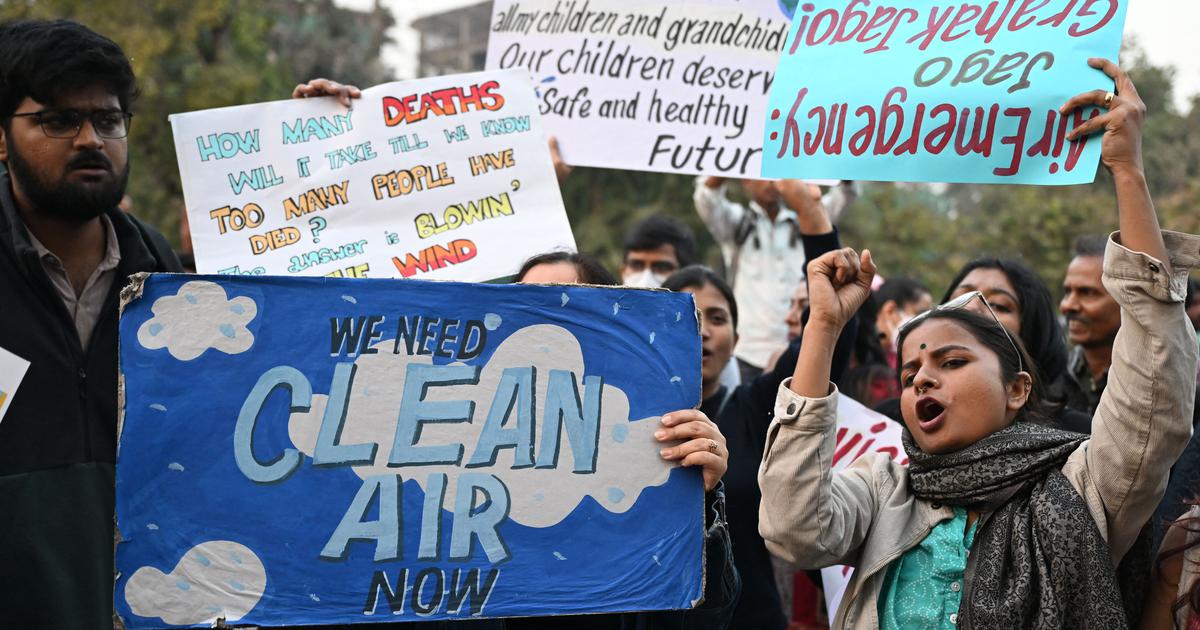
In a disheartening revelation regarding India’s ongoing struggle with pollution, a new book has highlighted that the Union Budget has once again failed to adequately address this pressing issue. The Ministry of Environment, Forest and Climate Change (MoEF&CC), which has been at the forefront of combating pollution, continues to operate in isolation, grappling with the monumental task of cleaning the air and water across the nation.
The MoEF&CC supports various initiatives like the Central Pollution Control Board (CPCB) and the Commission on Air Quality Management (CAQM). However, the lack of a comprehensive, multi-ministerial approach to tackle pollution is alarming. The only dedicated scheme from the MoEF&CC, known as Abatement of Pollution, was disbanded in the fiscal year 2020-21, leaving the ministry with a limited arsenal to combat environmental degradation.
Under the current government, the CPCB, which serves as the primary agency for pollution control, has seen a decline in its budget allocations over the years. Initially, during the first term of Prime Minister Modi, the CPCB’s funding saw a rise from ₹690 million in 2013-14 to ₹1.14 billion in 2018-19. However, the scenario has drastically changed in the second term. The financial support has stagnated, with allocations hovering around ₹1 billion for two consecutive years, followed by a slight increase to ₹1.16 billion in 2021-22, only to decrease to ₹970 million in 2022-23. The funding for the final year of Modi’s second term came in at a mere ₹1.05 billion, which is actually lower than what was allocated five years prior.
This downward trend in funding reflects a broader neglect of environmental issues by the central government. While other sectors have witnessed significant investments, pollution control continues to be treated as a secondary concern. The CPCB has struggled to maintain its operational efficiency, grappling with bureaucratic stagnation and a lack of innovative strategies to combat pollution effectively.
As India faces an alarming increase in pollution levels, particularly in metropolitan areas, experts argue that the government must adopt a more holistic approach to environmental management. This includes integrating initiatives across various ministries to create a united front against pollution. The time has come for the government to prioritize ecological health in its financial planning, ensuring that adequate resources are allocated to sustain and expand pollution control measures. Failure to act decisively now may result in dire consequences for public health and environmental integrity in the years to come.