Unraveling the Mystery of Vulcan: How a Hypothetical Planet Validated Einstein’s Gravitational Theories
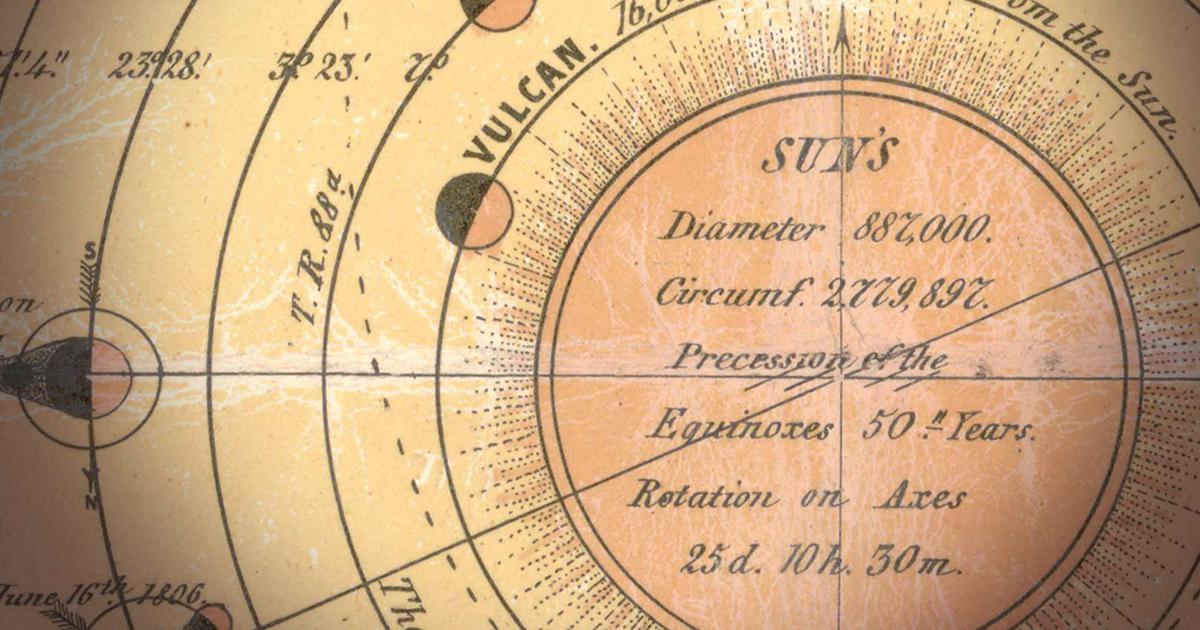
In the mid-19th century, the brilliant French mathematician Urbain Le Verrier made significant strides while exploring the cosmic dance of our solar system. Fresh off his success in predicting Neptune’s existence by analyzing the peculiar movements of Uranus, Le Verrier turned his keen intellect to the innermost planet, Mercury. He observed a perplexing phenomenon: Mercury’s orbit was advancing more rapidly than anticipated, particularly when it was at its closest point to the Sun. This mysterious advance, although seemingly minor, posed a challenge to the established Newtonian understanding of gravitational mechanics.
Le Verrier’s proposition was groundbreaking. He speculated that an undiscovered planet, which he named Vulcan, might exist closer to the Sun than Mercury itself. According to his theory, this hidden planet could be exerting gravitational forces on Mercury, causing the unexpected shift in its orbital path. The choice of the name ‘Vulcan’ was symbolic, named after the Roman god of fire, reflecting the planet’s proximity to the Sun and the challenges inherent in observing it.
In the years that followed, the scientific community was abuzz with excitement. Both amateur and professional astronomers embarked on quests to find Vulcan. They aimed to glimpse this elusive planet either during solar eclipses or as it transited across the face of the Sun, moments when the intense solar glare would be less obstructive. Despite their best efforts, the quest for Vulcan was fraught with difficulties; the Sun’s brightness proved to be a formidable barrier, obscuring any potential sightings of the supposed planet.
As time progressed and with advancements in astronomical techniques, the idea of Vulcan began to fade, especially with the advent of Einstein’s General Theory of Relativity in the early 20th century. Einstein’s revolutionary concepts provided a more profound understanding of gravity, explaining not just the movements of planets, but also the very fabric of spacetime. His theory suggested that gravity is not merely a force but a curvature of spacetime itself, fundamentally redefining our comprehension of the cosmos.
Ultimately, the mysterious advance in Mercury’s orbit was elegantly explained through this new lens of physics, rendering Le Verrier’s Vulcan unnecessary. The discoveries that unfolded in the wake of Einstein’s theories reshaped our understanding of planetary motion, affirming that some long-held beliefs could be overturned by innovative thinking and new scientific paradigms. While Vulcan may never have existed, its story is a testament to the relentless pursuit of knowledge and the evolution of scientific thought.