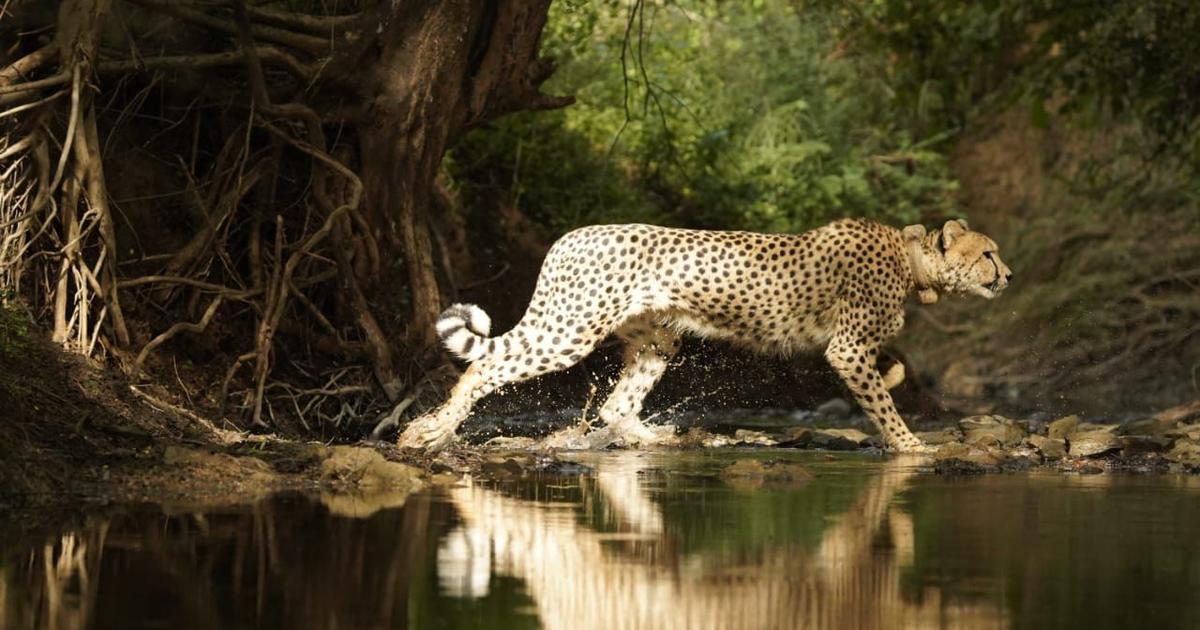
India’s bold initiative, Project Cheetah, is venturing into unexpected realms as one of its young male cheetahs, known as KP-2, recently made headlines by traversing over 150 kilometers from Kuno National Park to the famed Ranthambore Tiger Reserve in Rajasthan. This remarkable journey not only highlights the adventurous spirit of KP-2 but also raises critical questions regarding the long-term success of the rewilding project.
KP-2 is no stranger to long-distance wanderings. His recent escapade, however, took him deep into the heart of Ranthambore, a popular tourist destination, where he was spotted alongside a tiger and a leopard, making for an extraordinary sighting known as a “triple sighting.” This rare occurrence brought excitement to wildlife enthusiasts and photographers, showcasing the biodiversity that thrives in the region. Such sightings serve as a testament to the ecological richness of these parks, which now feature a blend of Africa’s fastest land animal alongside India’s own majestic fauna.
For over a month, KP-2 explored the terrains of Ranthambore, a period in which he attempted to assert his territory. However, the allure of the wilderness proved challenging, leading to his eventual capture and return to Kuno National Park shortly before Madhya Pradesh Chief Minister Mohan Yadav’s recent visit. This intervention highlights the complexities involved in managing wildlife populations that are re-adapting to their natural habitats.
KP-2 is part of a cohort of male cheetahs, all sub-adult siblings, who are in a crucial phase of their lives where exploration is vital for their development. Reports indicate that another sibling, KP-3, has also migrated towards the Dholpur area in Rajasthan, suggesting that these cheetahs are not only adapting but are also actively seeking their own territories—a vital behavior for their survival in the wild.
Project Cheetah, which officially commenced in September 2022, aims to restore the population of cheetahs in India, decades after the Asiatic cheetah was declared extinct in the country. By introducing African cheetahs to Indian landscapes, conservationists hope to bolster biodiversity and revive ecosystems that have historically supported these agile predators. However, the recent movements of KP-2 and KP-3 signal a need for ongoing management and monitoring of these animals as they navigate their new environments.
As the project unfolds, the wandering behaviors of these cheetahs will be closely observed, shedding light on their adaptability and the challenges they face in a landscape that is rapidly changing due to human activity and climate factors. The excitement surrounding their journeys intertwines with concerns about their safety and the sustainability of their habitats.