War Impact on Pharmaceutical Industry: Rising Costs and Supply Chain Concerns Affect Global Pharma Market
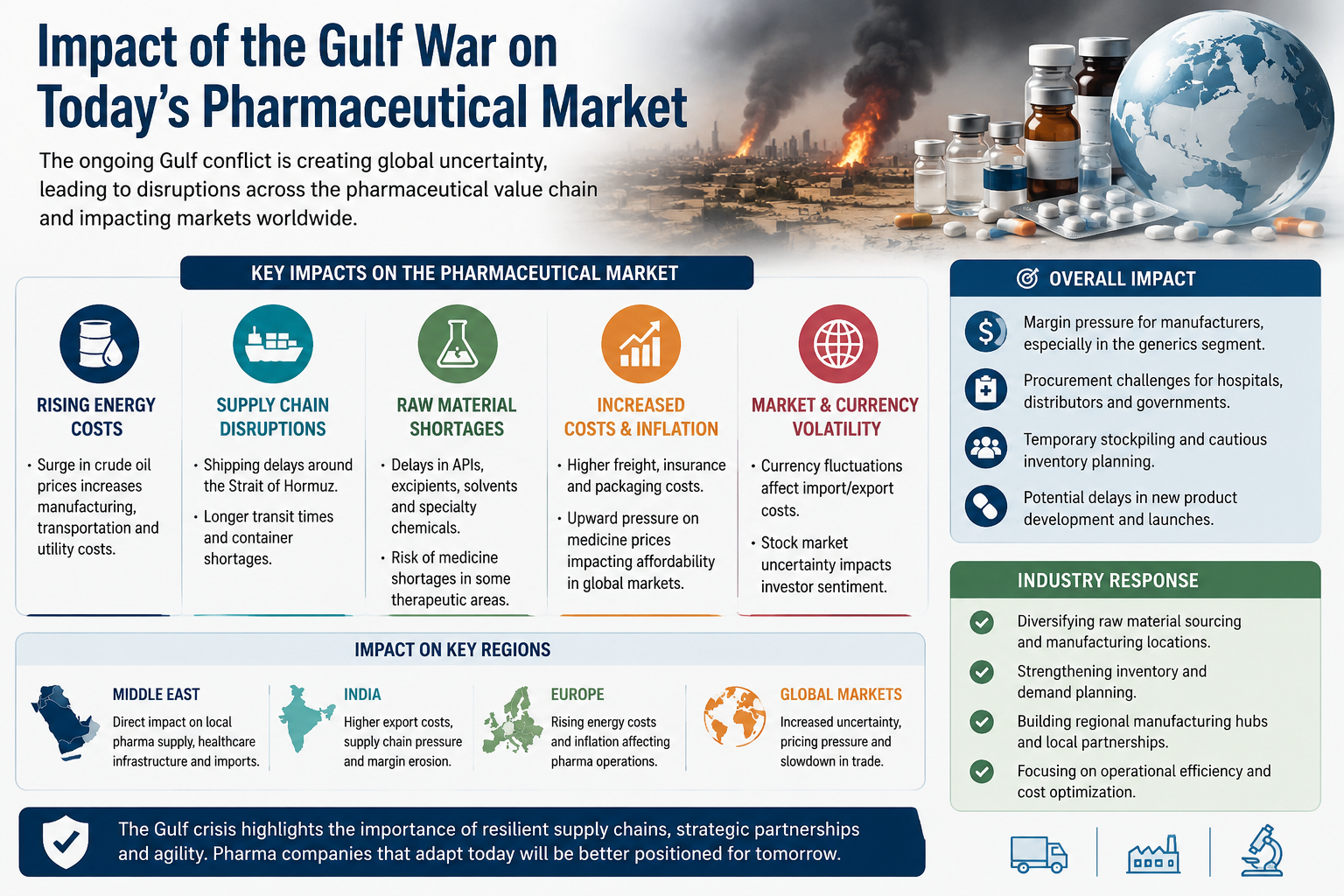
The ongoing geopolitical tensions in the Gulf region have created uncertainty across several global industries, including the pharmaceutical sector. Industry experts say the current situation is contributing to supply chain disruptions, rising operational costs, inflationary pressure, and logistical challenges for pharmaceutical manufacturers in multiple countries.
One of the major concerns for the pharmaceutical industry is the possible disruption to international shipping and energy supply routes, particularly around the Strait of Hormuz, an important global trade corridor. Rising crude oil prices have affected transportation expenses, packaging materials, chemical intermediates, and manufacturing utilities, all of which play a key role in pharmaceutical production.
The pharmaceutical sector depends heavily on international supply chains for Active Pharmaceutical Ingredients (APIs), excipients, solvents, packaging materials, and specialty chemicals. Industry observers note that disruptions in shipping routes and longer transit times may lead to delays in raw material procurement and export operations.
India, one of the world’s largest suppliers of generic medicines, could also face challenges related to increased freight costs, container shortages, higher insurance expenses, and currency fluctuations. Pharmaceutical companies are reportedly dealing with rising energy costs, which may impact manufacturing operations and profit margins, particularly in the generic medicine segment where pricing flexibility is limited.
According to industry representatives, increased costs of raw materials and packaging materials have added pressure on medicine manufacturing. Some manufacturing units have reportedly reduced production capacity, adjusted working hours, or temporarily scaled down shifts in response to operational challenges. However, there is no official nationwide confirmation regarding large-scale factory shutdowns.
Despite the current uncertainty, healthcare experts believe the long-term demand outlook for pharmaceuticals remains strong. Global demand for medicines continues to grow, particularly in emerging markets across Asia, Africa, and Latin America.
Analysts suggest that the present situation may encourage pharmaceutical companies to strengthen localized manufacturing capabilities, diversify supply chains, and improve long-term operational resilience.