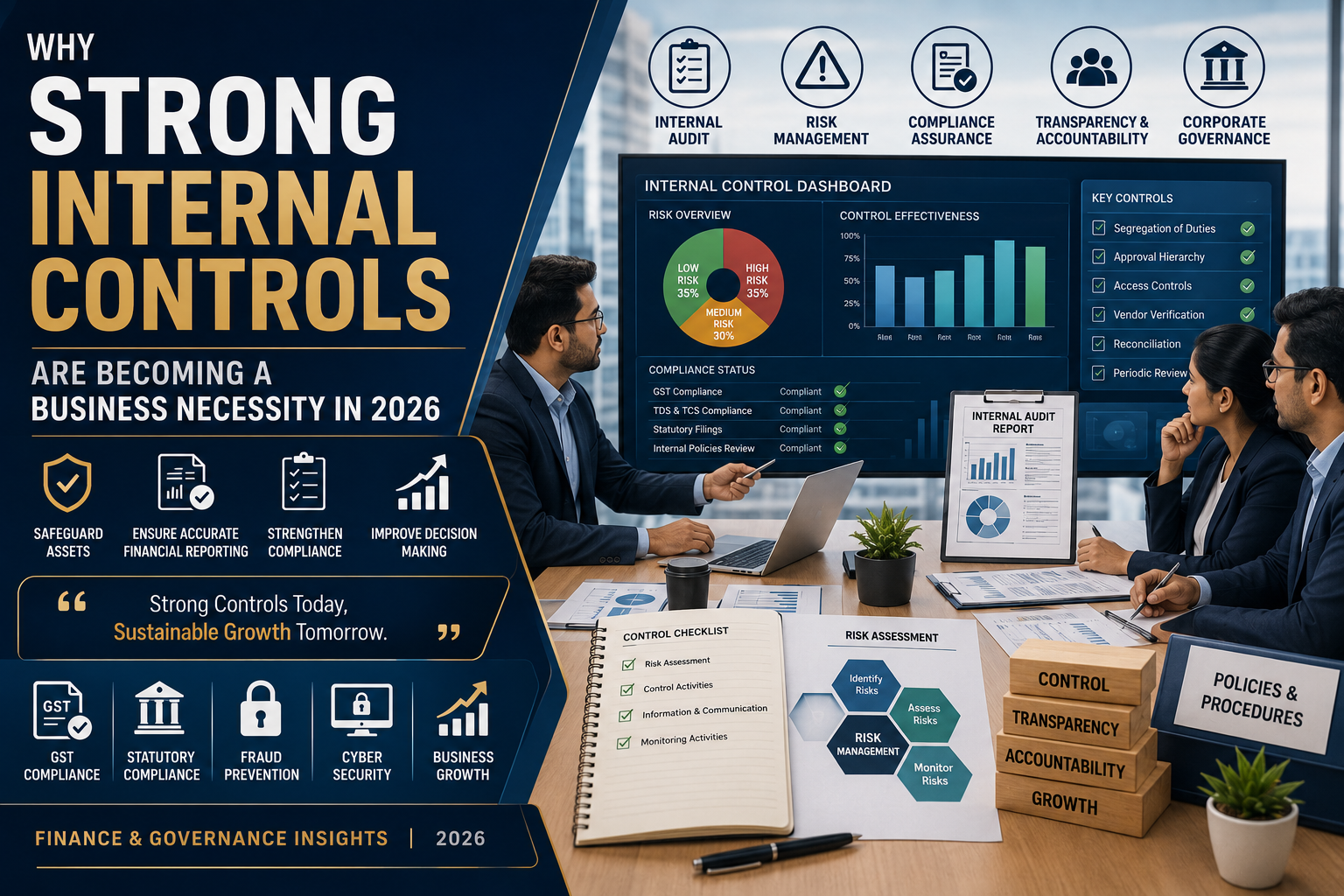
In today’s rapidly evolving regulatory environment, businesses are facing increasing scrutiny from tax authorities, regulators, investors, and financial institutions. As a result, strong internal controls are no longer viewed merely as a compliance requirement but as a critical component of sustainable business operations.
Recent instances of financial fraud, GST discrepancies, cyber risks, and corporate governance failures have highlighted the growing importance of effective control mechanisms. Organizations with weak operational processes often face challenges such as revenue leakages, unauthorized transactions, compliance penalties, data security concerns, and operational inefficiencies.
Robust internal controls help businesses safeguard assets, maintain accurate financial reporting, strengthen regulatory compliance, and improve decision-making processes. Key focus areas typically include segregation of duties, approval hierarchies, vendor verification, inventory management controls, statutory compliance monitoring, cybersecurity measures, and periodic internal audits.
For growing businesses and SMEs, implementing a structured internal control framework can significantly enhance stakeholder confidence and reduce long-term business risks. Financial institutions, lenders, and investors are also increasingly evaluating governance standards and compliance systems before extending financial support or investment.
Industry experts believe that organizations with strong internal controls are better positioned to respond to market uncertainties, regulatory changes, and operational disruptions. In a competitive business environment, effective governance practices also contribute to improved transparency and long-term credibility.
As businesses continue to expand and adapt to changing market conditions, investing in strong internal controls is no longer just about preventing losses—it is about building a foundation for sustainable growth, operational efficiency, transparency, and long-term success.