A Ship Never Truly Dies
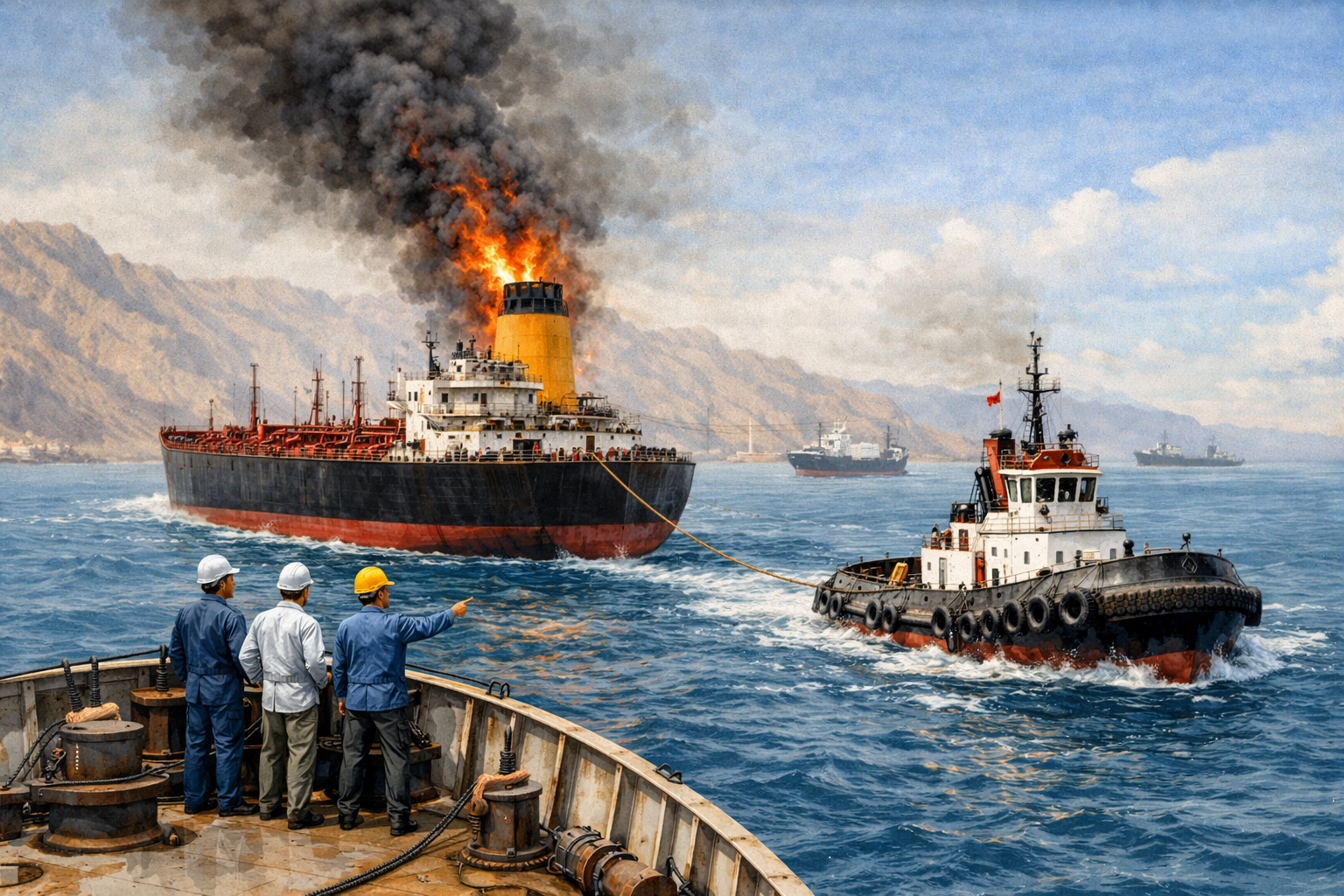
The maritime world has witnessed acts of destruction and recovery that seem almost beyond belief. One such extraordinary case is that of the Sea Wise Giant—a vessel far larger than the Titanic and capable of carrying an astonishing 564,763 tons of crude oil. Severely damaged by Exocet missile strikes during the Iran-Iraq conflict, she sank in the shallow waters off Iran’s Kharg Island. Few could have imagined that such a colossal wreck would ever sail again. Yet, against all odds, the vessel was refloated by a Norwegian salvage company, towed to Singapore, and painstakingly restored at the Keppel shipyard. After extensive repairs and conversion, she was recommissioned in 1991 as TT Jahre Viking—a powerful testament to human ingenuity and perseverance.
I witnessed a similarly remarkable episode during the same conflict. The Iranian cargo ship MV Iran Shojjat, laden with sugar and bound for the port of Bushehr, came under attack by Iraqi jets. The assault was devastating. Missiles tore through her structure, leaving the accommodation block melted and deformed, while the engine room lay in ruins—its switchboards, generators, and machinery reduced to twisted debris. At first glance, the ship appeared beyond redemption.
But the sea often tells a different story. Within six months, after extensive repairs in Singapore, Shojjat was restored to seaworthiness. What seemed like a total loss became a powerful example of resilience—both of ships and the industry that sustains them.
Indeed, ships often find second lives in unexpected ways. Some are transformed into static establishments, serving as floating hotels, museums, or restaurants. The Italian passenger liner Augustus, for instance, was converted into a floating hotel after her retirement. With hundreds of rooms, dining spaces, and event facilities, she continues to serve people—not as a vessel of transport, but as a place of experience and memory.
Even the process of scrapping, commonly viewed as the end of a ship’s life, is in reality a beginning of another kind. A dismantled hull becomes raw material for new vessels. Machinery is refurbished and reused. Steel, cables, and components find their way into new maritime creations. In essence, a ship is not destroyed—it is transformed.
Among the most fascinating transformations I have witnessed is the conversion of a tanker into a self-unloading vessel. The process begins chaotically, with teams of workers stripping the ship of cables and piping. Yet beneath this apparent disorder lies a precise and coordinated operation. While one team dismantles the old, another prepares prefabricated sections—sometimes an entirely new forebody—to be fused with the existing structure. In a dramatic phase of reconstruction, the vessel is stabilized, cut apart, and reassembled into a new form, ready for another chapter at sea.
Thus, whether through salvage, conversion, repurposing, or recycling, ships rarely meet a true end. They evolve, adapt, and endure.
In the final reckoning, one truth stands firm: a ship never truly dies—it simply changes its form.
Novin Christopher