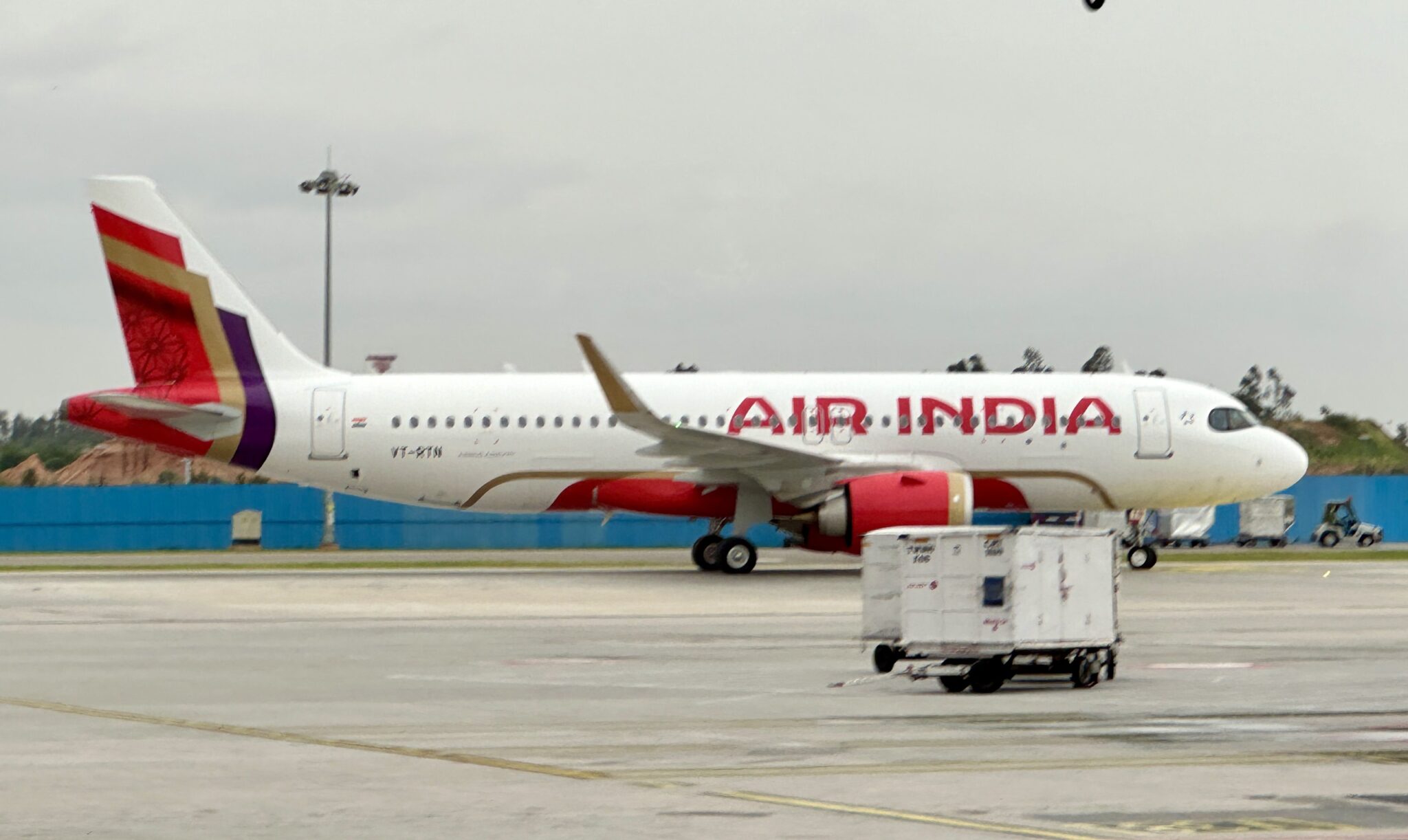
An Air India (AI) Airbus A320 Neo operating flight AI 2812 from Chhatrapati Shivaji Maharaj International Airport, Mumbai (BOM) to Kempegowda International Airport, Bengaluru (BLR) on 9 April 2026 declared a “PAN PAN” alert over the radio as Engine 2 stalled shortly after takeoff, officials familiar with the incident confirmed.
The aircraft, originally scheduled to depart at 2:05 AM, took off at approximately 2:15 AM and returned to Mumbai (BOM) at around 2:35 AM, less than 20 minutes after leaving the runway.
Passengers on board flight AI 2812 reported hearing a loud sound and seeing sparks during takeoff. Following these abnormal signs, the pilots of Air India (AI) declared “PAN PAN” — an internationally recognized urgency code used when a serious situation exists that does not immediately threaten the aircraft or those on board but requires priority assistance.
According to the official information available, “there was a sound heard and sparks seen while taking off. The pilot declared PAN PAN and returned to the airport a few minutes after take off,” an official aware of the incident, who requested anonymity.
The official further confirmed that Engine 2 of the A320 Neo had stalled, prompting the crew’s decision to return to Mumbai (BOM).
A PAN PAN declaration is one step below a full MAYDAY call in aviation emergency protocols. It signals an urgent situation that is serious and requires assistance, but does not pose an immediate, life-threatening danger.
Pilots use the call to alert air traffic control and ground services to prepare for the aircraft’s return or diversion, ensuring priority clearance and standby emergency services on arrival.
Incident Timelines:
The incident involved Air India flight AI 2812, operated by an Airbus A320 Neo aircraft. The flight was on a scheduled early-morning service from Mumbai (BOM) to Bengaluru (BLR).
The aircraft took off approximately 10 minutes behind schedule at 2:15 AM and returned to Mumbai (BOM) at around 2:35 AM — completing a turnaround in roughly 20 minutes.
Passengers on board were reported to have been shaken during the takeoff phase when the abnormal sounds and sparks were observed. The aircraft was brought back safely, and passengers were subsequently transferred to another aircraft to complete their journey to Bengaluru (BLR).
The flight was operated by Airbus A320-251N (A320neo), registered as VT-TNK. Further, it is an 8-year-old aircraft powered by two CFM LEAP-1A engines.
What an Engine Stall Means:
An engine stall, in the context of a jet aircraft, typically refers to a compressor stall — a disruption in airflow through the engine’s compressor section that can cause a loss of thrust and, in some cases, produce loud bangs or visible sparks from the engine exhaust.
On the Airbus A320 Neo, CFM LEAP-1A engines power the Air India (AI) fleet variant, which differs from the Pratt and Whitney-powered aircraft used by other Indian carriers.
Engine 2 — the right-hand engine — experienced this stall condition shortly after takeoff. The crew followed standard operating procedures, declared PAN PAN, and returned the aircraft to Mumbai (BOM) without further incident.
Incidents involving in-flight engine stalls and PAN PAN declarations fall within the oversight of India’s Directorate General of Civil Aviation (DGCA).
The regulator typically launches an investigation to determine the root cause, assess whether the airline followed established procedures, and evaluate whether any systemic aircraft maintenance issues contributed to the event.
Air India (AI) has confirmed that passengers were safely rerouted to their destination after a change of aircraft.
The flight took off again using another Airbus A320neo, registered as VT-ATV, which was previously operated by Vistara Airlines. It features a special TATA SIA Airlines Retro livery. Further, it is an over 7-year-old aircraft powered by two CFM LEAP-1A engines.