Akshayanagar in Begur is witnessing growing frustration among residents as deteriorating road conditions and persistent drainage leaks continue to disrupt daily life. Locals allege that despite repeated complaints, the Bruhat Bengaluru Mahanagara Palike (BBMP) has failed to take timely action, raising concerns over public safety, sanitation, and infrastructure management in one of Bengaluru’s rapidly developing residential zones.
The issue has intensified in recent weeks, particularly following intermittent rainfall, which has worsened already damaged roads and exposed underlying drainage problems. Residents say the combination of deep potholes and leaking sewage lines has made commuting hazardous and living conditions increasingly unsanitary.
Civic Neglect in a Growing Residential Hub
Akshayanagar, located in the southern part of Bengaluru near Begur, has seen significant urban expansion over the past decade. With a rising population and increasing number of residential complexes, the demand for robust civic infrastructure has grown accordingly. However, residents argue that development has not been matched with adequate maintenance.
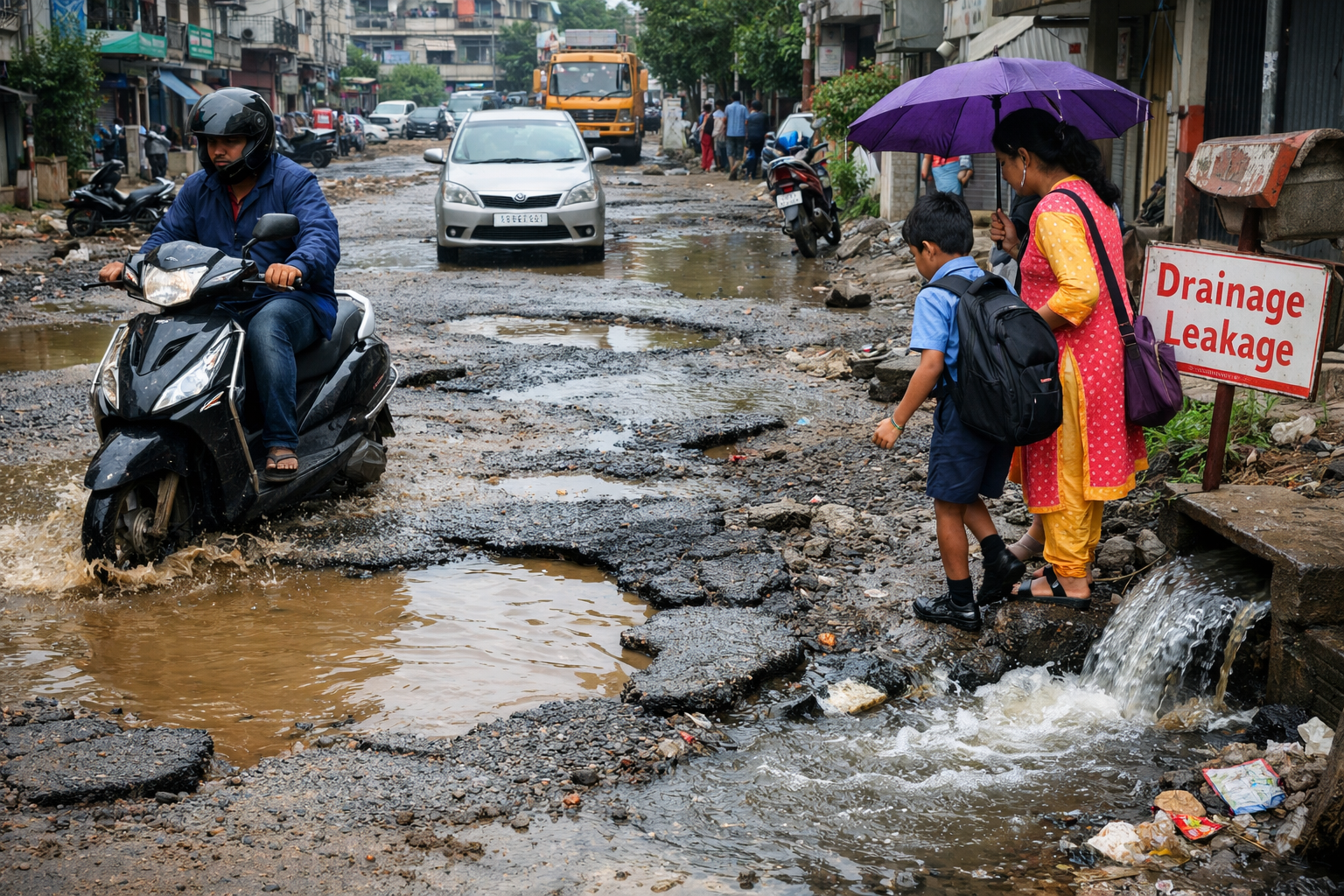
Multiple stretches of internal roads are reportedly riddled with potholes, some large enough to cause vehicle damage and accidents. Commuters, including school buses and delivery vehicles, are forced to navigate uneven terrain daily. According to locals, these issues have persisted for months without proper repair work.
Adding to the concern are frequent drainage leaks, with sewage water overflowing onto streets in several pockets. Residents claim that these leaks not only produce foul odors but also pose serious health risks, especially for children and the elderly.
Residents Voice Safety and Health Concerns
For many residents, the situation has moved beyond inconvenience to become a pressing safety issue. Two-wheeler riders are particularly vulnerable, with several near-miss incidents reported due to concealed potholes filled with rainwater. Pedestrians also face difficulty navigating streets where drainage water has mixed with mud, creating slippery surfaces.
Health concerns are equally alarming. Stagnant sewage water is seen as a breeding ground for mosquitoes and bacteria, increasing the risk of vector-borne diseases such as dengue and chikungunya. Residents say they are forced to keep windows closed due to the stench, affecting overall quality of life.
Several apartment associations in the area have reportedly submitted complaints through BBMP’s grievance portals and local ward offices. However, many claim that responses have either been delayed or limited to temporary fixes that do not address the root of the problem.
BBMP Under Scrutiny
The BBMP, responsible for maintaining civic infrastructure in Bengaluru, is now facing criticism for what residents describe as a lack of proactive intervention. While officials have occasionally conducted patchwork repairs, locals argue that these measures are short-lived and fail to withstand even moderate rainfall.
Experts point out that recurring potholes and drainage leaks often indicate deeper structural issues, such as poor road construction quality, inadequate drainage planning, or lack of regular maintenance. Without addressing these underlying causes, temporary repairs are unlikely to provide lasting relief.
Civic activists have also highlighted the need for better accountability mechanisms within BBMP. They argue that public funds allocated for road maintenance must be utilized transparently and efficiently, especially in areas experiencing rapid urban growth.
Impact on Daily Life and Local Economy
The ongoing infrastructure issues are not only affecting residents but also local businesses. Delivery delays, reduced foot traffic, and vehicle damage have added to operational challenges for small vendors and service providers in the area.
Real estate sentiment may also take a hit if the situation persists. Akshayanagar has been considered a promising residential locality due to its connectivity and affordability. However, prolonged civic issues could deter potential buyers and investors, impacting property values.
Parents of school-going children have expressed concern over the safety of daily commutes, while working professionals report increased travel time due to poor road conditions. For many, what was once a convenient neighborhood is becoming increasingly difficult to navigate.
What Residents Demand Next
Residents are now urging BBMP to undertake comprehensive road resurfacing and permanent drainage repairs rather than relying on temporary fixes. They are also calling for regular inspections, improved complaint resolution timelines, and better coordination between civic departments.
Some community groups are considering escalating the issue through social media campaigns and formal petitions to higher authorities. The demand is clear: immediate and sustainable action to restore basic infrastructure and ensure public safety.
Conclusion
The situation in Akshayanagar highlights the broader challenges of urban infrastructure management in rapidly growing cities like Bengaluru. Without timely intervention from BBMP, the problems of potholes and drainage leaks risk escalating further. Residents now await decisive action that goes beyond short-term repairs and delivers lasting solutions.