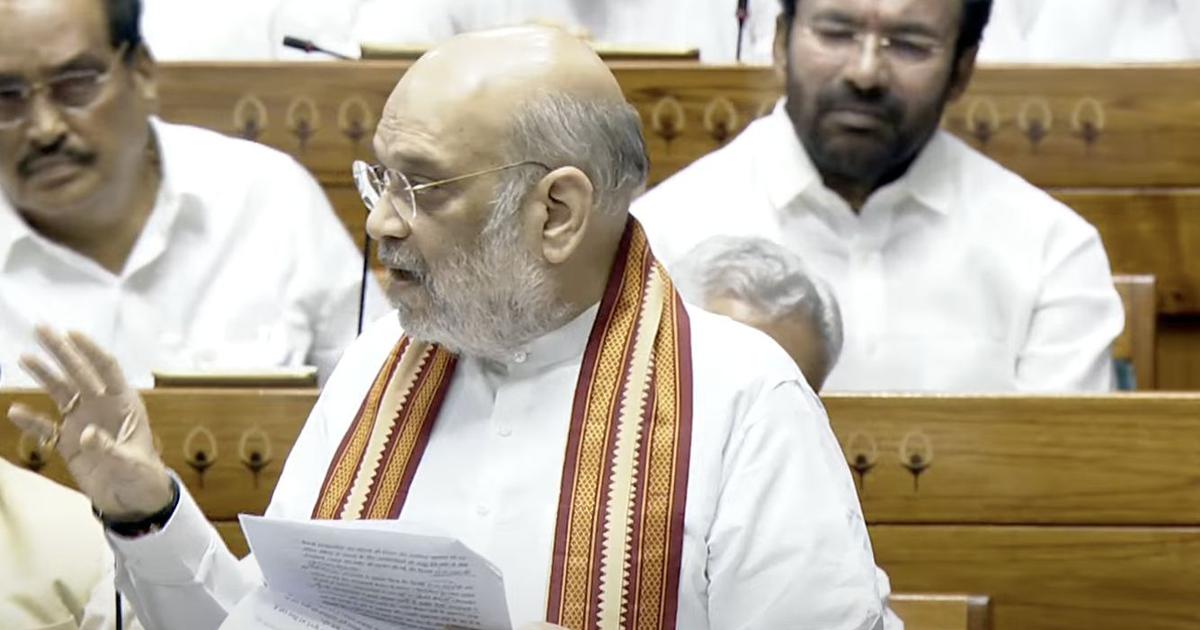
In a bold statement made during the Lok Sabha session on Monday, Union Home Minister Amit Shah announced that India has effectively rid itself of Maoist violence, marking a significant milestone in the nation’s long-standing battle against left-wing extremism. Shah confidently articulated that the Union government had set a target date of March 31 for the elimination of Maoism, claiming that this ambitious goal has been successfully achieved.
During his address, Shah provided a detailed account of the Union government’s proactive measures against Maoist insurgents, revealing that between 2024 and March 2025, security forces had neutralized 706 Maoists in intense gunfights. In addition, he reported that 2,218 Maoist operatives were apprehended and 4,839 surrendered. This comprehensive offensive has reportedly decimated key Maoist leadership in regions notably affected by the insurgency, including Telangana, Maharashtra, and Chhattisgarh.
Among the notable successes highlighted by Shah were the elimination of high-profile Maoist leaders such as Ganesh Uike and Madvi Hidma. The Home Minister emphasized the central government’s unwavering commitment to countering Maoist influence, mentioning that operatives like Vikas Nagpure, known as Anant, and Mallojula Venugopal Rao, also referred to as Bhupathi, have voluntarily surrendered to authorities. Such developments signal a decline in Maoist activity and a potential turning point in the government’s counter-insurgency operations.
However, while Shah’s assertions paint a picture of success, they come amidst rising scrutiny and skepticism from various quarters. Critics, including civil liberties organizations and opposition parties, have raised concerns regarding allegations of “fake encounters” involving alleged Maoists. Reports from journalists, such as Malini Subramaniam, have detailed incidents where community members assert that individuals killed in these encounters were not militants but civilians, which raises serious questions about the government’s narrative and operational conduct.
As the government celebrates these reported gains, it faces the challenge of addressing the broader implications of its tactics in the fight against extremism. The narrative of success must be balanced with accountability and transparency in operations to ensure that the rights of citizens are upheld. The ongoing dialogue on security measures versus human rights remains crucial as the country moves forward in its efforts to combat insurgency and restore peace.