Assam CM Himanta Biswa Sarma Accuses Congress of Using Pakistani Sources Against His Wife
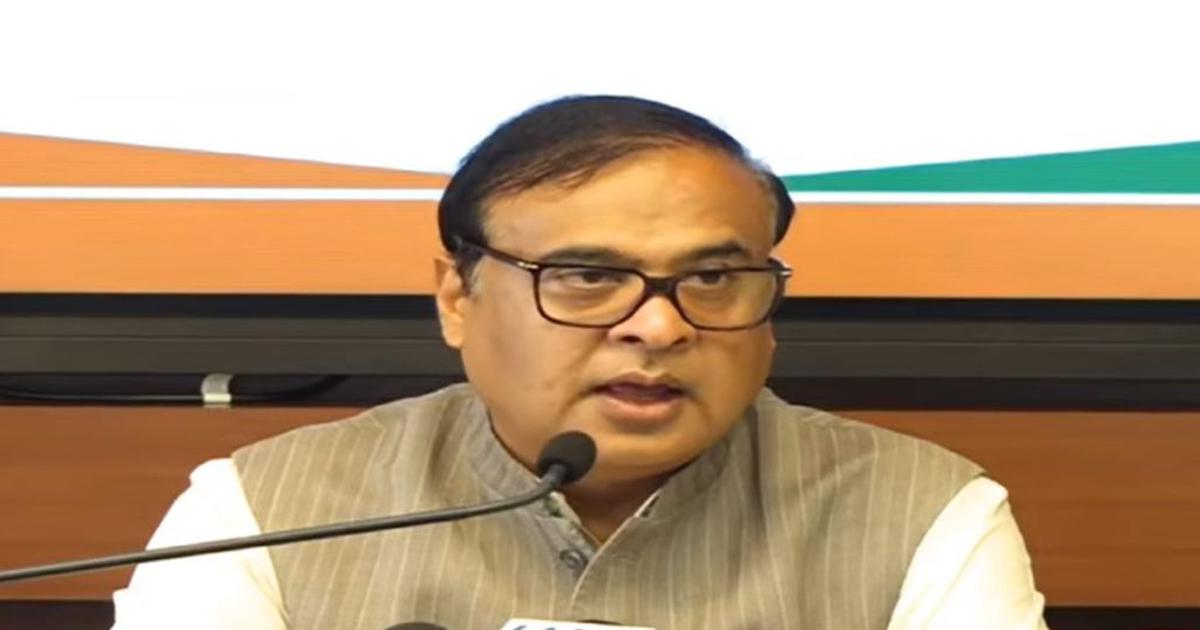
In a startling revelation, Assam Chief Minister Himanta Biswa Sarma has accused the Indian National Congress of sourcing its claims about his wife’s alleged possession of foreign passports from a Pakistani online group. This claim comes as the political climate in Assam heats up ahead of the crucial assembly elections, where public sentiment is increasingly pivotal.
During a press conference on Monday, Sarma highlighted a concerning trend in media coverage, noting that a Pakistani channel has conducted at least 11 talk shows in the last ten days focusing on the Assam elections—an occurrence he deemed unprecedented. He stated, “In each of these discussions, the overarching conclusion is that the Congress should emerge victorious. The connection between the Congress’s recent press conference and Pakistani sources has become unmistakable.” This allegation adds a new dimension to the already charged political atmosphere in the state.
This controversy ignited on Sunday when Congress spokesperson Pawan Khera presented what he described as documentary proof indicating that Riniki Bhuyan Sarma, the chief minister’s wife, holds passports from three nations: the United Arab Emirates, Egypt, and Antigua and Barbuda. Sarma quickly dismissed these allegations, labeling them as “malicious, fabricated, and politically motivated lies.” He emphasized his and his wife’s resolve to pursue legal action against Khera for the claims, which they argue are baseless.
The timing of these accusations appears strategic, coinciding with the assembly elections scheduled for Thursday, with results set to be announced on May 4. The BJP leader asserted that his wife has already filed a first information report regarding the issue, signaling their intent to take the legal battle seriously. He remarked, “When someone presents fraudulent documents to the public, it is imperative to take action against them.”
This incident highlights the escalating tensions between the ruling Bharatiya Janata Party (BJP) and the opposition Congress in Assam, amid an increasingly polarized political landscape. As parties vie for voter support, the role of digital media and external influences in shaping public opinion becomes a critical point of discussion. The implications of using foreign sources to undermine political opponents could have significant ramifications, raising questions about the integrity of political discourse in the region.