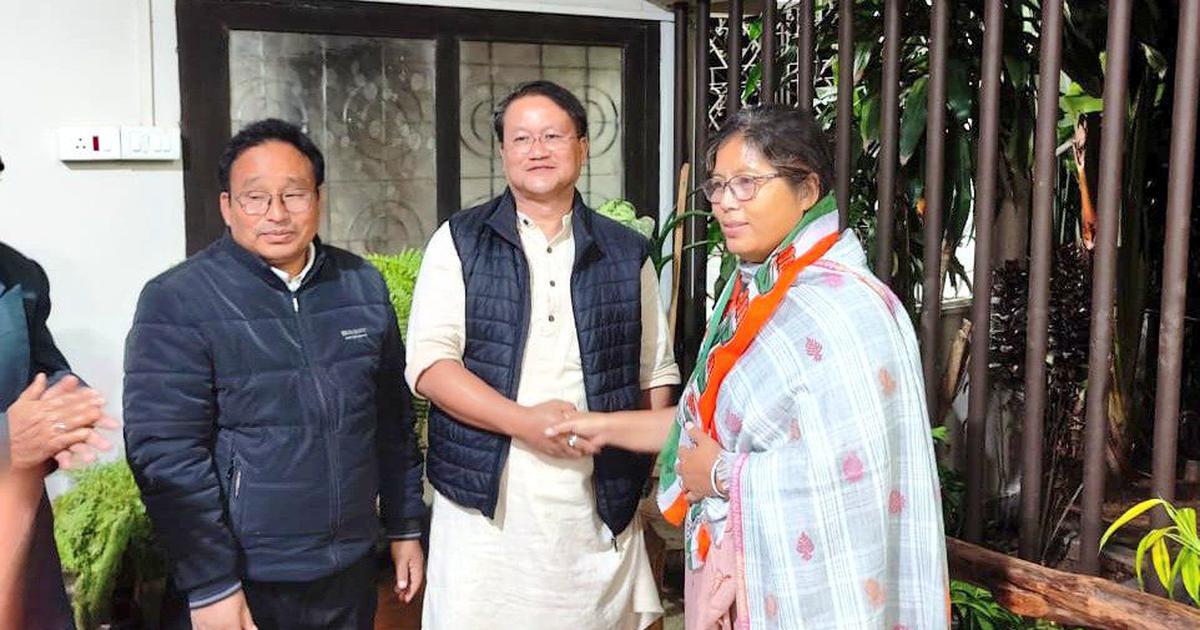
In a significant political shift in Assam, Nandita Gorlosa, the state’s Minister for Sports and Youth Welfare, officially joined the Indian National Congress on Sunday. This move comes shortly after the Bharatiya Janata Party (BJP) declined to grant her a ticket for the upcoming Assembly elections. Gorlosa’s resignation from both the BJP and her ministerial position occurred just hours before her transition to the Congress party.
The Congress party has indicated that Nirmal Langthasa, who was initially slated to contest from the Haflong Assembly constituency, will step aside to accommodate Gorlosa as the party’s candidate. This decision underscores the Congress’s commitment to supporting a leader who has demonstrated resilience and dedication in her political journey.
Gorlosa’s tenure in the Assam Assembly began with a victory in the 2021 elections, where she represented the Haflong constituency. Her decision to leave the BJP highlights ongoing tensions within the party, especially as it prepares for the elections scheduled for April 9, with ballot counting set for May 4. The BJP has put forth Rupali Langthasa as their candidate for Haflong, signaling a renewed focus on this pivotal constituency.
Jitendra Singh, the Congress leader overseeing the party’s operations in Assam, praised Gorlosa for her unwavering commitment to the people of Dima Hasao district. Singh remarked that over the past five years, Gorlosa has been a significant voice for her constituents, standing firm on her beliefs despite facing personal and political challenges. This narrative of resilience is likely to resonate with voters as the political landscape heats up.
The political dynamics in Assam are rapidly evolving as parties gear up for the Assembly elections. Gorlosa’s decision to join Congress not only adds to the party’s strength in the region but also raises questions about the BJP’s internal strategies and candidate selections. As the election date approaches, the spotlight will remain on both the Congress and the BJP to see how these changes influence voter sentiment and campaign strategies.