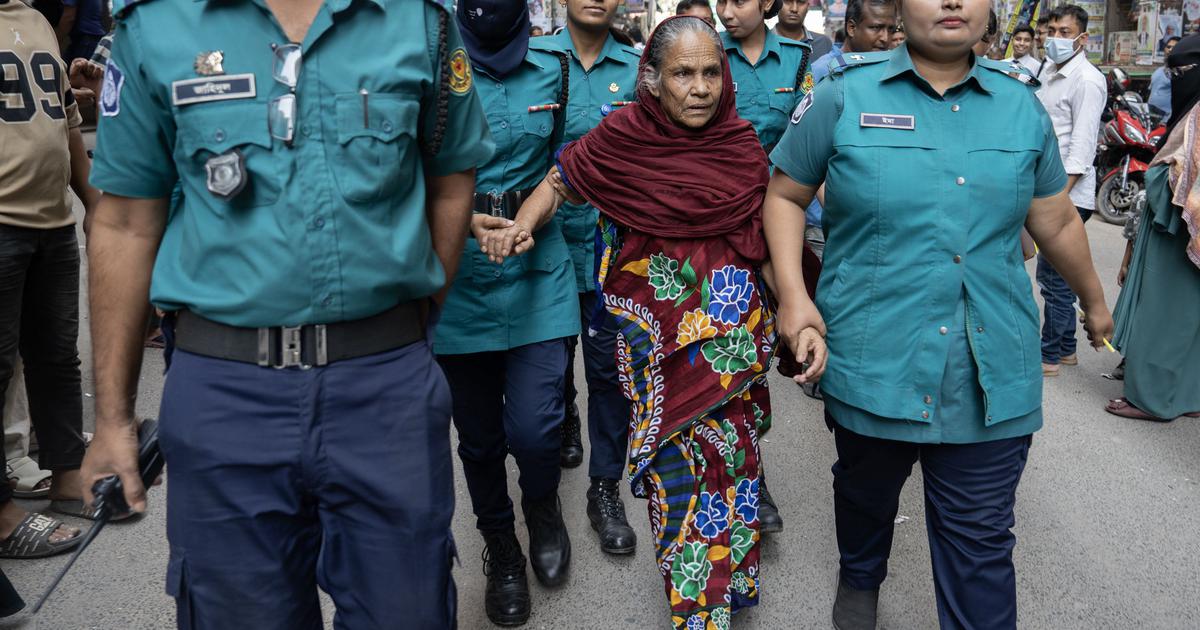
In a poignant tale of displacement and resilience, 69-year-old Sakina Begum finds herself stranded in Bangladesh, far from her home in Nalbari, Assam. Her journey began last year, when she was apprehended and taken to a detention center, only to be forcibly pushed across the border into Bangladesh. This distressing narrative highlights the challenges faced by many indigenous people in the region.
Last June, Sakina was discovered by Jakia Begum and her daughter, Klanti Akhtar, in a vulnerable state on a roadside in Dhaka. The elderly woman was soaked from the rain, visibly distressed, and nursing an injured hand. Klanti, who has lived in Dhaka’s Mirpur locality her entire life, had never heard of Nalbari. Intrigued and concerned for the stranger, the duo took Sakina in, hoping to provide her some comfort.
Once they arrived home, curiosity compelled Klanti to search for Nalbari online, only to uncover that it lies in Assam, India, not far from the border. This revelation added layers of complexity to their encounter, marking the beginning of a series of questions that would remain unanswered for Sakina. The elderly woman struggles to piece together her journey, recalling only fragments of her ordeal, particularly the traumatic experience of being taken from a police station to a notorious detention center in Matia.
Sakina’s memories grow hazy from that point onward. She remembers being transported across the border near Dhubri district, but the details of her journey to Dhaka remain unclear. The chaos of her circumstances and the despair of separation from her homeland weigh heavily on her. Despite her uncertainty, she managed to board a bus, asking the conductor to take her to Nalbari—a request that ultimately led her to the bustling streets of Dhaka, over 500 kilometers away.
The plight of Sakina Begum raises significant questions about the treatment of indigenous populations in India and the implications of border control policies. Many individuals from Assam and neighboring regions have faced similar fates, caught in the crossfire of political tensions and strict immigration laws. As the global community watches, stories like Sakina’s serve as reminders of the human cost associated with enforced migration and identity struggles.