In today’s democratic landscape, the belief that a minority or small community cannot succeed in elections due to limited population is not only outdated but also misleading. Democracy is not dictated solely by numbers—it is shaped by leadership, credibility, vision, and the ability to connect with people across communities.
Across Assam and the wider Northeast India, there are several powerful examples that break this myth. Moni Kumar Subba, a leader from a relatively small community, proved this by winning the Tezpur Lok Sabha seat three consecutive times between 1998 and 2004 as a Congress MP. His victories clearly demonstrate that public trust and leadership qualities can transcend demographic limitations.
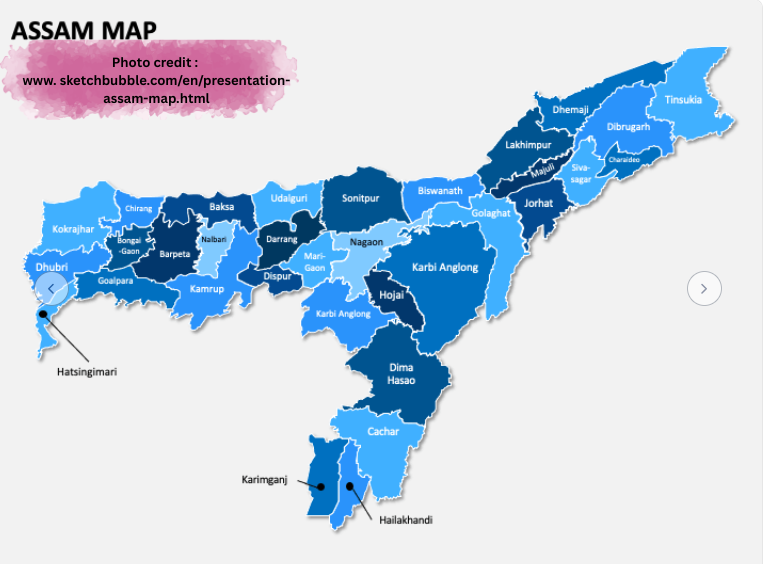
Similarly, Kartik Sana Sinha from Patherkandi, Assam and Birjit Sinha from Tripura have shown how leadership and grassroots connection can rise above the constraints of community size. Kartik Sana Sinha has been elected once to the Assam Legislative Assembly, winning the 2006 election from the Patharkandi constituency, and is now contesting in the upcoming Assam elections.
Notably, Birjit Sinha has been elected to the Tripura Legislative Assembly six times, representing the Kailashahar constituency. He holds the distinction of achieving the highest number of representations in that constituency by an individual. His electoral victories in 1988, 1998, 2003, 2008, 2013, and 2023—primarily under the banner of the Indian National Congress—stand as a strong example of sustained public trust and leadership beyond demographic limitations.
At the same time, historical records remind us that representation of smaller communities has been possible and meaningful in the past. Prominent Manipuri leaders such as N. Bidyapati Singh, Merachaoba Singh, Subhankar, and Kutub Ahmed Mazumder were elected as MLAs and, in some cases, held ministerial responsibilities in Assam. Alongside them, Kazi Kutub Uddin Ahmed, who was elected from the Lakhipur constituency in 1978, and Nurul Huda, a prominent leader of the Communist Party of India (Marxist), who served as both Member of Parliament (MP) and Member of Legislative Assembly (MLA) from Silchar and was recognized as a frontline leader in the Assam Assembly, also made significant contributions.
However, despite a population estimated at over 6 lakh in Assam, community bodies such as the World Meetei Council and organizations like the National Manipuri Progressive Front have increasingly raised concerns about the lack of direct Manipuri-speaking representation in the state legislature in recent decades. This gap highlights not a limitation of the community, but a challenge that calls for renewed political participation, unity, and strategic engagement.
For small communities like the Manipuris in Assam and across the Northeast, the message is clear: the past has already proven what is possible. The future now depends on breaking mental barriers and stepping forward with confidence.
The time has come to move beyond old-school thinking. Small communities must think big, act boldly, and build inclusive leadership. True democracy thrives when capable leaders rise above identity barriers and represent the aspirations of all people, not just their own community.