Business Administration and Economic Development How Efficient Management Systems Drive Sustainable Economic Growth
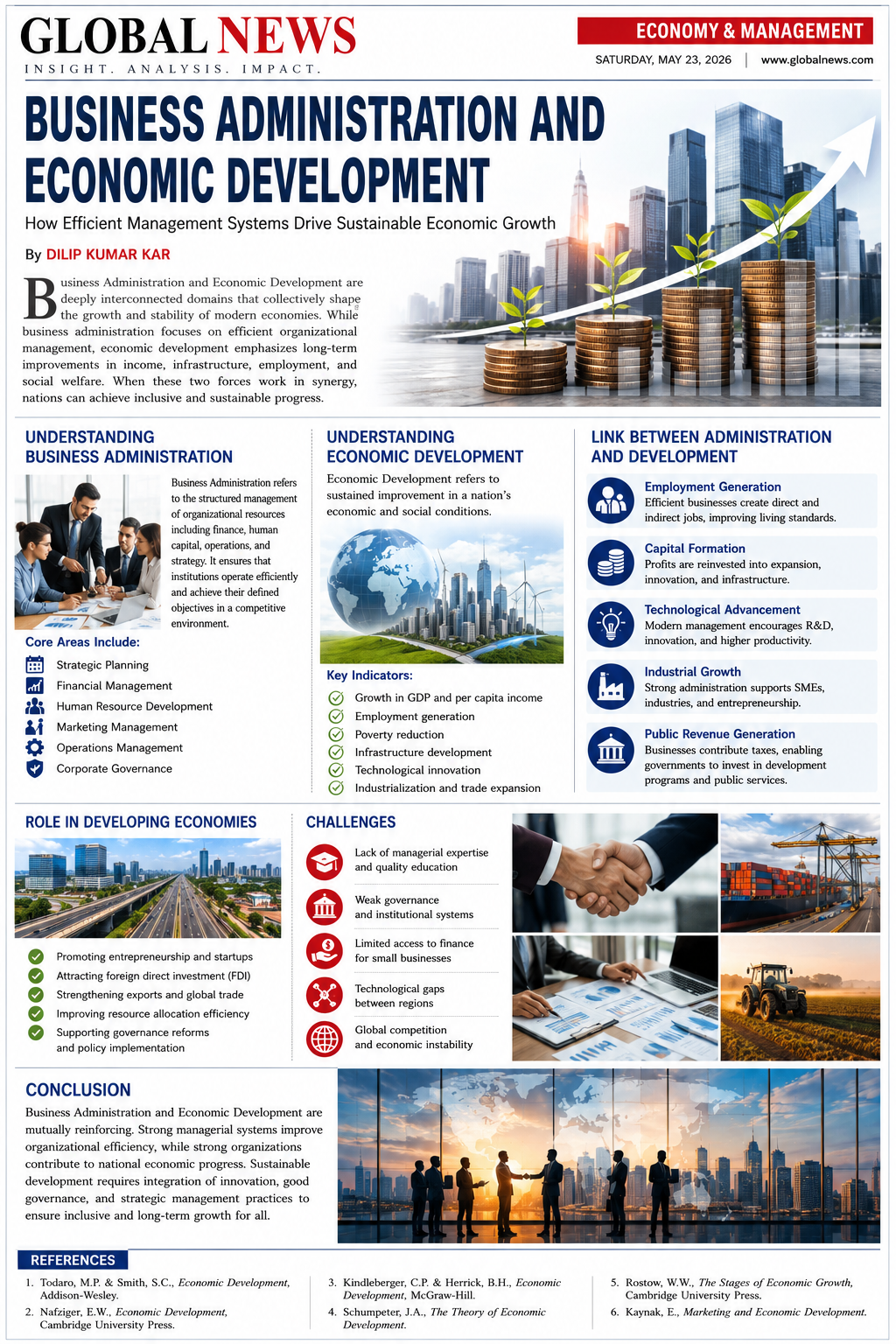
Business Administration and Economic Development are closely interconnected fields that play a crucial role in shaping the growth and stability of modern economies. While business administration focuses on the efficient management of organizations and resources, economic development emphasizes long-term improvements in income, employment, infrastructure, productivity, and social welfare.
Understanding Business Administration
Business Administration refers to the systematic management of organizational resources, including finance, human resources, operations, marketing, and strategic planning. Effective administration enables institutions and businesses to function efficiently, adapt to competition, and achieve long-term goals.
Key areas of business administration include:
- Strategic Planning
- Financial Management
- Human Resource Development
- Marketing Management
- Operational Efficiency
- Leadership and Decision-Making
Efficient management systems help organizations improve productivity, reduce operational costs, and strengthen competitiveness in domestic and global markets.
Understanding Economic Development
Economic Development refers to the sustained improvement of a country’s economic and social conditions. It goes beyond economic growth alone and includes broader indicators such as poverty reduction, industrial expansion, infrastructure development, employment generation, education, healthcare, and improvement in living standards.
A strong and stable economy requires both productive industries and effective institutional systems capable of supporting sustainable growth.
The Link Between Administration and Development
Efficient business administration directly contributes to economic development in several ways. Well-managed businesses generate employment opportunities, encourage innovation, improve industrial productivity, and contribute to national income through taxation and investment.
In developing economies, strong administrative systems help:
- Attract domestic and foreign investment
- Promote entrepreneurship and startups
- Improve resource allocation
- Encourage industrial expansion
- Enhance technological adoption
- Strengthen economic competitiveness
Businesses also play a major role in supporting infrastructure growth and public welfare through economic activity and government revenue generation.
Challenges
Despite the strong relationship between business administration and economic development, several challenges continue to affect development outcomes in many countries. These include:
- Weak governance systems
- Lack of managerial expertise
- Limited financial access
- Technological gaps
- Infrastructure deficiencies
- Policy instability
Addressing these challenges requires coordinated efforts between governments, educational institutions, industries, and policymakers.
Conclusion
Business Administration and Economic Development must work together to ensure sustainable and inclusive economic progress. Effective management practices, combined with sound economic policies and institutional stability, create a strong foundation for long-term national development and social prosperity.