Centre Questions Court’s Role in Defining Essential Religious Practices in Sabarimala Case
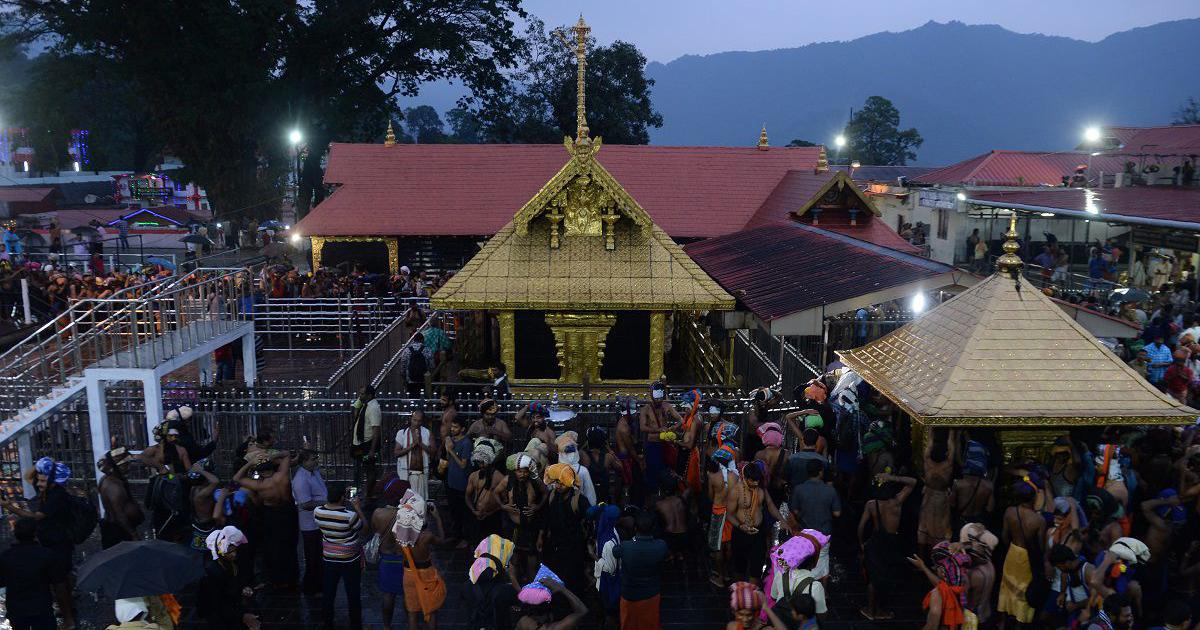
The ongoing legal battle over women’s entry into the Sabarimala temple has taken a new turn as the Union government challenges whether courts should determine what constitutes an essential religious practice. This significant debate was brought to the forefront during a hearing by a nine-judge bench of the Supreme Court, addressing constitutional issues surrounding gender discrimination in religious places.
Solicitor General Tushar Mehta, representing the Centre, made his arguments on Tuesday, asserting that the Supreme Court’s previous decisions regarding the temple’s entry ban should be reconsidered. In 2018, a five-judge Constitution bench had ruled in favor of allowing women of menstruating age to enter the Ayyappa temple, lifting the longstanding prohibition by a vote of 4:1. However, after subsequent review petitions, the matter was escalated to a nine-judge bench to address larger questions about religious freedom.
Mehta’s stance hinges on the claim that the restrictions on women’s entry are not merely gender discrimination but are based on the distinct characteristics of the deity worshipped at Sabarimala. He urged the bench to reject the notion that this practice equates to untouchability, emphasizing that the restriction is age-based and reflects the temple’s unique traditions. The Solicitor General cautioned against imposing Western notions of gender equality onto Indian society without considering the country’s rich civilizational values.
Justice BV Nagarathna, one of the judges on the bench, raised pertinent concerns about social issues being cloaked in religious practices. Her remarks suggest a growing recognition within the judiciary of the need to critically assess how age-old customs align with contemporary societal values and women’s rights. The tension between maintaining religious traditions and ensuring gender equality continues to provoke intense debate across India.
This case is not just a legal battle; it reflects broader societal attitudes towards women and religious practices in India. The Sabarimala temple’s entry restrictions have become a touchstone for discussions about women’s rights and equality in the country. The Supreme Court’s decision, expected in the coming months, could set a significant precedent for how India navigates the complex interplay between religion, tradition, and modern civil rights.