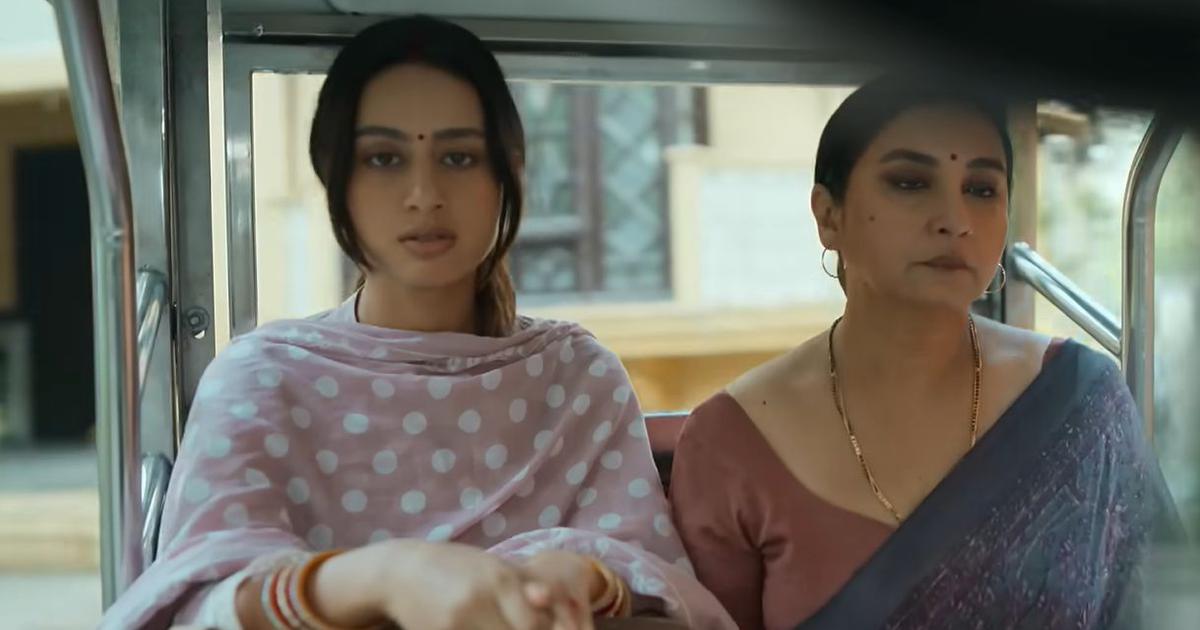
The new JioHotstar series ‘Chiraiya’ boldly ventures into the often-ignored territory of marital rape in India, challenging the deeply ingrained notion that marriage equates to a blanket consent for sexual relations. This six-episode Hindi drama, created by Divy Nidhi Sharma and directed by Shashant Shah, is rooted in an idea by Soumyabrata Rakshit and offers a compelling narrative that forces viewers to confront uncomfortable truths about relationships within the Indian context.
Set against the vibrant backdrop of Lucknow, the series introduces us to Kamlesh, portrayed by Divya Dutta, an archetypal daughter-in-law who embodies traditional values and familial loyalty. She is revered in her household, presided over by the patriarch, Papaji, played by the talented Sanjay Mishra. Kamlesh takes great pride in her role, from nurturing her younger brother-in-law Arun (Siddharth Shaw) to fostering a seemingly idyllic marriage with her husband Vinay (Faisal Rashid). However, beneath the surface of this seemingly perfect family dynamic lies Kamlesh’s own unfulfilled desires, particularly around the birth of her daughter, which she compensates for by doting excessively on Arun.
The narrative takes a transformative turn with the arrival of Arun’s new wife, Pooja (Prasanna Bisht). A stark contrast to Kamlesh, Pooja is portrayed as a modern, aware young woman, yet she quickly becomes ensnared in the harsh realities of her marriage. It soon becomes evident that Pooja is being coerced into non-consensual sexual relations with her husband, presenting a jarring reality that is often swept under the rug in many Indian households. The show does not shy away from explicitly showcasing Pooja’s struggles as her pleas for autonomy are dismissed and her discomfort is trivialized by those around her.
The strength of ‘Chiraiya’ lies in its commitment to raising awareness about marital rape, a topic that is frequently relegated to silence in Indian society. The show’s initial character-driven approach, which effectively establishes the characters’ backgrounds and motivations, gradually intensifies as the narrative unfolds. However, as the series progresses, some viewers may find that the storytelling becomes increasingly heavy-handed, perhaps diluting the potent message it aims to convey.
Overall, ‘Chiraiya’ serves as a crucial conversation starter, particularly in a cultural landscape where discussions about consent within marriage remain taboo. By weaving together the threads of tradition, familial expectation, and personal autonomy, the show invites its audience to reflect on the nature of consent and the often-overlooked intricacies of marital relationships in contemporary India. As the series challenges societal norms, it beckons viewers to reconsider the implications of silence surrounding marital rape, making it a significant addition to the ongoing discourse around women’s rights and dignity in India.