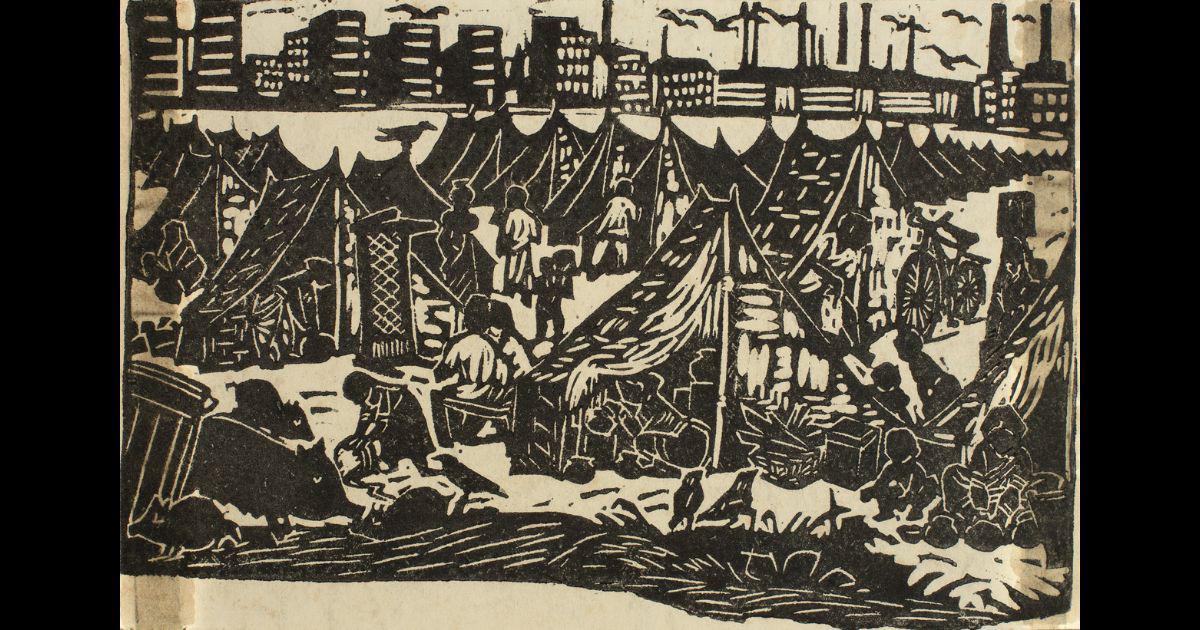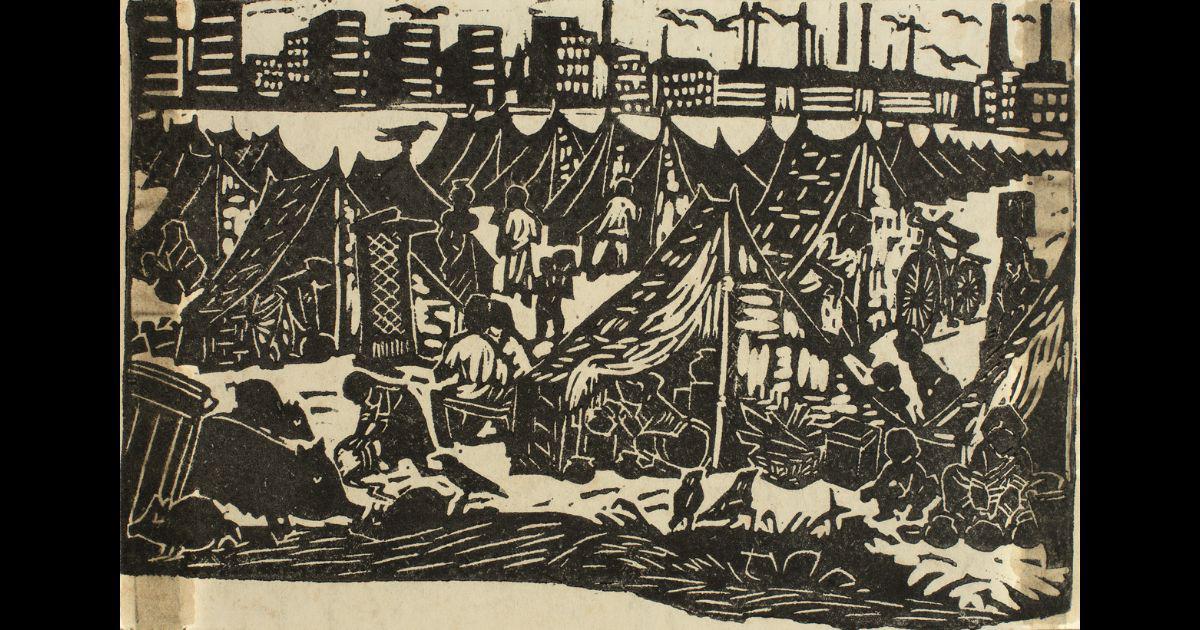
Mumbai, a city known for its vibrant history and cultural tapestry, finds itself in a constant state of flux, and nowhere is this transformation more striking than in the artistic renditions of its past. One such evocative piece is the work of artist Chittaprosad, whose 1950s depiction of a labour camp serves as a poignant reminder of a time that feels increasingly distant in today’s fast-paced urban environment.
Throughout the decades, representations of Mumbai, or Bombay as it was once known, have often been laced with nostalgia. These portrayals hark back to an era perceived as simpler, when the city’s streets were less congested and its natural beauty, from pristine beaches to sprawling gardens, could be enjoyed without the overwhelming hustle and bustle of modern life. By the 1990s, this sense of nostalgia had already begun to permeate public consciousness as the city’s population surged, leading to the decline of many historic structures in areas like Flora Fountain, which fell victim to neglect and urban decay.
The last twenty-five years have witnessed an unprecedented pace of change driven by redevelopment initiatives that have radically altered the cityscape. Residential houses have morphed into towering buildings, and iconic structures have been replaced or overshadowed by high-rises. Infrastructure developments such as flyovers, sealinks, and a vast network of metro lines have reshaped the way Mumbaikars navigate their city. This rapid transformation has created a landscape that bears little resemblance to the one known even a few decades ago, as the allure of Mumbai’s once-familiar vistas fades away.
A curious aspect of this ongoing change is the fleeting nature of views from properties across the city. Real estate brokers now often include disclaimers highlighting that the picturesque scenery glimpsed during property showings may quickly become outdated. This reflects not only the dynamic nature of Mumbai’s skyline but also the broader implications of urbanization that have led to a relentless race against time, where even the most appealing vistas may vanish over the course of a real estate transaction.
Chittaprosad’s work acts as a bridge between the past and present, reminding us of a time when the struggles of the working class were laid bare against the backdrop of a city that was still finding its identity. His art invites viewers to reflect on the socio-political realities faced by labourers, offering a commentary on the socio-economic changes that have shaped Mumbai. As the city continues to evolve, the narratives encapsulated in Chittaprosad’s art resonate deeply, urging us to pause and consider the implications of such rapid transformation on the lives of its inhabitants.