Climate Crisis and Extreme Weather: The Most Urgent Challenge of Our Time
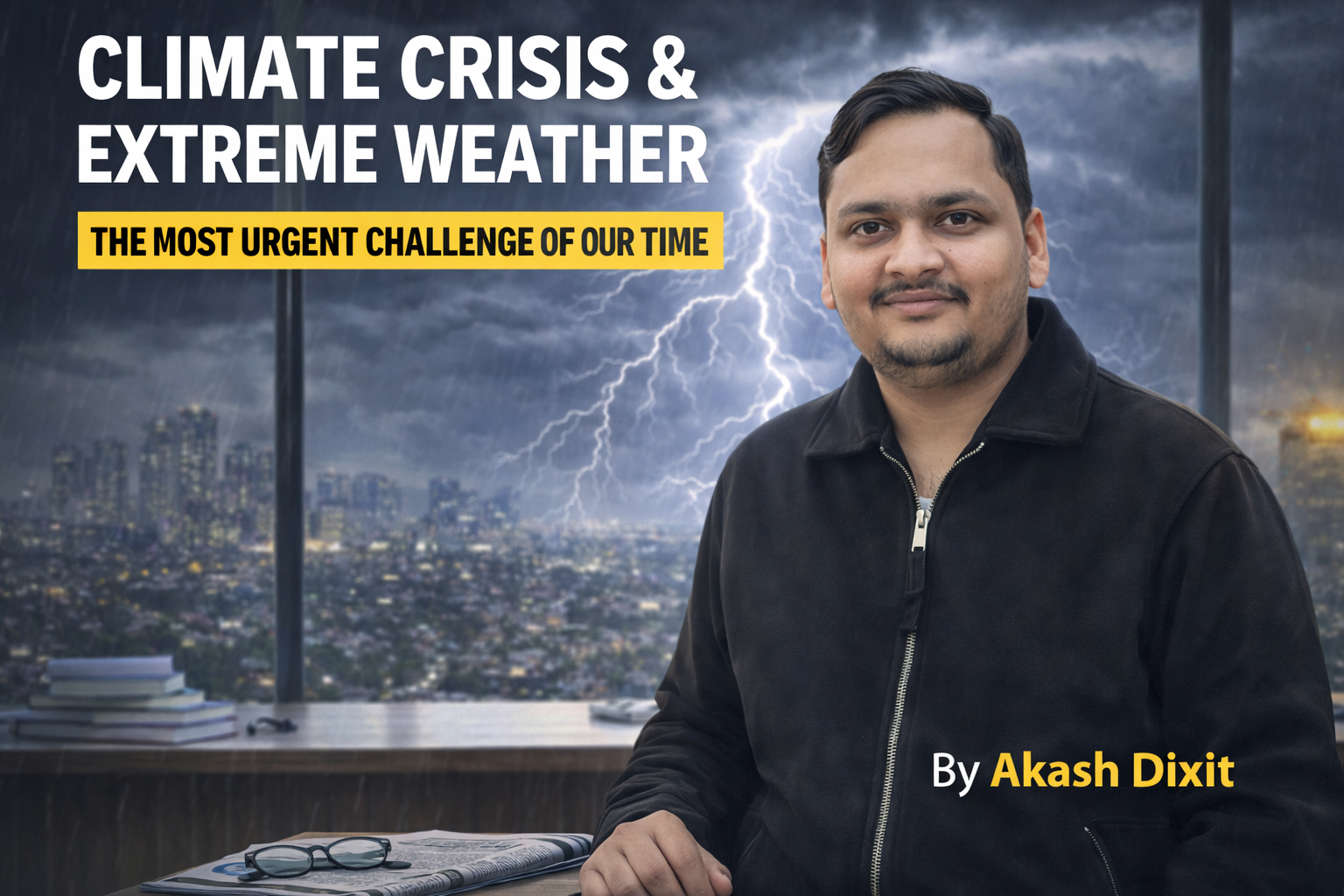
The increasing frequency of extreme weather events across the globe has brought the issue of climate change to the forefront of public discourse. From unseasonal rains and hailstorms in India to wildfires in Australia and hurricanes in the United States, the evidence is overwhelming—our planet is undergoing rapid environmental changes. What was once considered a distant or abstract threat has now become an immediate and visible reality affecting millions of lives every day.
In India, recent weather disturbances have once again highlighted the vulnerability of both urban and rural systems. Sudden rainfall, strong winds, and unexpected temperature fluctuations during what should be a relatively stable seasonal transition have disrupted daily life. Flights have been delayed, roads have been flooded, and power outages have become increasingly common. These disruptions are not merely inconveniences; they are indicators of a deeper, systemic problem that demands urgent attention.
The agricultural sector, which forms the backbone of India’s economy, is particularly at risk. Farmers rely heavily on predictable weather patterns for sowing and harvesting crops. However, with climate variability increasing, these patterns are becoming unreliable. Unseasonal rains can destroy crops just before harvest, leading to significant financial losses and pushing already vulnerable farming communities into deeper distress. This not only affects individual livelihoods but also has wider implications for food security and inflation.
Urban areas, on the other hand, face a different set of challenges. Rapid and often unplanned urbanization has led to inadequate infrastructure that is ill-equipped to handle extreme weather conditions. Poor drainage systems result in waterlogging even after moderate rainfall, causing traffic congestion and health hazards. The lack of green spaces further exacerbates the problem, as cities lose their natural ability to absorb excess water and regulate temperatures.
At the heart of these changes lies the phenomenon of global warming. The continuous increase in greenhouse gas emissions, primarily due to human activities such as industrialization, deforestation, and the burning of fossil fuels, has led to a rise in global temperatures. This, in turn, affects atmospheric patterns, leading to more frequent and intense weather events. While natural climatic variations do occur, the scale and speed of current changes strongly point toward human-induced causes.
The global nature of climate change means that no country can tackle it alone. International cooperation is essential to address this crisis effectively. Agreements such as the Paris Climate Accord aim to limit global temperature rise, but their success depends on the commitment and action of individual nations. India, being one of the largest developing economies, has a crucial role to play. Balancing economic growth with environmental sustainability is a complex but necessary task.
The government has taken several steps in this direction, including promoting renewable energy, encouraging electric mobility, and implementing policies aimed at reducing carbon emissions. However, much more needs to be done. Investment in climate-resilient infrastructure, improved disaster management systems, and support for sustainable agricultural practices are critical. Equally important is the need for effective implementation of policies at the grassroots level.
Public awareness and participation are also key components of the solution. Individuals must recognize their role in contributing to environmental degradation and take steps to minimize their impact. Simple actions such as conserving energy, reducing waste, and supporting sustainable products can collectively make a significant difference. Education plays a vital role in this regard, as informed citizens are more likely to adopt responsible behaviors.
Another important aspect that deserves attention is the economic impact of climate change. Extreme weather events can lead to significant financial losses, both at the individual and national levels. Infrastructure damage, loss of productivity, and increased healthcare costs place a heavy burden on the economy. Investing in preventive measures and sustainable practices is not just an environmental necessity but also an economic imperative.
Furthermore, climate change is not just an environmental or economic issue; it is also a social one. Vulnerable populations, including the poor and marginalized communities, are often the hardest hit by extreme weather events. They have limited resources to cope with and recover from such disasters, making them more susceptible to long-term consequences. Addressing climate change, therefore, also requires a focus on social equity and justice.
Technology and innovation can play a significant role in combating climate change. Advances in renewable energy, efficient resource management, and climate modeling provide valuable tools for mitigation and adaptation. Encouraging research and development in these areas can lead to more effective and sustainable solutions.
In conclusion, the increasing frequency of extreme weather events serves as a stark reminder of the urgent need to address the climate crisis. It is no longer a problem for future generations; it is a challenge that we must confront today. Governments, businesses, and individuals must work together to reduce environmental impact and build resilience against changing climatic conditions. The choices we make today will determine the future of our planet. Ignoring the warning signs is no longer an option; decisive and collective action is the need of the hour.