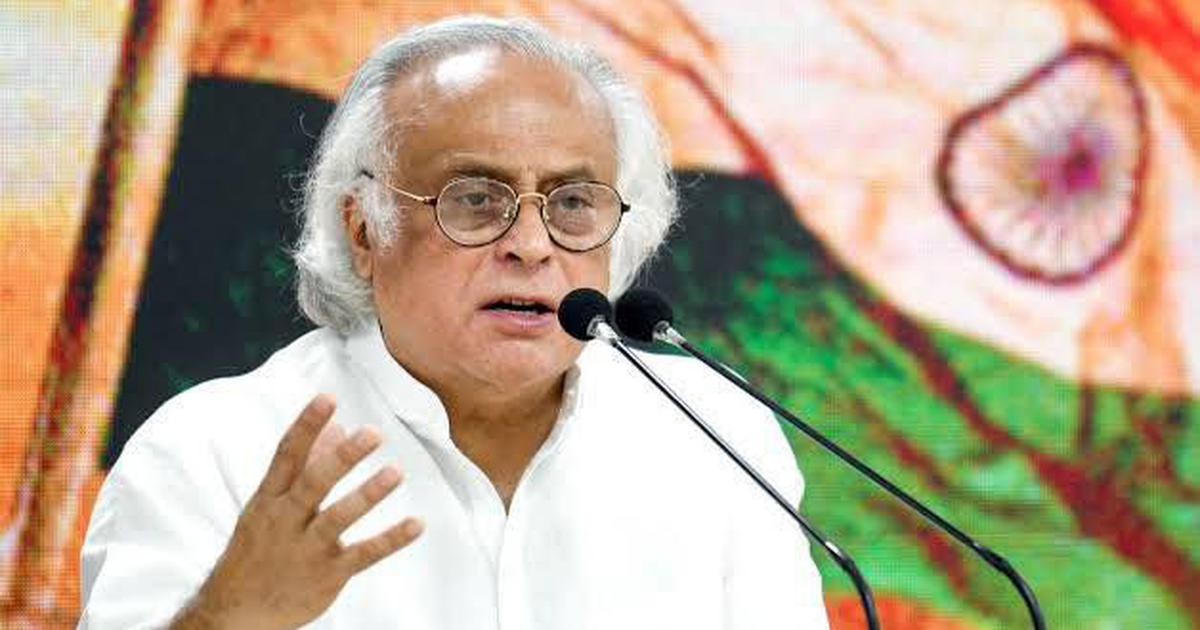
The Congress party has expressed deep concern over Pakistan’s role in mediating ceasefire discussions between the United States and Iran, labeling it a “significant setback” for Prime Minister Narendra Modi’s diplomatic efforts. This critique, articulated by Congress leader Jairam Ramesh, underscores the flaws in Modi’s approach to global leadership, which he refers to as a ‘self-styled vishwaguru’ or world leader.
Ramesh took to social media to assert that Modi’s image has been severely diminished by Pakistan’s involvement in these crucial negotiations. He stated that Modi’s once-prominent stature—a metaphorical ’56-inch chest’—has now appeared “shrunken and shriveled.” This commentary followed recent announcements from US President Donald Trump regarding a two-week ceasefire in the West Asia region, facilitated by the intervention of Pakistani officials, including Prime Minister Shehbaz Sharif and military chief Asim Munir.
In a statement, Trump described how Pakistan’s leadership had urged him to “hold off the destructive force being sent tonight to Iran,” indicating their active role in de-escalating tensions. Sharif also extended an invitation for US and Iranian representatives to meet in Islamabad on Friday to foster further negotiations aimed at achieving a comprehensive agreement. The Congress party has seized this moment to question the efficacy of Modi’s foreign policy, suggesting that a struggling economy like Pakistan’s being instrumental in international diplomacy casts doubt on Modi’s narrative of strong leadership.
In contrast, India’s Ministry of External Affairs has publicly welcomed the announcement of the ceasefire, expressing hope that it could pave the way for lasting peace in the tumultuous region of West Asia. Officials voiced concerns about the ongoing conflict, which has already inflicted significant hardship on the civilian population and disrupted vital global energy supplies and trade networks. The Indian government emphasized that stability in West Asia is crucial not just for regional peace but also for global economic well-being.
This diplomatic tug-of-war highlights the complexities of modern international relations, where nations with varying degrees of influence and economic stability can emerge as key players on the global stage. The Congress party’s critique reflects a broader discontent with Modi’s foreign policy strategy, particularly in light of these recent developments involving Pakistan, a country with which India has had historically tense relations.