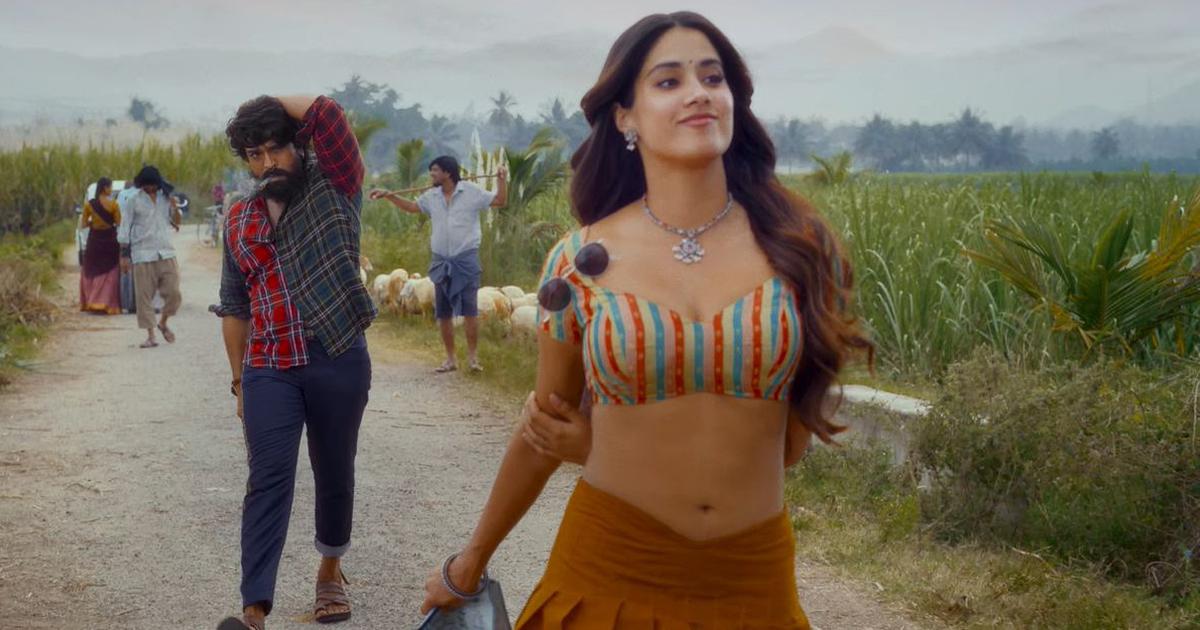
In an era where Indian cinema continues to evolve, the recent release of ‘Peddi’ has sparked significant discussions both online and offline. Directed by Buchi Babu Sana, the film features the talented Ram Charan in a multifaceted role where he portrays a champion in cricket, wrestling, and running. Charan’s character aims to elevate his village’s status through his sporting achievements. However, the film, which hit theaters on June 4 in multiple languages including Telugu and Hindi, has faced an avalanche of mixed reviews, raising questions about its narrative and character portrayal.
One of the most contentious aspects of ‘Peddi’ is the characterization of Achiyamma, played by Janhvi Kapoor. Critics have labeled her portrayal as overly sexualized and problematic, reducing her character to a mere decorative figure whose primary role appears to be to entice the protagonist. This depiction has not only garnered backlash from audiences but has also prompted a broader conversation about the representation of women in Indian cinema. In a landscape that increasingly calls for diverse and strong female characters, the film has unfortunately missed the mark, leaving many viewers dissatisfied.
The social media response to ‘Peddi’ quickly escalated, with many users expressing their discontent regarding the film’s treatment of female characters. In light of this criticism, director Buchi Babu Sana took to social media to address the backlash. He expressed regret and acknowledged the importance of portraying women with respect and dignity. Sana stated, “I have always had immense respect for women, both on and off screen, and it was never our intention to objectify or disrespect any female character.” In an effort to address the concerns raised, he mentioned the possibility of trimming contentious scenes in the film.
While Sana’s response indicates a willingness to listen to feedback, the situation highlights the complexities of filmmaking in today’s society. Cinema is not just a form of entertainment; it serves as a powerful medium that reflects cultural values and societal norms. As such, the portrayal of characters, especially women, carries significant weight. Audiences are becoming increasingly aware of the narratives presented on screen, demanding that filmmakers be more conscientious about the stories they tell and the characters they create.
Ultimately, ‘Peddi’ may serve as a case study for future filmmakers about the importance of crafting well-rounded characters and engaging storylines that resonate with audiences. The backlash against Achiyamma’s portrayal is not simply an isolated incident but rather a part of a larger movement calling for change in how women are represented in Indian cinema. As discussions continue, it remains to be seen how ‘Peddi’ will impact the film industry and whether it will inspire a shift towards more respectful and empowering representations of women on screen.