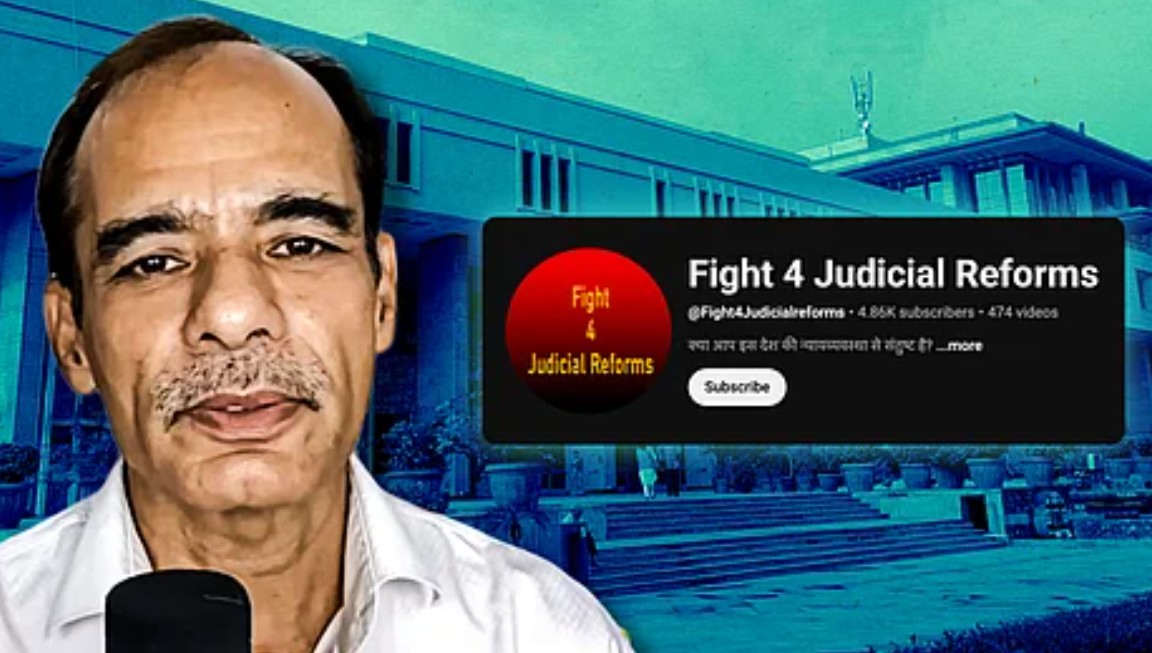
The Delhi High Court has sentenced YouTuber and advocate Gulshan Pahuja to six months of simple imprisonment in a criminal contempt case related to remarks made against the judiciary. The ruling has sparked renewed discussion around judicial accountability, freedom of expression, and the legal limits of criticism directed at courts.
According to court proceedings, the case was linked to videos and public statements in which Pahuja criticised the functioning of the judiciary using language that the Court considered objectionable and contemptuous. The Bench observed that some remarks went beyond fair criticism and could undermine public confidence in the judicial institution.
Court Observations and Sentence
The Delhi High Court held Pahuja guilty of criminal contempt and imposed a six-month simple imprisonment sentence along with financial penalties. The Court reportedly noted that he continued making controversial remarks during the proceedings and did not express remorse.
Reports indicate that the sentence was temporarily suspended for a limited period to allow him to seek legal remedies before a higher court.
Judicial Reform Advocacy
Before the contempt proceedings, Gulshan Pahuja had gained attention on social media for speaking about judicial reforms and court transparency. One of his frequently raised demands involved mandatory audio and video recording of court proceedings.
Supporters of such reforms argue that recorded proceedings can improve transparency, preserve courtroom accuracy, and strengthen public trust in the justice system. Through online videos and public communication, Pahuja had also claimed to have sent representations to constitutional authorities seeking reforms in the justice delivery system.
However, the Court’s contempt ruling focused specifically on the language and nature of his public remarks rather than on the broader issue of judicial reform.
Debate Over Criticism and Contempt
The case has once again brought attention to the broader debate surrounding criticism of the judiciary and contempt law in India.
Indian law permits fair criticism of court judgments and institutional functioning. At the same time, courts have the authority to initiate contempt proceedings if statements are viewed as lowering the dignity of the judiciary or interfering with public confidence in the justice system.
Legal experts remain divided on the issue. Some believe strong contempt laws are necessary to protect institutional credibility, while others argue that democratic accountability requires open discussion and scrutiny of public institutions.
Broader Discussion on Transparency
The controversy has also revived conversations around courtroom transparency and judicial reforms, including demands for structured recording systems and greater public accessibility to court proceedings.
Observers believe the case may contribute to wider legal and public discussions about balancing institutional dignity with freedom of expression and reform-oriented criticism.
Conclusion
The Delhi High Court’s decision in the Gulshan Pahuja contempt case has become a significant legal and public discussion point. While the ruling reinforces the judiciary’s stance on contempt and institutional authority, it has also renewed debate over transparency, accountability, and the acceptable limits of criticism in a democratic society.