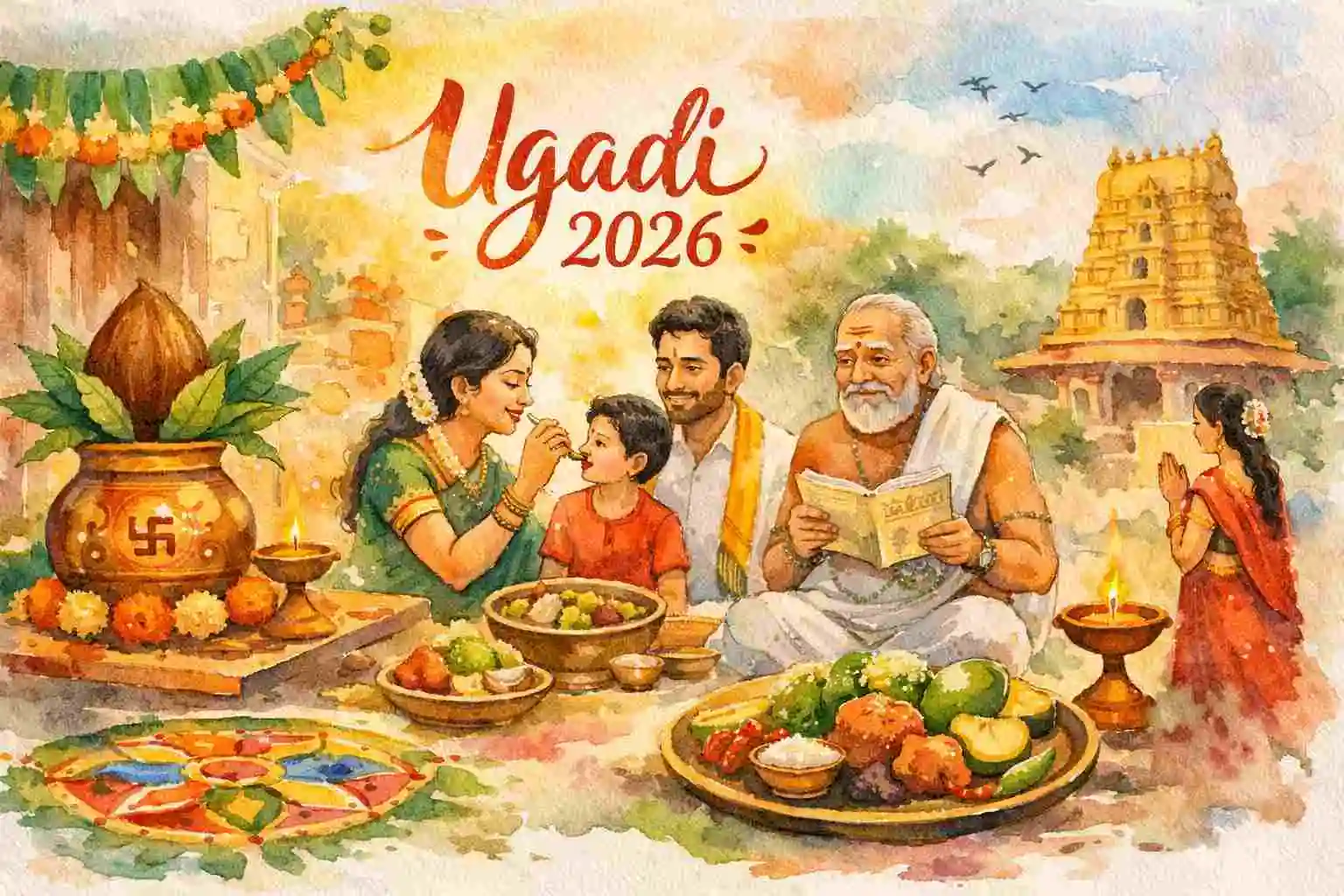
Embracing New Beginnings: Ugadi 2026
Introduction
Ugadi, the Telugu New Year, is a vibrant festival celebrated with great fervor and joy. It marks the commencement of a new year based on the Hindu lunisolar calendar, signifying hope, prosperity, and fresh beginnings. In 2026, Ugadi holds even greater significance as it falls on Wednesday, March 18th, a date that promises a mid-week celebration filled with cultural richness and traditional practices.
Understanding the Significance
Ugadi, derived from the Sanskrit word ‘Yugadi’ (meaning ‘beginning of an era’), symbolizes the cyclic nature of time and the promise of a brighter future. The festival is rooted in mythology and folklore, with varied explanations across regions. In Andhra Pradesh and Telangana, it is believed to be the day Lord Brahma started creation. For others, it marks the day Lord Rama returned to Ayodhya after his exile and was crowned king. Regardless of the specific interpretation, the core essence remains the same: celebrating life, embracing changes, and seeking blessings for a prosperous year ahead.
Preparation and Rituals
The spirit of Ugadi is evident in the meticulous preparations that begin days in advance. Homes are cleaned and decorated with vibrant rangolis (colored patterns) and mango leaves (symbolizing auspiciousness). Traditional oil baths, known as ‘Abyangana Snanam,’ are performed by all family members, signifying purification of mind and body. New clothes are donned, and the atmosphere buzzes with excitement.
The Sacred Ugadi Pachadi
The centerpiece of the Ugadi celebration is the ‘Ugadi Pachadi,’ a unique dish that embodies the six tastes or ‘Shadruchulu’:
Sweet (Jaggery/Sugar): Representing happiness and joy.
Sour (Tamarind Juice): Symbolizing challenges and difficulties.
Bitter (Neem Flowers): Representing sorrows and struggles.
Salty (Salt): Symbolizing fear and uncertainty.
Tangy (Raw Mango): Representing surprises and unexpected turns.
**Spicy (Chili Powder): Symbolizing anger and strong emotions.
This pachadi is a powerful metaphor, reminding individuals that life is a blend of various experiences, and one should accept them all with equanimity. Sharing the pachadi among family and friends reinforces bonds and promotes a sense of community.
Panchanga Sravanam: Foretelling the Future
Another crucial aspect of Ugadi is ‘Panchanga Sravanam,’ the reading of the Hindu almanac (Panchangam) for the upcoming year. Astrologers and priests predict general trends, agricultural prospects, weather conditions, and individuals’ personal fortunes based on planetary positions. This ritual fosters a sense of anticipation and helps people prepare for the opportunities and challenges that lie ahead.
Cultural Festivities and Gatherings
Ugadi is not just about rituals; it’s a social affair marked by cultural performances, traditional music, and dances. Communities organize events showcasing local talents, reinforcing cultural identity and strengthening social ties. Elaborate feasts are prepared, featuring traditional delicacies like ‘Pulihora’ (tamarind rice), ‘Bobbatlu’ (sweet flatbreads), and assorted sweets.
Significance of 2026 Ugadi
The 2026 Ugadi, falling on March 18th, provides a perfect opportunity for families to come together and celebrate. The mid-week date allows for a break from routine and dedicated time for festivities. As individuals and communities reflect on the past year and look forward to the new one, Ugadi 2026 serves as a reminder of the enduring traditions and values that guide and inspire.
Conclusion
Ugadi is more than just a date on the calendar; it’s a testament to the resilient spirit and the universal hope for a better future. The vibrant celebrations, meaningful rituals, and the iconic Ugadi Pachadi all contribute to a powerful experience that resonates with people across generations. As we welcome the New Year on March 18th, 2026, let us embrace the opportunities it brings, celebrate the richness of our culture, and strive for happiness, prosperity, and peace in the year ahead. Ugadi Subhakankshalu (Happy Ugadi) to everyone!