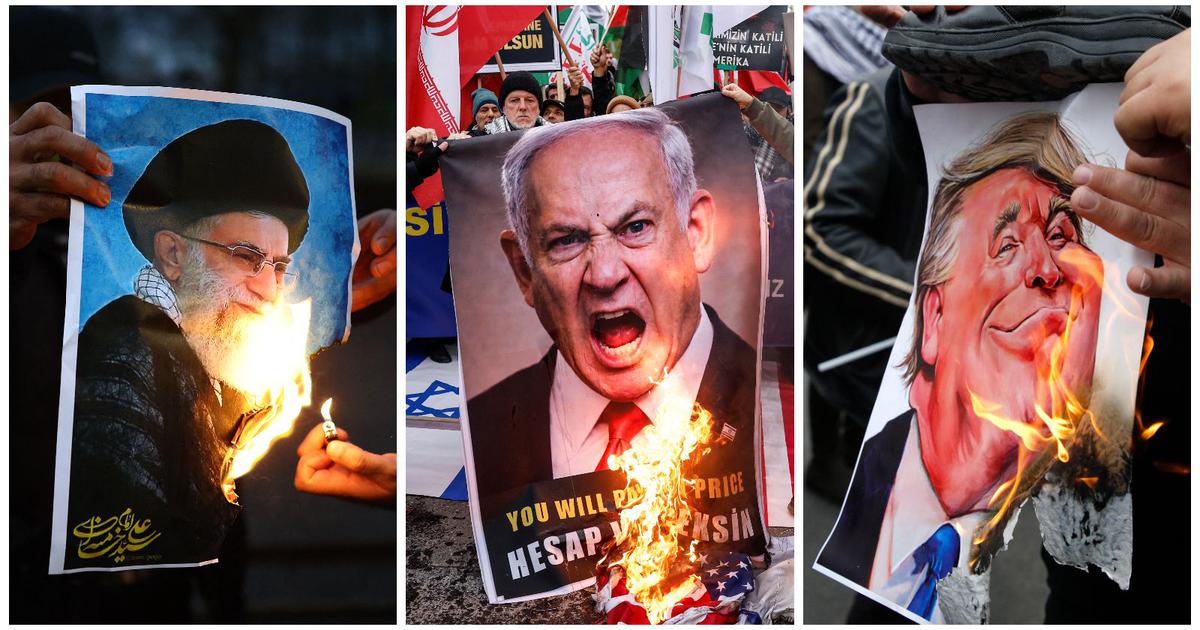
In a world rife with conflict, the ongoing crisis in West Asia continues to evoke strong emotions and opinions across the globe. The situation pits the United States and Israel against Iran, with the personalities of key leaders playing a critical role in shaping the narrative of this contentious struggle. Reflecting on the late sociologist André Béteille’s insights on the nature of evil in human affairs, it becomes essential to question the motives and legacies of influential figures involved in this conflict.
One of the central figures in this narrative is the late Ali Khamenei, the former Supreme Leader of Iran. Khamenei’s tenure was marked by staunch opposition to Western influence in the region, which he articulated as a form of resistance against imperialism. His death, characterized by a courageous refusal to back down in the face of imminent threats, has led some left-leaning intellectuals to romanticize his legacy as that of an anti-imperialist hero. However, such a portrayal may overlook the complexities of his actions and the broader consequences of his leadership.
In contrast, the role of current leaders like Israeli Prime Minister Benjamin Netanyahu and U.S. President Joe Biden cannot be neglected. Netanyahu’s tenure has been defined by aggressive military strategies and a hardline approach toward Palestinian rights, which has sparked widespread condemnation and deepening divisions. His administration’s actions often evoke fears of escalating violence in an already volatile region. On the other hand, Biden’s leadership reflects an attempt to balance traditional U.S. support for Israel while addressing the humanitarian concerns arising from the conflict. Yet, critics argue that his administration has not done enough to curb Israeli aggression.
The personalities of these leaders are not just footnotes in the history of the conflict; they are pivotal in determining the course of events. Each leader’s decisions and their framing of the narratives surrounding the conflict contribute significantly to the suffering of civilians caught in the crossfire. The historical context of their actions illustrates how leadership does not exist in a vacuum but is deeply intertwined with the socio-political landscape of the region.
As India navigates its own foreign policy in relation to this conflict, it becomes vital for policymakers and citizens alike to critically engage with these narratives. Understanding the motivations behind each leader’s actions can foster a more nuanced perspective on international relations and the role of power dynamics in global conflict. In conclusion, while figures like Khamenei, Netanyahu, and Biden may represent different facets of the same struggle, it is crucial to analyze the implications of their legacies on future peace efforts in West Asia.