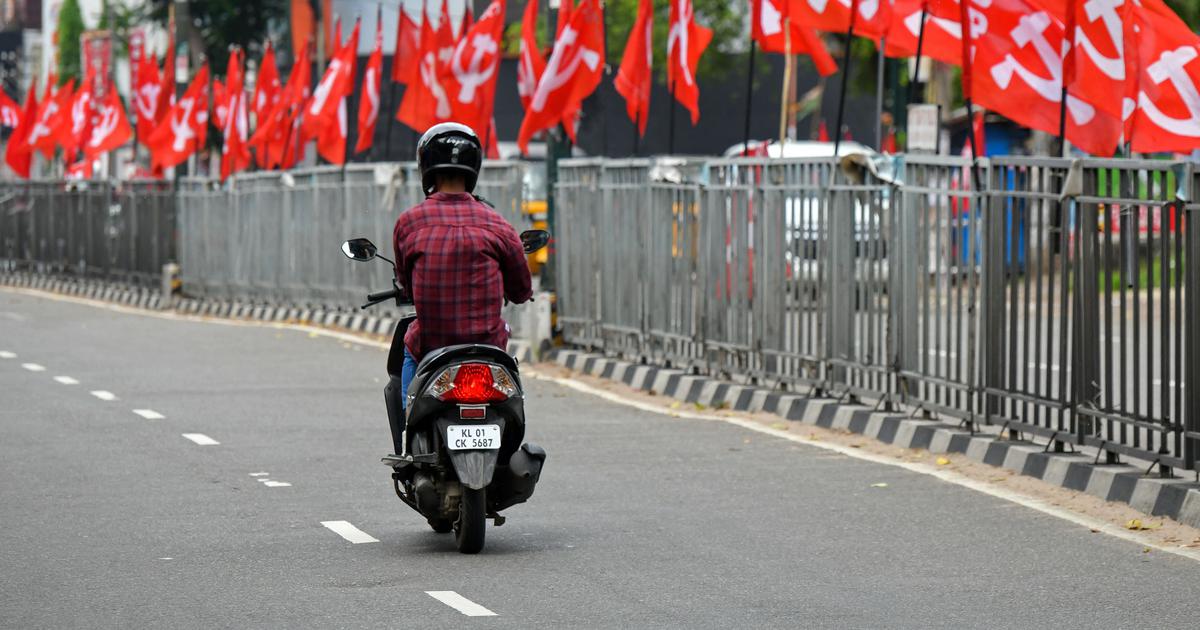
The discourse on caste in India remains a formidable issue, even in states where progressive politics has thrived for decades. Kerala, known for its long-standing leftist governance, presents a curious paradox: despite being ruled by the Left for many years, it has not fully eradicated the caste system. This reality prompts a deeper exploration of the relationship between socialist ideologies and caste dynamics, especially in light of Bhimrao Ambedkar’s seminal work, “Annihilation of Caste.”
Ambedkar, a pivotal figure in the Indian social reform movement, articulated the urgency of addressing caste as a social construct that affects all aspects of governance. In his address to the Indian Left in 1936, he posited that without confronting the ingrained prejudices associated with caste, no meaningful political or economic transformation could occur. This assertion resonates especially in Kerala, a state that made history in 1957 by electing the world’s first democratically elected communist government. Yet, even amidst educational advancements and high literacy rates, the caste system still permeates societal structures.
One may wonder how a state synonymous with leftist ideologies and progressive reforms continues to struggle with the entrenched problem of caste. The experience of local residents sheds light on this conundrum. A young woman I spoke to in 2010 encapsulated the sentiment when she remarked, “Whenever you think of Kerala, you think of red, even if it is light red.” This statement highlights both state pride and a recognition of the influence of communist governance, which has promoted equality and education. However, underlying issues of caste prejudice still linger, suggesting that political ideology alone does not dismantle social hierarchies.
The state’s approach to education and healthcare has undoubtedly elevated the quality of life for many, yet the persistence of caste-based discrimination raises questions about the effectiveness of leftist policies. Despite numerous efforts to promote social equity, the caste system remains a potent force, complicating the narrative of Kerala’s progressive identity. The challenge lies in translating the ideological framework of socialism into practical solutions that address the realities of caste.
Kerala’s experience serves as a reminder that even in regions perceived as progressive, the struggle against caste is ongoing. As we reflect on Ambedkar’s insights, it becomes evident that engaging with the deep-rooted issues of caste is essential for true social reform. The Leftist agenda must evolve to confront this ‘monster’ that continues to obstruct the path towards a more equitable society. Only by addressing caste head-on can Kerala realize its potential as a beacon of social justice in India.